
Table of Contents
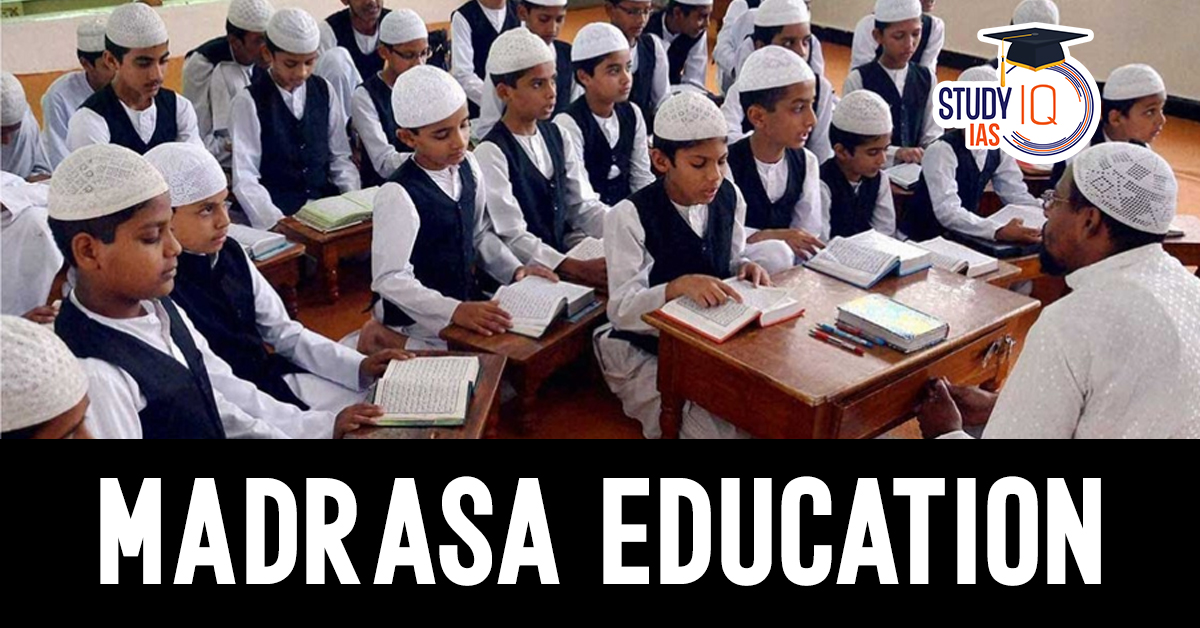
Madrasa Education
- The term ‘madrasa’ simply means ‘school’ in Arabic.
- Historically, madrasas in India were not only religious institutions but also provided secular education, especially in areas where formal schooling was inaccessible.
- Many prominent Indian figures like Raja Ram Mohan Roy, Rajendra Prasad, and Munshi Premchand received their early education from madrasas.
- But in recent times, it has been associated with religious extremism due to propaganda, especially by Western nations.
- In India, madrasas have existed since the time of the Delhi Sultanate, supported by the Khilji and Tughlaq dynasties.
- The Moroccan traveller Ibn Battuta documented that Firoz Shah Tughlaq used madrasas to educate women and slaves in arts and crafts.
| Fact |
| Article 25 of the Indian Constitution guarantees every citizen the right to profess, practice, and propagate their religion. |
Also Read: Right to Freedom of Religion in India
Implications
- Imparting secular values is critical for the unity and diversity of India.
- The NCPCR’s recent actions are seen as fueling religious alienation, especially for minorities, in the context of a growing atmosphere of majoritarianism.
- From Kashmir to Kanyakumari, religious minorities face insecurity, and NCPCR’s actions are viewed as exacerbating these tensions.
- Despite its intention to protect children’s rights, critics argue that the NCPCR has overlooked more pressing issues such as child trafficking and labour exploitation.
- The commission’s focus on madrasas appears misplaced when considering broader child welfare concerns in India.
- The Supreme Court’s stay is seen as a necessary step to ensure that child rights legislation is applied fairly across all educational institutions without discrimination based on religion.

 Right to Education (RTE) Act 2009 and So...
 Women’s Representation on Corporate Bo...
 Why Women’s Reservation Alone Is Not E...





 WhatsApp





