
Table of Contents
Context
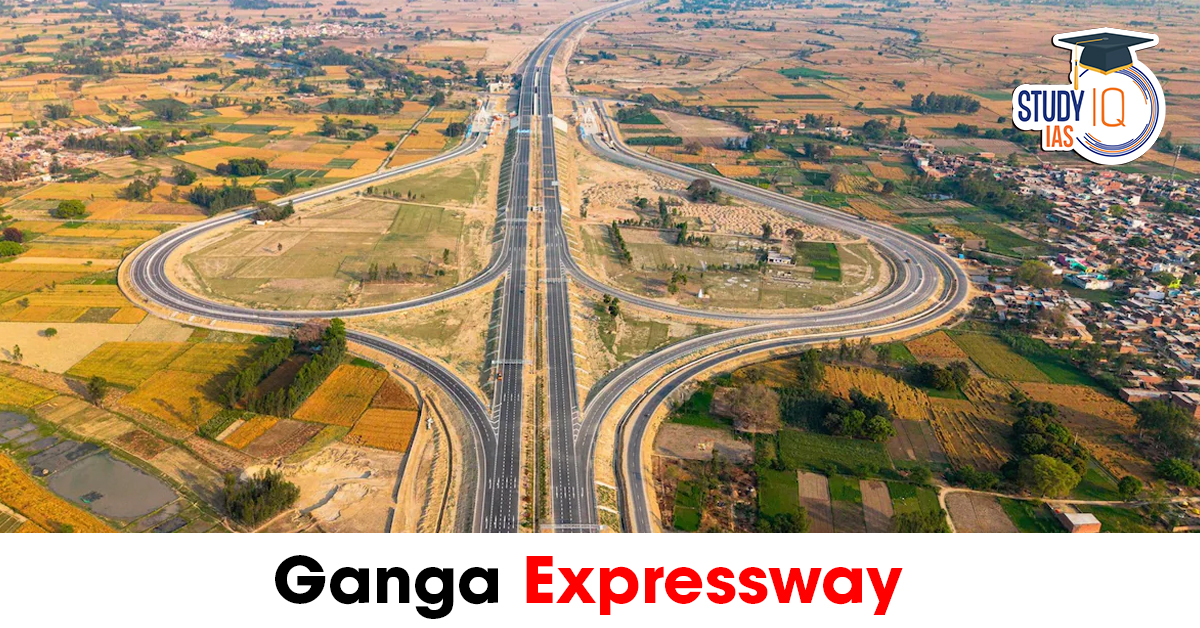
The Ganga Expressway is one of India’s most ambitious infrastructure projects, inaugurated by Prime Minister Narendra Modi on April 29, 2026, in Uttar Pradesh. This mega corridor stretches 594 kilometres, connecting Meerut to Prayagraj, and is designed to transform connectivity, industrial growth, and economic development across the state of Uttar Pradesh.
Ganga Expressway: India’s Longest Expressway
The Ganga Expressway is one of India’s most ambitious infrastructure projects aimed at boosting connectivity, economic growth, and regional development in Uttar Pradesh. Once completed, it will become one of the longest expressways in India, significantly reducing travel time across the state.
Route and Key Details
- Total Length: ~594 km
- Starting Point: Meerut
- Ending Point: Prayagraj
- Lanes: Initially 6 lanes (expandable to 8 lanes)
- Estimated Cost: ₹36,000+ crore
The expressway passes through several districts, improving east-west connectivity across Uttar Pradesh.
Implementing Authority
The project is being developed by the Uttar Pradesh Expressways Industrial Development Authority (UPEIDA), which is responsible for planning and execution of major expressways in the state.
Check Here: List of Expressways in India 2026
Ganga Expressway Features
- Ganga Expressway, connecting the state from east to west, will traverse 518 villages across 12 districts, significantly reducing travel time between Meerut and Prayagraj.
- High-Speed Corridor: It is designed to accommodate six lanes initially, expandable to eight, and boasts a maximum speed of 120 kilometres per hour.
- Airstrip Facility: Another important feature includes two long bridges spanning the Ganga and Ramganga rivers, allowing even big planes to land. A 3.50-kilometre airstrip near Jalalabad tehsil in Shahjahanpur enhances the project’s versatility.
- To enhance public convenience, nine public amenities complexes are planned along the expressway, with main toll plazas at Meerut and Prayagraj, and ramp toll plazas at 15 locations.
- Modern Infrastructure
- Service roads
- Interchanges and flyovers
- Toll plazas with digital systems
- Green Initiatives
-
- Tree plantation along the corridor
- Rainwater harvesting systems
- Environment-friendly construction practices
| Industrial & Economic Development |
The Ganga Expressway is not just a road; it is a catalyst for economic transformation:
|
Check Here: List of National Highways in India
Economic Significance
Boost to Regional Development
The expressway will connect backwards and rural regions to major urban centres, promoting balanced growth.
Industrial Growth
- Development of industrial corridors and logistics hubs
- Increased investment opportunities
Job Creation
Construction and related activities are generating thousands of employment opportunities.
Impact on Travel
- Travel time between Meerut and Prayagraj will be drastically reduced
- Improved connectivity to cities like:
- Bareilly
- Shahjahanpur
- Hardoi
- Rae Bareli
Future Prospects
The Ganga Expressway is expected to:
- Strengthen Uttar Pradesh’s infrastructure network
- Enhance logistics efficiency
- Attract domestic and foreign investment
It may also integrate with other major expressways, creating a robust road network across North India.
Conclusion
The Ganga Expressway represents a transformative step in India’s infrastructure development. By improving connectivity, boosting economic activity, and enhancing strategic capabilities, it is set to play a crucial role in shaping the future of Uttar Pradesh and beyond.

 Skyroot Vikram-1 Mission Aagaman: India'...
 Oor Pare Prehistoric Site: Location, Roc...
 Assam Election 2026: Exit Poll, Result D...












 WhatsApp





