
Table of Contents
Context
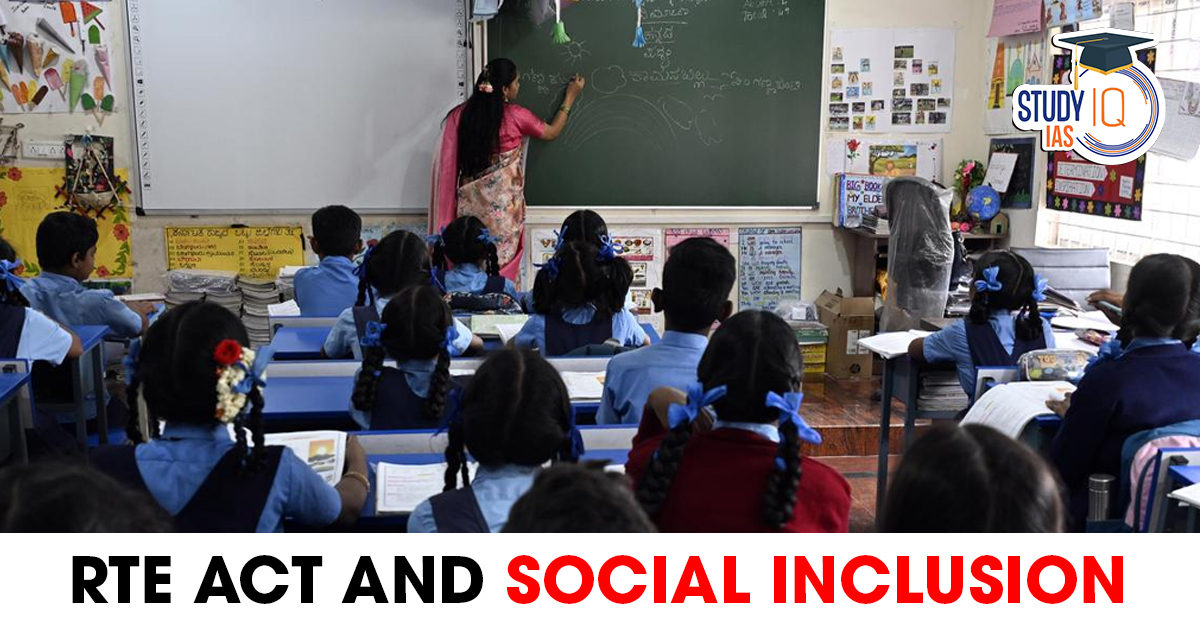
Recently, the Supreme Court of India reiterated the significance of Section 12(1)(c) of the Right to Education Act, 2009, describing it as an expression of the constitutional ideals of equality and inclusive education under Articles 14 and 21A. The Court emphasised that the provision is not merely a welfare initiative but a constitutional mechanism aimed at social integration.
About the Right to Education (RTE) Act, 2009
The Right of Children to Free and Compulsory Education Act, 2009, was enacted to implement Article 21A of the Constitution, which was introduced through the 86th Constitutional Amendment Act, 2002. It guarantees free and compulsory education to children between 6 and 14 years of age. The Act marked a transition from a charity-based approach to education towards a rights-oriented framework.
Objectives of the RTE Act
- To achieve universal elementary education
- To encourage equality and social inclusion in schooling
- To improve educational quality and learning standards
- To reduce dropout rates and educational disparities
Constitutional and Policy Significance
- Article 21A: Provides every child between 6–14 years the right to free and compulsory education.
- Directive Principles of State Policy: Articles 38, 39, and 46 direct the State to promote social justice, reduce inequalities, and protect weaker sections of society.
- Role of Section 12(1)(c): This provision translates constitutional goals into practice by promoting diversity and inclusiveness within educational institutions.
Key Features of the RTE Act
- Free and Compulsory Education: Children aged 6–14 years cannot be charged fees or denied schooling. The government is responsible for ensuring enrolment, attendance, and completion of elementary education.
- No Detention Policy: Initially, students could not be failed or expelled up to Class 8. The policy was later modified in 2019 to permit examinations in Classes 5 and 8.
- Standards for Schools: The Act lays down norms regarding:
- Pupil-teacher ratio
- Basic infrastructure such as classrooms, toilets, and drinking water
- Teacher qualifications prescribed by the National Council for Teacher Education
- Ban on Discrimination: Schools cannot conduct screening procedures for admissions or subject children to corporal punishment or mental harassment.
- School Management Committees (SMCs): Committees involving parents and local representatives oversee school functioning and development plans.
How the RTE Act Promotes Social Inclusion
- 25% Reservation in Private Schools: Under Section 12(1)(c), private unaided schools must reserve 25% of seats for children belonging to Economically Weaker Sections (EWS) and disadvantaged groups. This encourages interaction among children from diverse social backgrounds.
- Neighbourhood School Principle: The Act promotes local schooling, helping reduce segregation based on class or geography.
- Inclusive Learning Environment: Schools are prohibited from discriminating against students on social or economic grounds and must provide equal access to facilities and activities.
Impact of Social Integration under RTE
Positive Educational and Social Outcomes
- Research and implementation experiences indicate:
- Decline in prejudice and discriminatory attitudes among children
- Greater empathy and social cooperation
- Better access to peer networks and opportunities for disadvantaged students
- Increased confidence and aspirations among marginalised children
Wider Social Benefits
The policy contributes to:
- Inclusive citizenship
- Reduction in intergenerational inequality
- Strengthening of democratic and national values
Implementation Evidence
- More than five million children have reportedly benefited under the provision, with several states recording high retention rates. Cities such as Delhi and Ahmedabad have witnessed growing acceptance of integrated classrooms.
- Several states, including Rajasthan, Gujarat, and Delhi, have adopted digital admission systems and monitoring mechanisms to improve transparency and reduce administrative discretion.
Associated Challenges
- Hidden Forms of Segregation: Children from disadvantaged backgrounds may still experience stigma, labelling, or subtle exclusion within schools.
- Unequal Participation: Economic and cultural barriers such as language differences, transport expenses, and additional educational costs continue to affect participation.
- Institutional Resistance: Some private schools have shown reluctance in implementing inclusion-related provisions effectively.
Administrative Weaknesses
Key concerns include:
- Delayed reimbursements to schools
- Weak grievance redress systems
- Uneven implementation across states
Way Forward
- Strengthen public education systems alongside RTE implementation
- Ensure timely reimbursement to private schools
- Eliminate hidden educational costs for disadvantaged students
- Improve grievance redress mechanisms
- Increase awareness among the weaker sections regarding their rights
- Monitor schools to prevent discriminatory practices within classrooms

 Skyroot Vikram-1 Mission Aagaman: India'...
 Oor Pare Prehistoric Site: Location, Roc...
 Assam Election 2026: Exit Poll, Result D...












 WhatsApp





