
Table of Contents
The US-Iran Ceasefire of April 2026 marks a crucial pause in escalating tensions after weeks of intense conflict in West Asia. While the agreement has temporarily reduced direct hostilities between the United States and Iran, fresh developments, especially Israeli strikes in Lebanon, are now threatening the fragile peace process. After 40 days of US–Israeli strikes on Iran, a two-week ceasefire brokered by Pakistan was announced to pause hostilities and enable negotiations while restoring shipping through the Strait of Hormuz.
US-Iran Ceasefire 2026 Latest Update
- Israel continues heavy strikes in Lebanon, with 300+ killed and 1,100+ injured in a single day
- World Health Organization warns of hospital collapse
- Tedros Adhanom Ghebreyesus urges protection of Beirut hospitals
- Hezbollah escalates retaliation
- 50+ attacks in 24 hours
- Rockets targeting Israeli cities (Haifa, Ashdod)
- Iran delays participation in talks, citing ongoing Israeli strikes
Key Update: Ceasefire holding between US–Iran directly, but regional war intensifying
US-Iran Ceasefire Agreement 2026
The Iran–US ceasefire of 2026 represents a critical moment in global geopolitics, offering a brief window for diplomacy after weeks of conflict. While it has reduced immediate tensions, its success will depend on sustained negotiations and the resolution of deeper strategic issues.
Key Features of the Ceasefire
- A two-week temporary ceasefire was agreed between Iran and the United States.
- Announced around 7–8 April 2026
- Mediated by regional actors, notably Pakistan
- Aimed at:
- Halting active hostilities
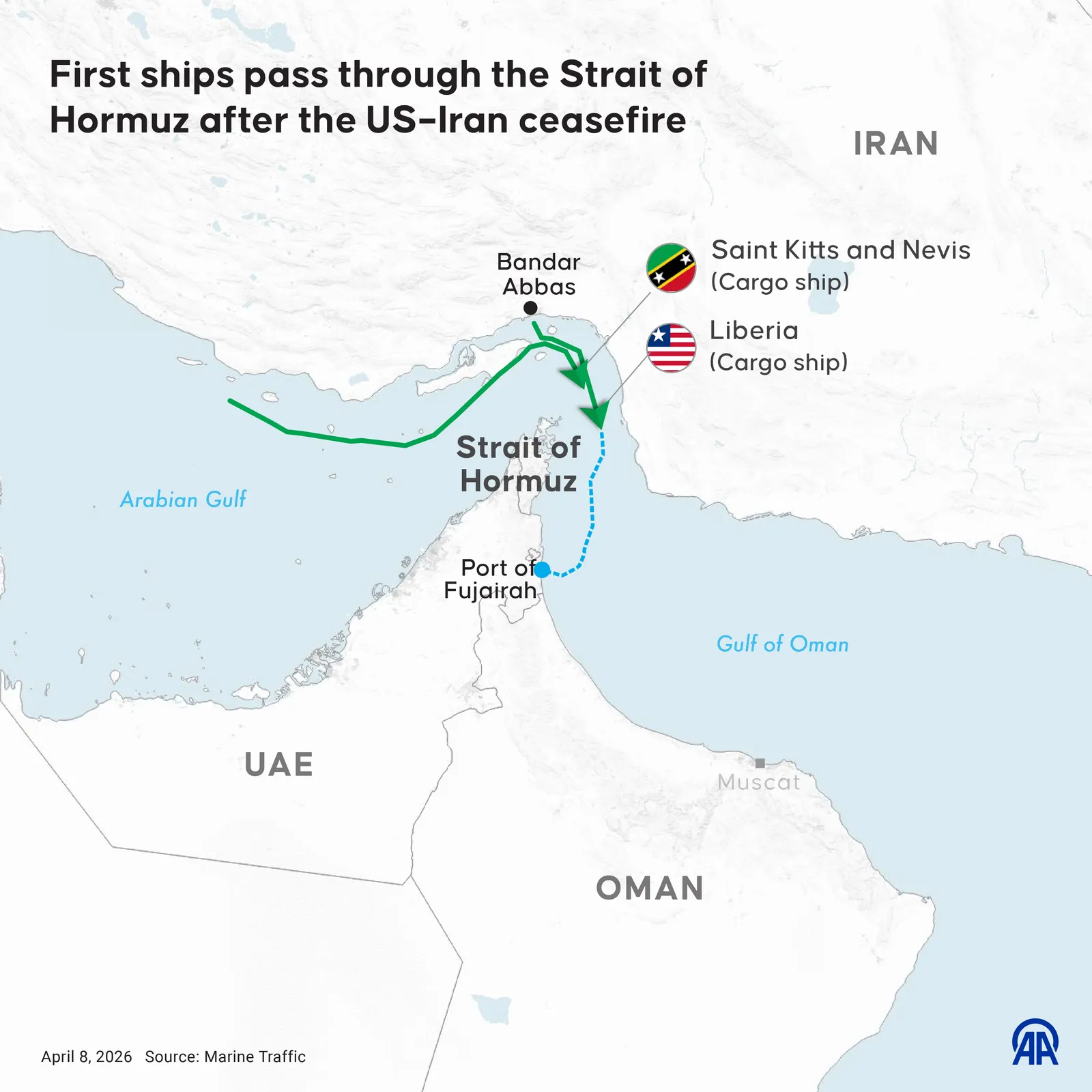
- Reopening the Strait of Hormuz (key global oil route)
- Creating space for diplomatic negotiations to achieve long-term peace
- Limited Scope: Some regions (e.g., Lebanon) may not be fully covered
The ceasefire is seen as a confidence-building measure, not a final peace agreement.
Key Terms of the US-Iran Ceasefire Deal
| Aspect | Key Terms of the Ceasefire Deal |
| Ceasefire Duration | US–Iran agree to halt military attacks for 2 weeks to create space for negotiations. |
| Strait of Hormuz | Iran agrees to reopen shipping lanes and ensure controlled passage with Iranian armed forces coordination (~20% global oil flow). |
| Non-Aggression Commitment | The proposal includes the US commitment to non-aggression toward Iran during negotiations. |
| Iran Nuclear Programme | US reportedly accepts continuation of Iran’s civilian nuclear enrichment, though future limits remain under negotiation. |
| Sanctions Relief | Iran demands the removal of primary and secondary US sanctions and the release of frozen Iranian assets abroad. |
| UN and IAEA Resolutions | The proposal calls for ending UN Security Council and IAEA resolutions targeting Iran’s nuclear programme. |
| US Military Presence | Iran seeks the withdrawal of US combat forces from regional bases in the Gulf. |
| Compensation Mechanism | The proposal includes financial compensation to Iran for war damage, partly via transit fees on ships passing through Hormuz. |
| Regional Proxy De-escalation | Iran-aligned militias in Iraq announced a temporary halt to attacks on US bases during the ceasefire period. |
| Future Negotiations | Formal talks scheduled in Islamabad to convert the temporary ceasefire into a longer political settlement. |
Background of the US-Iran Conflict
Earlier attempts at ceasefire negotiations had failed, with both sides rejecting proposals before finally agreeing to a temporary truce. The US-Iran ceasefire follows a prolonged period of conflict involving:
- The United States
- Iran
- Indirect involvement of regional actors, including Israel and Hezbollah
Key triggers
- Escalation over Iran’s nuclear program
- Attacks on military and strategic targets
- Disruptions in the Strait of Hormuz, affecting global energy supply
Check here: US-Iran Conflict in detail!
Global Reactions
- Many countries welcomed the truce and called for permanent peace talks
- Major powers emphasised regional stability and energy security
- Oil markets responded cautiously due to uncertainty around the ceasefire
US-Iran Ceasefire: Challenges and Concerns
Despite the agreement, several issues remain unresolved:
1. Fragile Nature of the Ceasefire
- Accusations of violations have already emerged
- Conflicting interpretations of terms by both sides
2. Exclusion of Proxy Conflicts
- Fighting involving regional actors like Hezbollah continues
- Some areas (e.g., Lebanon) are not fully covered under the truce
3. Core Issues Still Unresolved
- Iran’s nuclear program
- Sanctions and economic restrictions
- Regional power dynamics
Strategic Importance of US-Iran Ceasefire
The ceasefire has major global implications:
- Energy Security: Stability in oil supply routes
- Geopolitics: Balance of power in West Asia
- Diplomacy: Opportunity for long-term peace negotiations
Understanding the Conflict Architecture (NEW DIMENSION)
Direct vs Proxy Warfare
- Direct: US vs Iran
- Indirect: Iran vs Israel (via Hezbollah)
Modern conflicts are hybrid and multi-layered
Theatre-Based Conflict
- Persian Gulf (oil & naval conflict)
- Lebanon (Hezbollah vs Israel)
- Iraq & Syria (militia activity)
The ceasefire fails because it covers only one theatre
What Lies Ahead?
The next phase depends on:
- Success of diplomatic talks
- Compliance with ceasefire terms
- Willingness of both sides to compromise
Experts view the ceasefire as a temporary pause rather than a permanent solution, with the situation remaining highly volatile.
Conclusion
The US–Iran Ceasefire 2026 is not a resolution but a temporary strategic pause. While it has reduced confrontation, ongoing violence in Lebanon, unresolved nuclear issues, and global energy disruptions highlight the complex and fragile nature of modern conflicts.
In today’s multipolar and interconnected world, ceasefires without addressing proxy conflicts and structural tensions are inherently unstable.

 Oor Pare Prehistoric Site: Location, Roc...
 Assam Election 2026: Exit Poll, Result D...
 Great Indian Bustard (GIB): Features, Th...














 WhatsApp





