
Table of Contents
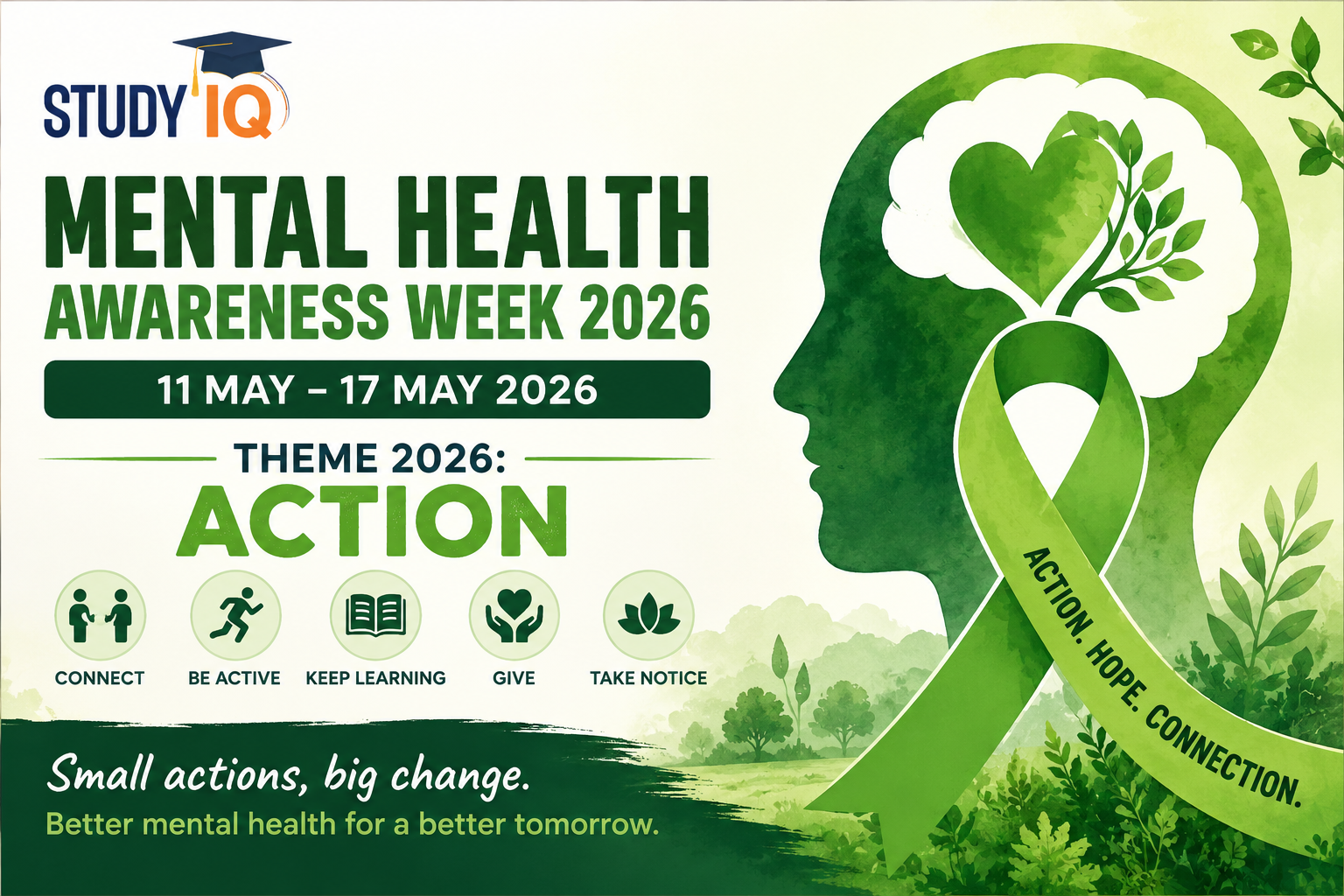
Mental Health Awareness Week 2026 is being observed from 11 May to 17 May 2026 with the theme “Action.” The campaign encourages people to move beyond discussions and take practical steps to improve mental wellbeing. Organized by the Mental Health Foundation and supported by organizations such as Mind and the National Health Service, this year’s awareness week focuses on hope, prevention, emotional resilience, and stronger human connections.
As stress, anxiety, loneliness, workplace burnout, and digital fatigue continue to rise worldwide, Mental Health Awareness Week 2026 has become more relevant than ever before.
Read Also: UPSC Daily Current Affairs 2026
What is Mental Health Awareness Week?
Mental Health Awareness Week is an annual global campaign dedicated to promoting mental wellbeing, reducing stigma around mental illness, and encouraging people to seek support when needed.
The awareness week highlights the importance of emotional health in everyday life and encourages governments, schools, workplaces, and communities to prioritize mental wellbeing alongside physical health.
Over the years, the campaign has helped millions of people openly discuss mental health challenges such as:
- Anxiety disorders
- Depression
- Stress and burnout
- Loneliness
- Workplace pressure
- Emotional trauma
- Social isolation
The campaign also aims to create a society where people feel safe discussing their emotional struggles without fear of judgment.
Mental Health Awareness Week 2026 Theme: “Action”
The official theme for Mental Health Awareness Week 2026 is “Action.”
This theme emphasizes that awareness alone is no longer enough. Mental health experts believe that practical action is now essential to improve emotional wellbeing and reduce the growing mental health crisis globally.
The campaign encourages people to take even small daily actions that can positively impact their mental health and support others emotionally.
Why the Theme “Action” Matters
In recent years, mental health challenges have increased significantly because of:
- Rising cost of living
- Financial insecurity
- Workplace stress
- Academic pressure
- Excessive social media use
- Loneliness and social isolation
- Global conflicts and uncertainty
- Digital burnout
Experts believe that taking positive actions — even small ones — can reduce helplessness, improve emotional control, and create optimism.
Objectives of Mental Health Awareness Week 2026
The main objectives of the campaign include:
1. Breaking Mental Health Stigma
Many people still hesitate to seek help because of fear, shame, or social judgment. The campaign encourages open conversations about emotional wellbeing.
2. Promoting Early Support
Mental health organizations stress the importance of identifying emotional struggles early before they become severe.
3. Encouraging Community Support
The campaign promotes emotional support through families, workplaces, schools, and local communities.
4. Promoting Preventive Mental Healthcare
Experts increasingly emphasize prevention instead of only crisis-based treatment.
5. Supporting Emotional Resilience
The campaign helps people build coping mechanisms to manage stress, anxiety, and uncertainty more effectively.
Activities Promoted During Mental Health Awareness Week 2026
The campaign encourages individuals and communities to participate in practical wellbeing activities.
Wear It Green Day
One of the most popular initiatives is Wear It Green Day, where people wear green clothing to show solidarity and support for mental health awareness.
Schools, colleges, workplaces, and communities organize events to spread awareness and encourage open conversations.
Community Participation
People are encouraged to:
- Join support groups
- Participate in local awareness campaigns
- Spend time with family and friends
- Volunteer for social causes
- Organize mental health discussions
Spending Time Outdoors
Experts recommend spending time in nature and green spaces because outdoor environments can reduce stress and improve mood.
Seeking Professional Help
The campaign strongly encourages individuals to seek mental health support early rather than waiting until problems worsen.
NHS Recommended Ways to Improve Mental Wellbeing
The National Health Service recommends five evidence-based actions that can improve mental wellbeing in daily life.
1. Connect with Other People
Healthy relationships and social support systems help reduce loneliness and improve emotional resilience.
Strong emotional connections are considered one of the biggest protective factors for mental health.
Benefits:
- Reduces stress
- Improves emotional stability
- Creates a sense of belonging
- Helps people cope with anxiety and depression
2. Be Physically Active
Regular physical activity improves both physical and mental health.
Exercise releases endorphins, often called “feel-good hormones,” which help improve mood and reduce anxiety.
Helpful activities include:
- Walking
- Cycling
- Yoga
- Running
- Stretching exercises
- Outdoor sports
Even small amounts of physical activity can positively affect emotional wellbeing.
3. Learn New Skills
Learning keeps the brain active and improves confidence and self-esteem.
Experts recommend activities such as:
- Reading books
- Cooking
- Music
- Painting
- Gardening
- Language learning
Continuous learning also helps reduce stress and increases focus.
4. Give to Others
Acts of kindness and volunteering improve emotional wellbeing and strengthen community relationships.
Helping others creates emotional satisfaction and purpose in life.
Examples include:
- Supporting a friend emotionally
- Volunteering locally
- Donating to charities
- Helping elderly people
- Participating in community work
5. Practice Mindfulness
Mindfulness helps individuals focus on the present moment rather than worrying excessively about the future.
It improves emotional regulation and reduces stress levels.
Common mindfulness practices:
- Meditation
- Deep breathing exercises
- Journaling
- Gratitude practices
- Digital detox routines
Mental Health Foundation’s Key Recommendations
The Mental Health Foundation believes long-term societal reforms are necessary to improve mental health outcomes globally.
Supporting Children Early
Helping children develop emotional security at a young age can reduce future mental health issues.
Protecting Children from Trauma
Safe childhood environments are strongly linked to healthier emotional development.
Emotional Education in Schools
Teaching emotional intelligence in schools can improve resilience and reduce anxiety among students.
Reducing Workplace Stress
Workplace burnout has become a major issue globally.
Organizations are encouraged to:
- Provide mental health support
- Encourage work-life balance
- Reduce excessive workloads
- Promote healthy workplace culture
Fighting Loneliness Among Older Adults
Social isolation among elderly populations significantly affects emotional wellbeing.
Building stronger social support systems for older adults remains essential.
Mental Health Challenges in 2026
Mental health experts warn that emotional wellbeing challenges are increasing globally.
Major Causes Include:
| Challenge | Impact |
|---|---|
| Workplace burnout | Stress and anxiety |
| Social isolation | Depression and loneliness |
| Financial pressure | Emotional insecurity |
| Excessive screen time | Mental fatigue |
| Academic competition | Anxiety among students |
| Global uncertainty | Emotional distress |
Young people and working professionals are among the most affected groups.
Importance of Mental Health Awareness Week in Schools and Workplaces
In Schools
Mental health awareness programs help students:
- Understand emotions better
- Reduce exam stress
- Build emotional resilience
- Improve communication skills
In Workplaces
Mental health initiatives improve:
- Employee wellbeing
- Productivity
- Workplace morale
- Stress management
- Team communication
Experts increasingly believe that mental wellbeing should be treated as seriously as physical health.
How Social Media Affects Mental Health
Social media has both positive and negative effects on emotional wellbeing.
Positive Effects
- Emotional support communities
- Access to mental health resources
- Awareness campaigns
Negative Effects
- Comparison and insecurity
- Online harassment
- Digital addiction
- Sleep disruption
- Anxiety and stress
Experts recommend maintaining a healthy balance between online and offline life.
Simple Daily Habits for Better Mental Health
Small daily routines can significantly improve emotional wellbeing.
Helpful habits include:
- Sleeping properly
- Eating healthy food
- Exercising regularly
- Limiting screen time
- Talking openly about emotions
- Practicing gratitude
- Spending time in nature
- Taking regular breaks from work
Consistency matters more than perfection.
Why Mental Health Matters More Than Ever
Mental health directly affects:
- Physical health
- Relationships
- Productivity
- Academic performance
- Decision-making
- Quality of life
Ignoring emotional wellbeing can lead to long-term mental and physical health complications.
Experts believe that creating emotionally supportive communities is essential for a healthier society.
Conclusion
Mental Health Awareness Week 2026 highlights a powerful message — awareness alone is not enough; meaningful action is necessary.
Whether it is supporting loved ones, seeking professional help, spending time outdoors, practicing mindfulness, or simply checking on a friend, small actions can create lasting positive change.
As mental health challenges continue to grow worldwide, this year’s theme “Action” reminds everyone that emotional wellbeing deserves daily attention, care, and support.
FAQs on Mental Health Awareness Week 2026
When is Mental Health Awareness Week 2026 observed?
Mental Health Awareness Week 2026 is being observed from 11 May to 17 May 2026.
What is the theme of Mental Health Awareness Week 2026?
The official theme for 2026 is “Action.”
Who organizes Mental Health Awareness Week?
The campaign is organized by the Mental Health Foundation and supported by organizations like Mind and the NHS.
What is Wear It Green Day?
Wear It Green Day is an initiative where people wear green clothing to support mental health awareness.
How can people improve mental wellbeing?
Experts recommend physical activity, social connection, mindfulness, learning new skills, helping others, and seeking support early when needed.
 UAPA Act 1967: Key Provisions, Supreme C...
 Sarus Crane: Habitat, Features, Conserva...














 WhatsApp





