Table of Contents
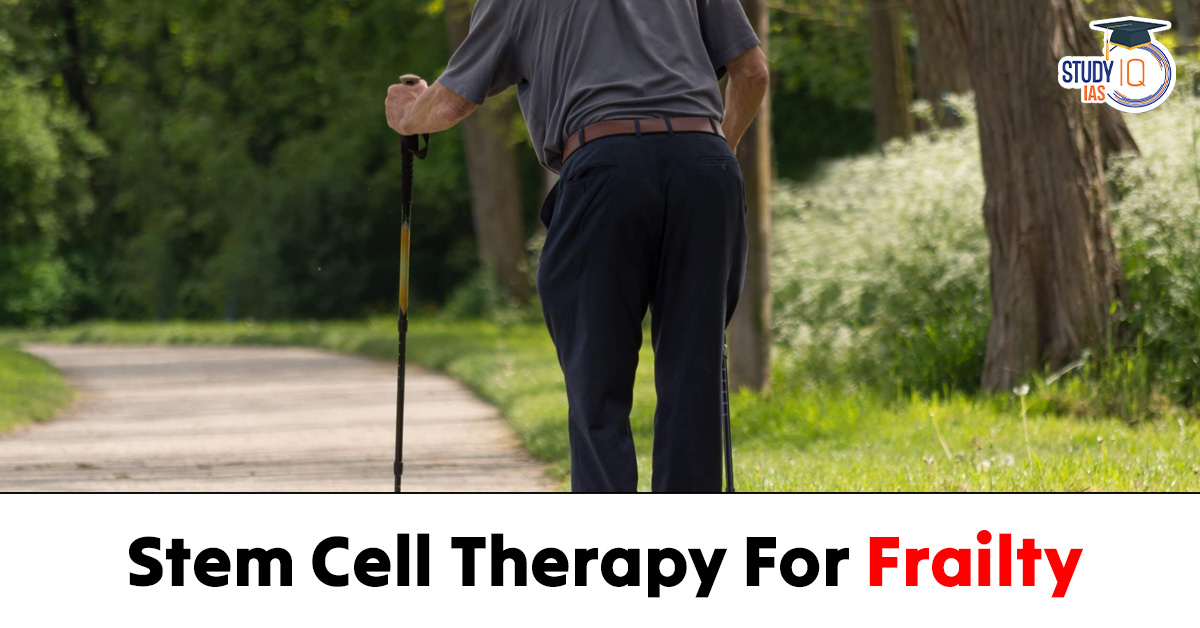
Context: A recent clinical study showed that mesenchymal stem cell therapy can improve physical function in elderly people with frailty, suggesting that frailty (earlier seen as normal ageing) may be biologically treatable.
| About Frailty |
|
Also Read: Stem Cell Therapy for Autism
About Mesenchymal Stem Cells (MSCs)
- Mesenchymal stem cells are multipotent stem cells found in bone marrow and adipose tissue, capable of differentiating into bone, cartilage and muscle cells.
- Biological Properties:
- Regenerative ability: Repair damaged tissues
- Immunomodulation: Reduce inflammation
- Paracrine signalling: Release bioactive molecules promoting healing
- Immune Advantage: Do not strongly trigger immune response (low rejection risk; minimal need for immunosuppressive drugs).
- Clinical Use: Used experimentally in regenerative medicine, orthopaedics, cardiovascular repair, and ageing-related conditions.
Also Read: Zimislecel-Stem Cell Therapy for Type 1 Diabetes
How It Tackles Frailty
- Reduces Inflammation: MSCs release molecules that lower chronic inflammation (a key driver of ageing-related decline).
- Promotes Tissue Repair: Helps regenerate muscle and vascular tissues, improving strength and resilience.
- Improves Physical Performance: Patients showed improved walking capacity (e.g., ~60 metres more in a 6-minute walk test) → meaning they could walk longer distances without fatigue, indicating better endurance and functional ability.
- Enhances Recovery: Improves the body’s ability to recover from stress, illness or injury.
- Improves Vascular Function: Acts on small blood vessels, improving blood flow and reducing ageing-related damage.

 QDENGA Dengue Vaccine: India’s First A...
 Skyroot Vikram-1 Mission Aagaman: India'...
 Oor Pare Prehistoric Site: Location, Roc...














 WhatsApp