Table of Contents
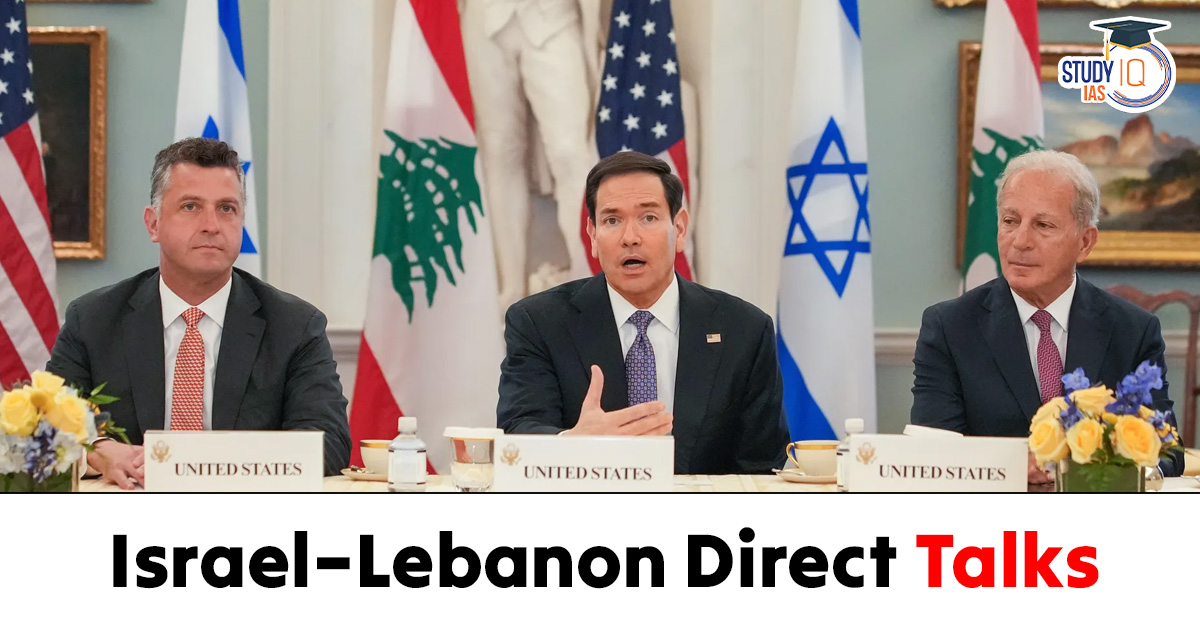
Context: Israel and Lebanon held their first direct diplomatic talks in decades, mediated by the United States, amid escalating conflict involving Hezbollah and the broader Iran–Israel confrontation.
Israel–Lebanon Direct Talks: Participants
- United States (Mediator): Led by Marco Rubio, facilitating dialogue and pushing for the reduction of Hezbollah influence and regional stabilisation.
- Israel: Represented by diplomatic officials (e.g., Ambassador Yechiel Leiter), focusing on security concerns and disarmament of non-state actors.
- Lebanon: Represented by government officials (e.g., Ambassador Nada Hamadeh Moawad), emphasising ceasefire, humanitarian relief, and sovereignty of Lebanese armed forces.
- Notably Excluded: Hezbollah was not part of the talks, though it remains a key actor influencing ground realities (continued attacks during negotiations).
| Historical Issues Between Israel and Lebanon |
|
Key Demands of Israel and Lebanon
| Issue | Israel’s Demand | Lebanon’s Demand |
| Hezbollah Disarmament | Complete disarmament and removal of Hezbollah and other non-state armed groups | Gradual reduction of Hezbollah’s military role and integration under Lebanese state authority (armed forces to be the sole security provider in south Lebanon) |
| Ceasefire | No immediate ceasefire; linked to security guarantees and Hezbollah disarmament | Demand an immediate ceasefire to stop casualties, enable humanitarian relief and civilian return |
| Security Zone | Establish a buffer zone up to the Litani River (~30 km) | Oppose buffer; demand complete Israeli withdrawal and restoration of territorial sovereignty |
| Military Operations | Maintain freedom to conduct strikes and surveillance against threats | End Israeli airstrikes, incursions and violations of airspace/territory |
| Border & International Mechanism | Strengthen monitoring along the Blue Line with international oversight to ensure demilitarisation | Expand UNIFIL (United Nations Interim Force in Lebanon) role and deploy the Lebanese Army in southern Lebanon (to replace non-state actors and ensure long-term border stability) |

 Skyroot Vikram-1 Mission Aagaman: India'...
 Oor Pare Prehistoric Site: Location, Roc...
 Assam Election 2026: Exit Poll, Result D...














 WhatsApp