
Table of Contents
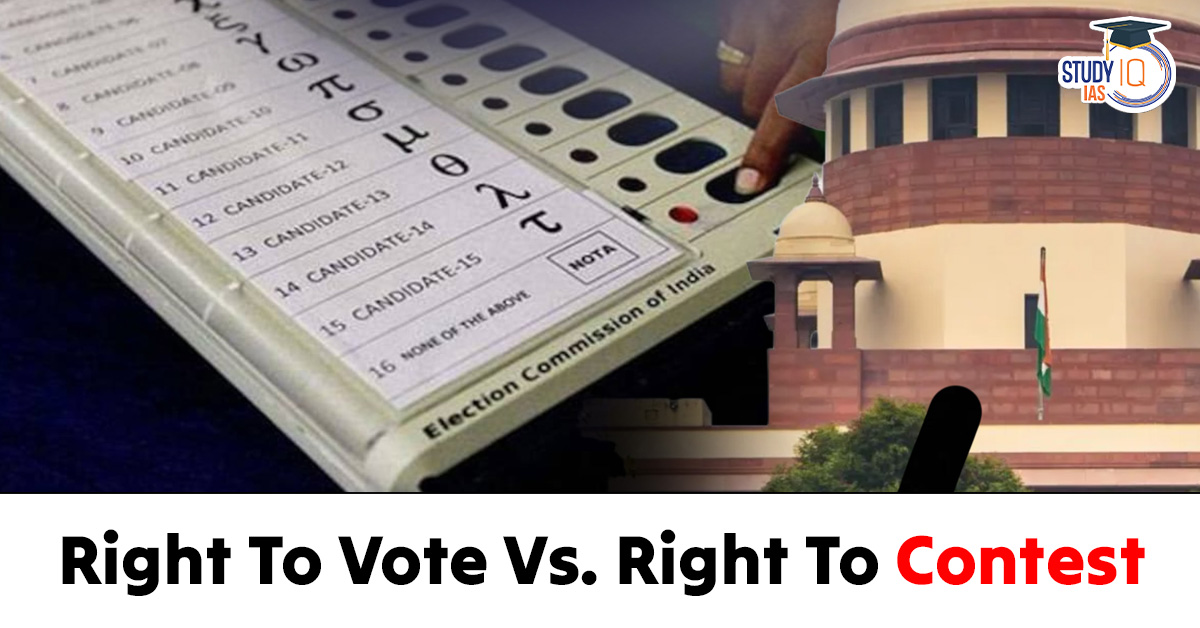
Context: The ongoing controversy over the Special Intensive Revision (SIR) of electoral rolls by the EC has sparked a nationwide debate. The issue has brought attention to the distinction between the right to vote and the right to contest elections, along with concerns about electoral fairness.
Right to Vote vs. Right to Contest: Reasons for Controversy
- Allegations of large-scale deletion of voter names, including eligible voters.
- Concerns regarding disenfranchisement, especially among marginalised groups lacking documentation.
- Judicial interventions, with petitions questioning transparency, fairness, and procedural safeguards.
Right to Vote vs Right to Contest
| RIGHTS | RIGHT TO VOTE | RIGHT TO CONTEST ELECTIONS |
| About | ● A statutory right under the Representation of the People Act.
● Available to all citizens above 18 years, subject to eligibility. ● Forms the foundation of democratic participation. ● Any disruption directly affects democratic legitimacy. ● Article 326: Establishes universal adult suffrage. |
● A statutory right, but with stricter conditions.
● Requires: ○ Fulfilment of eligibility criteria ○ Compliance with nomination procedures ○ Absence of disqualifications ● More regulated and restrictive than voting. |
| Similarities |
|
|
| Impact of SIR | ● Disenfranchisement: Exclusion from rolls directly denies citizens their voting right.
● Unequal Impact: Vulnerable groups are disproportionately affected: ○ Migrants ○ Rural poor ○ Elderly ● Declining Trust: Repeated controversies may reduce confidence in the electoral system. |
● Changing Electoral Dynamics: Altered voter lists can influence electoral outcomes.
● Reduced Representativeness: Exclusion of groups may distort the true will of the people. ● Political Tensions: Can lead to allegations of bias and increased polarisation. |

 Chief Election Commissioner Removal 2026...
 Fundamental Duties of Indian Constitutio...
 Skyroot Vikram-1 Mission Aagaman: India'...














 WhatsApp





