
Table of Contents
Context
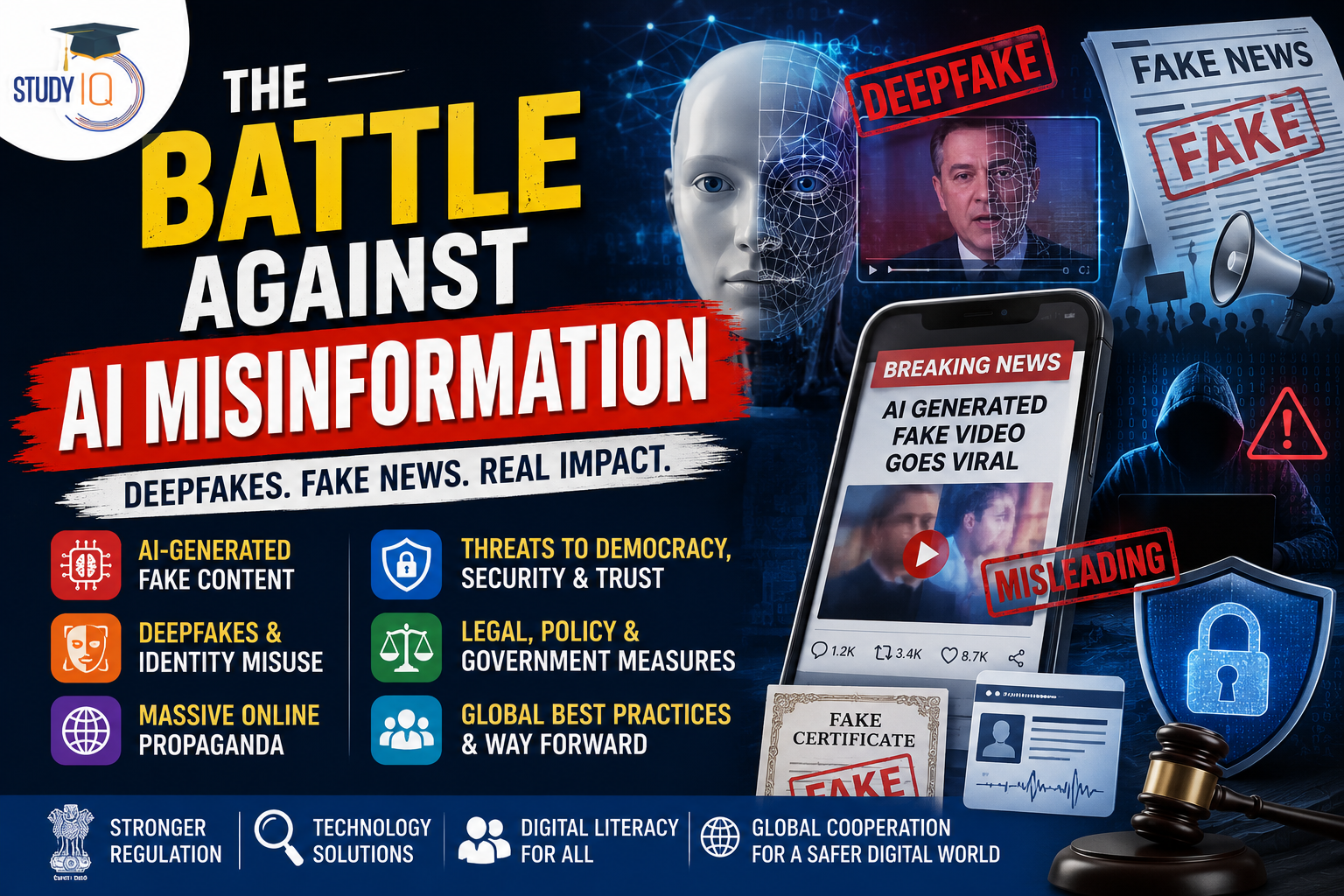
Rapid advances in generative AI tools intensified concerns regarding deepfakes, synthetic propaganda, identity misuse and large-scale digital misinformation globally and in India.
Read Also: UPSC Daily Current Affairs 2026
How AI is Spreading Misinformation
- Mass Production of False Content: Generative AI drastically reduced the cost and effort required to create fake narratives at scale. (g. AI-generated news websites increased from ~600 in 2024 to over 2,089 in 2025 across 16 languages)
- Hyper-Realistic Deepfakes: AI can generate realistic images, videos and audio nearly indistinguishable from authentic content. (g. Deepfake attacks reportedly occurred every five minutes in 2024)
- AI-Powered Propaganda Systems: AI personas can mimic real users and manipulate public opinion through psychological targeting. (g. China-linked “GoLaxy” system allegedly used AI personas and “LLM grooming” to influence narratives)
- Rapid Social Media Amplification: Platforms prioritise engagement over authenticity, enabling misinformation to spread quickly. (g. AI-generated posts flooding Facebook, Instagram, LinkedIn and X)
- Manipulation During Crises: AI-generated fake visuals and videos increasingly used during conflicts and terror incidents. (g. After the 2025 Pahalgam terror attack, deepfake military videos and fake advisories circulated online)
- Erosion of Trust (“Liar’s Dividend”): Rise of deepfakes allows even genuine evidence to be dismissed as fake. (Politicians or accused persons can deny authentic videos as AI-generated)
- Identity Theft & Gendered Harms: AI tools facilitate impersonation, voice cloning and non-consensual explicit content. (AI-generated fake sexualised images created using women’s profile photos)
- Academic & Institutional Manipulation: AI can fabricate certificates, research papers and legal documents. (Fake mark sheets, journals and AI-generated legal citations)
- Rising AI Error & Hallucination Rates: AI systems themselves increasingly generate false information. (Chatbot falsehood rate reportedly rose from 18% in 2024 to 35% in 2025)
Implications
- Threat to Democracy & Elections: AI misinformation can distort electoral discourse and influence voter behaviour.
- National Security Risks: Synthetic propaganda can inflame communal tensions and manipulate conflict narratives. (Pahalgam attack misinformation campaign)
- Damage to Institutional Credibility: Public trust in journalism, academics, courts and governance may weaken.
- Rise in Cybercrime & Fraud: AI-driven phishing, impersonation and document forgery becoming more sophisticated. (Digital document forgery rose by 244% in one year)
- Violation of Privacy & Personality Rights: Unauthorised use of voice, likeness and personal data threatens dignity and privacy.
- Psychological & Social Polarisation: AI-driven content can deepen fear, outrage and communal divisions.
Government Measures
- IT Rules, 2026: Mandate disclosure labels for AI-generated or altered content to improve transparency and reduce deception.
- introduced metadata tracing requirements for AI-generated content. (Aims to identify origin and modification history of synthetic media)
- Rapid Takedown Mechanism: Platforms must remove synthetic or manipulated content within three hours upon government or court orders. (Introduced after concerns over rapid spread of deepfakes during crises and elections)
- User Grievance Redressal: Social-media intermediaries required to resolve complaints related to harmful AI-generated content within 36 hours.
- DPDP Act, 2023: Strengthens accountability for misuse of personal data, voice and likeness by AI systems. (Important in cases involving AI-generated fake celebrity or individual images)
- AI Governance Guidelines (2025): MeitY proposed a risk-based AI governance framework for regulating high-risk AI applications.
- MeitY Action Against Platforms: Government increasingly seeking transparency from AI platforms regarding moderation and filtering systems. (MeitY issued notices to X after Grok-generated explicit deepfake images targeted an Indian user)
- Safe Harbour Accountability Debate: Government examining limits of intermediary immunity under Section 79 of IT Act for platforms embedding AI tools directly.
- PIB Fact-Check & Crisis Monitoring: PIB actively counters viral misinformation during sensitive events. (PIB identified multiple fake AI-generated narratives after the 2025 Pahalgam terror attack)
Way Forward
- Build a Tiered Risk Classification Framework: High-risk AI systems should face stricter regulation before deployment. (AI-generated content during communal tensions, elections or national-security crises should require mandatory compliance under MeitY’s 2025 AI Governance Guidelines)
- Reimagine Platform Liability: Platforms embedding generative AI tools should face greater accountability instead of claiming intermediary immunity.
- Crisis Disinformation Protocol: During emergencies or communal crises, social-media platforms should rapidly detect and suppress verified synthetic misinformation. (Delayed response during the 2025 Pahalgam attack allowed fake military videos and advisories to spread widely)
- Independent AI Safety Oversight: AI Safety Institute proposed under India’s AI Governance Guidelines can independently verify synthetic content instead of leaving decisions solely to governments or platforms.
- Strengthen Digital & AI Literacy: Citizens should be trained to critically verify online information before sharing. (Necessary to counter deepfakes, AI scams and manipulated narratives)
- Global Cooperation on AI Governance: Countries should develop common standards for deepfake regulation, AI transparency and platform accountability.
| Global Best Practices to Tackle AI-Driven Misinformation |
| ● EU Digital Services Act (DSA): Imposes strict accountability on large digital platforms for removing harmful and misleading AI-generated content.
● U.K. AI Safety Institute: Conducts independent testing and risk assessment of advanced AI systems and deepfake technologies. ● Mandatory AI Labelling (Meta, YouTube, TikTok): Platforms label AI-generated or altered images/videos to improve transparency. ● Finland’s Media Literacy Model: Integrates misinformation detection and digital literacy into school education and public campaigns. ● Election AI Disclosure Rules (U.S. & EU): Require disclosure of AI-generated political advertisements and campaign material. ● UNESCO & OECD AI Ethics Frameworks: Promote global principles for trustworthy, transparent and human-centric AI governance. |
|
Read More Notes |
|
| Environment Notes | Art and Culture Notes |
| Science and Tech | History Notes |
| Geography Notes | Indian Polity Notes |
| General Knowledge | International Relation |
|
Explore StudyIQ Courses |
|
 Alpine Musk Deer: Habitat, Distribution,...
 International Day of Rural Women 2026: D...
 Short-Lived Climate Pollutants (SLCPs): ...














 WhatsApp





