Table of Contents
Context
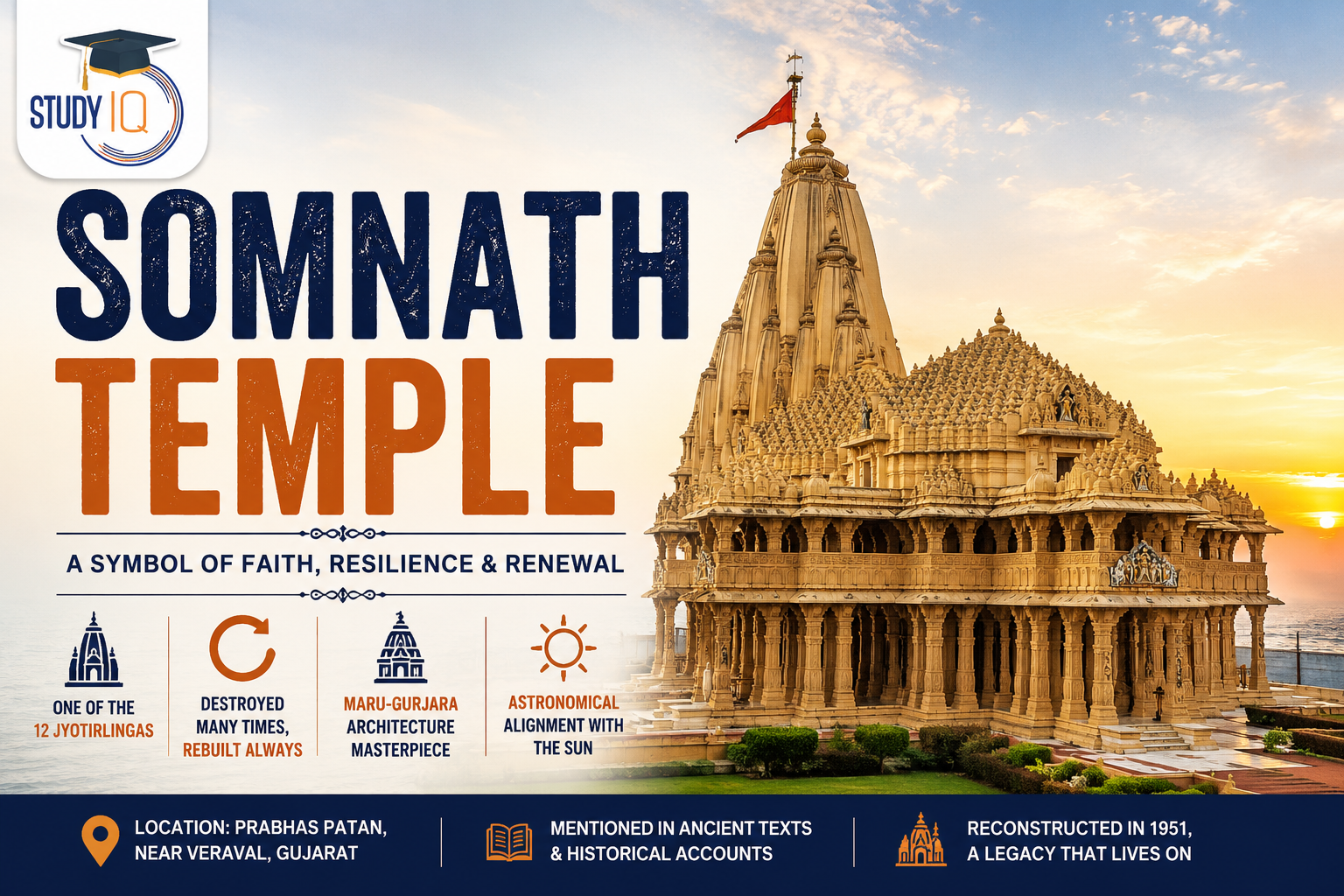
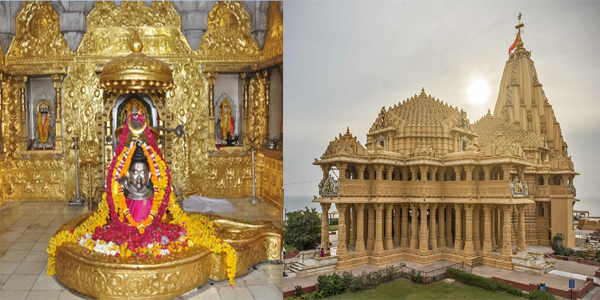
2026 marks 75 years of reconstruction (1951), highlighting Somnath’s continuity from destruction to renewal.
Read Also: UPSC Daily Current Affairs 2026
About Somnath Temple
- Location: At Prabhas Patan near Veraval in Gujarat on Arabian Sea coast at Triveni Sangam (Kapila, Hiran, Sarasvati rivers)
- Historical References: Mentioned in ancient texts and accounts Kalidasa (Raghuvamsa, 5th century), Al-Biruni (11th century) and Amir Khusrau (Delhi Sultanate period)
- Attacks & Destruction: Destroyed multiple times including: 1026 (by Mahmud of Ghazni)during the reign of Bhima I , 14th century(by Delhi Sultanate invasions and 1706 (Under Aurangzeb)
- Reconstruction History
- 18th century: Rebuilt by Ahilyabai Holkar (ensured continuity of worship)
- Post-independence: Sardar Vallabhbhai Patel initiated reconstruction in 1947 and was inaugurated in 1951 by Dr. Rajendra Prasad.
- Architecture: Built in Maru-Gurjara (Solanki/Chalukyan) style with Kailash Mahameru Prasad layout comprising:
- Garbhagriha (sanctum)
- Sabhamandap (assembly hall)
- Nrityamandap (dance hall)
- About Maru-Gurjara Architecture
- Origin: Flourished under Solanki rulers in Gujarat and Rajasthan, combining Māru (Mewar), Māha Gurjara and Saurashtra styles.
- Structural Layout: Features garbhagriha connected to mandapa internally and externally
- Key Features:
- Plain Exterior Walls: Limited carvings (focus on structure)
- Jharokha: Projecting stone balcony (ventilation and aesthetics).
- Chhatri: Dome-shaped pavilion (memorial or decorative element).
- Jaali: Perforated stone screens (light and ventilation control).Courtyard-based planning (micro-climate regulation).
- Water Architecture
- Surya Kund: Step tank with small shrines (unique feature)
- Baoli: Stepwell (water access)
- Johad: Rainwater harvesting (groundwater recharge)
- Astronomical Feature: East-facing temples aligned for sunlight entry into sanctum during equinox (astronomical precision).
|
Read More Notes |
|
| Environment Notes | Art and Culture Notes |
| Science and Tech | History Notes |
| Geography Notes | Indian Polity Notes |
| General Knowledge | International Relation |
|
Explore StudyIQ Courses |
|
 Nobel Prize in Chemistry 2026: Kagan and...
 India Demonstrates First Free-Space Quan...
 India–EFTA Trade and Economic Partners...





 WhatsApp