
Table of Contents
Context: Recently, Common Cause (NGO), in collaboration with the Lokniti Programme of the Centre for the Study of Developing Societies (CSDS), released a comprehensive report on police torture and (un)accountability.
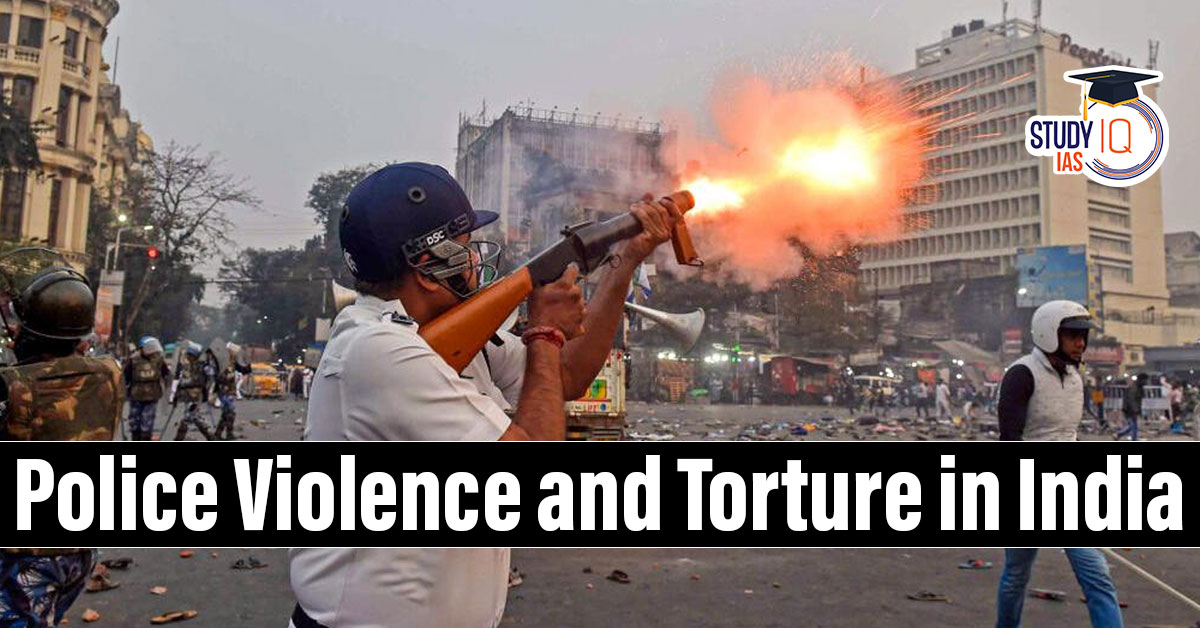
What are the Nature of Police Violence and Torture in India?
- Widespread Acceptance of Tough Methods: 55% of police personnel believe it is important to use “tough methods” to instil fear.
- 30% justify third-degree methods for serious crimes; 9% even for petty offences.
- Justification of Extra-Legal Actions: 22% prefer killing dangerous criminals over legal trial.
- One in four justify mob violence in sexual harassment and child-lifting cases.
- Disproportionate Targeting of Marginalised Groups: Victims largely include Adivasis, Dalits, Muslims, illiterate individuals, and slum dwellers.
- Lack of Legal Oversight & Accountability: Procedures of arrest are often not followed; in some states, only 41% report “always” the following procedure.
- Near-zero convictions for custodial deaths between 2018–22 despite multiple reported cases.
| 🕊️ UN Definition of Torture (as per the United Nations Convention Against Torture, 1984 — Article 1) |
|
Underlying Causes and Contributing Factors
- Colonial Legacy of Policing: Continued use of colonial-era mindset of control, coercion, and fear.
- Lack of Accountability Mechanisms: No effective punishment or deterrent for custodial torture or deaths.
- Discrepancies in data and lack of transparency (e.g., different agencies reporting different custodial death figures).
- Political & Institutional Pressure: Pressure from politicians and senior officers to deliver “quick results” leads to shortcuts and coercion.
- Inadequate Training: Lack of training in human rights and modern interrogation techniques.
- Passive Role of Judiciary and Medical Examination: Magistrates often act as “silent spectators,” not questioning or documenting custodial abuse.
- MLE is usually conducted by non-specialist doctors like eye specialists, anesthesiologists, or general physicians, which undermines the integrity of the findings.
|
Fact |
|
- Public Support for Quick Justice: Public disillusionment with the slow judicial process leads to societal tolerance of police excesses.
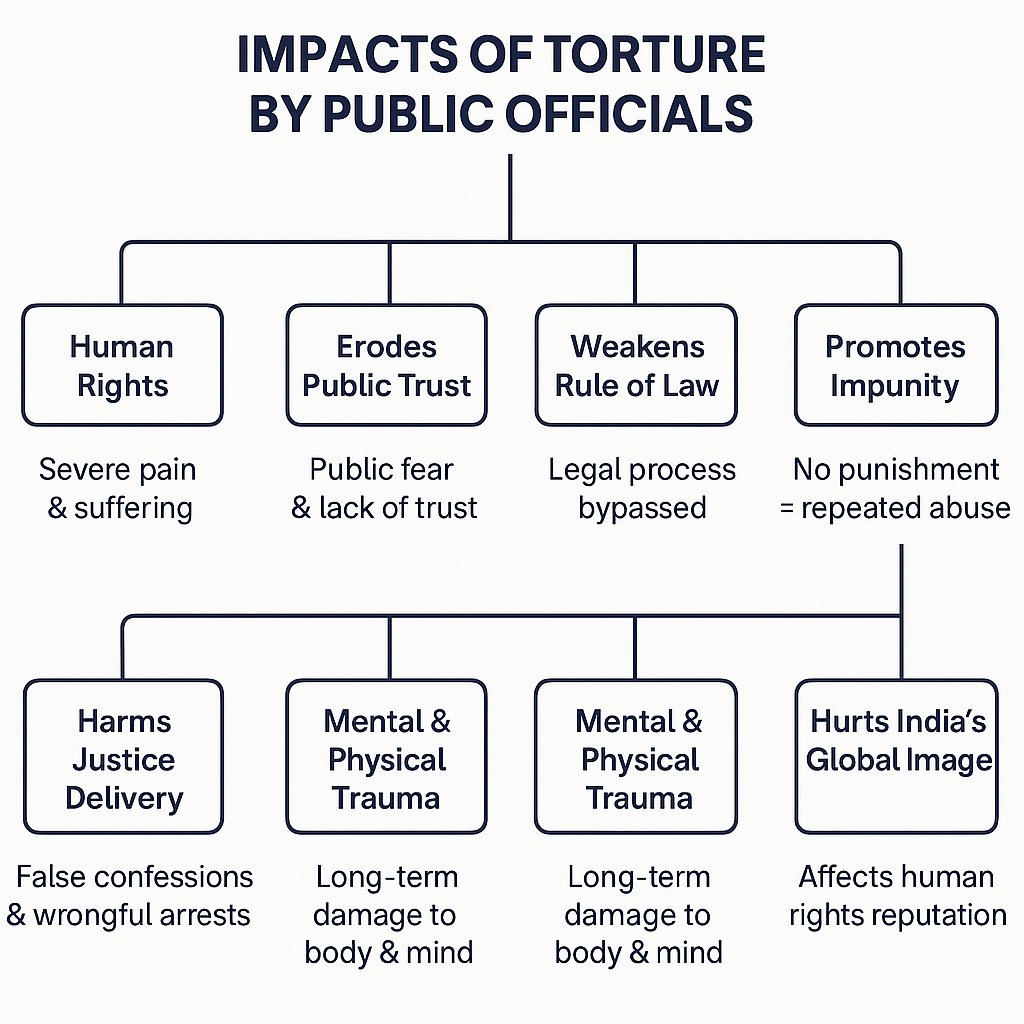
- No Standalone Law Against Torture: India has not ratified the UN Convention Against Torture.
- The absence of a specific anti-torture law enables continued impunity.
Way Forward
- Legal and Policy Reforms: India must ratify the Convention and enact specific anti-torture legislation to criminalize custodial violence as a distinct offence.
- Amend Laws and Guidelines: Update the Police Act, 1861, and enforce Supreme Court directives like those in the K. Basu case to ensure transparency in arrests, detentions, and interrogations.
- Accountability Mechanisms: Establish independent oversight bodies to investigate allegations of police abuse and ensure prosecution of guilty officers.
- Training and Capacity Building Human Rights Training: Incorporate human rights laws into police training curricula to sensitize officers about the illegality and immorality of torture.
- Modernized Policing Techniques: Equip police with tools for non-violent interrogation methods, forensic science, and technology-driven crime investigation.
- Depoliticization of Police: Implement measures like empowering State Security Commissions to reduce political interference in policing.
- Workload Reduction: Address manpower shortages and improve working conditions to reduce the stress that often leads to violent behaviour.
- Community Policing Grassroots Engagement: Adopt community policing models that bridge trust gaps between police and citizens.
- Initiatives like Kerala’s Janamaithri Suraksha Project can be scaled nationwide.
- CCTV Surveillance in Police Stations: Install night-vision cameras as mandated by the NHRC to monitor custodial practices and deter torture.
- Victim Protection Laws: Enact robust victim and witness protection legislation to encourage reporting of torture cases without fear of retaliation.
- Cultural Change Shift Police Culture: Address the moral justification many officers hold regarding torture through systemic changes in institutional values and community engagement.

 Right to Education (RTE) Act 2009 and So...
 Women’s Representation on Corporate Bo...
 Why Women’s Reservation Alone Is Not E...













 WhatsApp





