Table of Contents
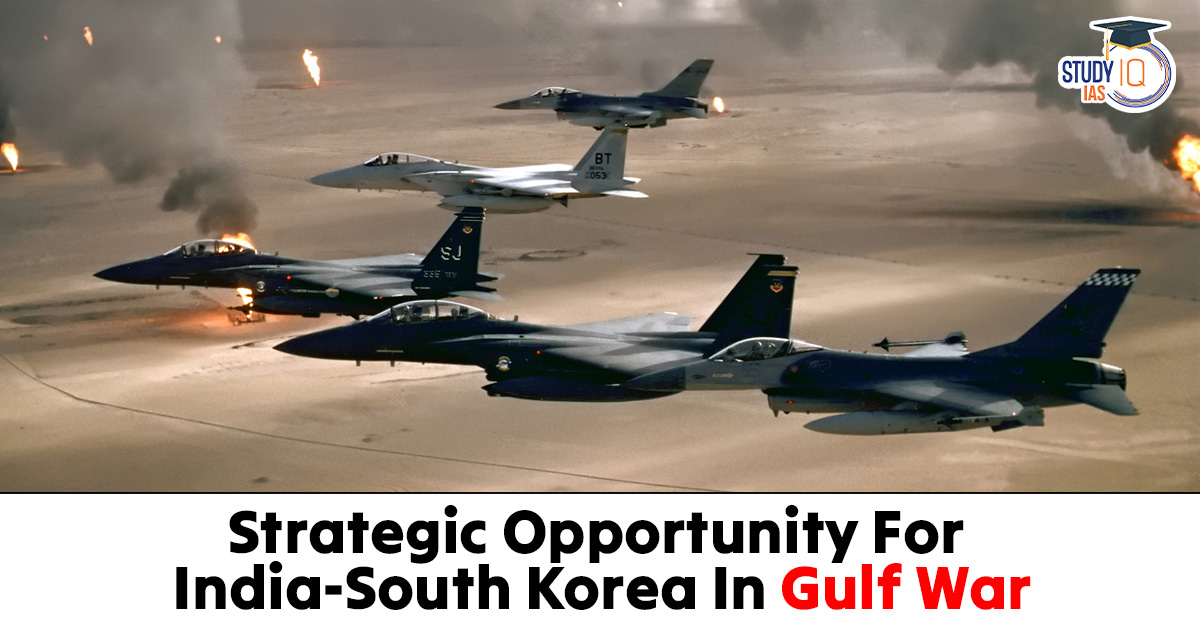
Context: The ongoing Gulf conflict has exposed Asia’s deep dependence on Gulf energy and maritime routes, highlighting structural vulnerabilities but also opening strategic cooperation opportunities for countries like India and South Korea.
Vulnerability of Asia to the Gulf War
- High Energy Dependence: Asia imports ~70% of its crude oil from the Gulf (China, India, Japan, and South Korea heavily reliant), making it highly exposed to supply disruptions.
- Critical Maritime Chokepoint: The Strait of Hormuz (≈20% of global oil trade) is vital; any disruption directly threatens Asian economies.
- Limited Diversification: Unlike the U.S. (energy producer) and Europe (diversified sources), Asia remains structurally dependent on West Asia.
- Economic Vulnerability: Industrial economies (Japan, South Korea, China, India) rely on stable energy flows for manufacturing and growth, making them sensitive to price shocks.
- Dependence on External Security Provider: Asian countries rely on the US. naval presence to secure sea lanes, creating strategic vulnerability amid changing U.S. commitments.
- Threat to Freedom of Navigation: Iran’s attempts to control transit in Hormuz challenge UNCLOS norms, directly affecting Asian trade interests.
How Gulf War Presents Opportunities for India and South Korea
- Strategic Convergence: Shared concerns on energy security and maritime security create scope for a deeper India–South Korea strategic partnership.
- Maritime Security Cooperation: Potential for joint naval coordination, information sharing, logistics agreements and sea lane protection.
- Reducing Overdependence on U.S.: Encourages Asian-led security frameworks, reducing reliance on U.S. naval dominance.
- Defence Industrial Collaboration: South Korea’s expertise (shipbuilding, naval platforms) can support India’s naval modernisation and fleet expansion.
- Energy and Infrastructure Cooperation: Participation in Gulf infrastructure projects (pipelines, ports, logistics corridors) to bypass chokepoints like Hormuz.
- Nuclear Energy Collaboration: South Korea’s advanced nuclear technology (SMRs) can support India’s clean energy transition.
- Geoeconomic Opportunity: Joint engagement in West Asian economic transformation projects, reducing long-term vulnerability to disruptions.

 Skyroot Vikram-1 Mission Aagaman: India'...
 Oor Pare Prehistoric Site: Location, Roc...
 Assam Election 2026: Exit Poll, Result D...













 WhatsApp