Table of Contents
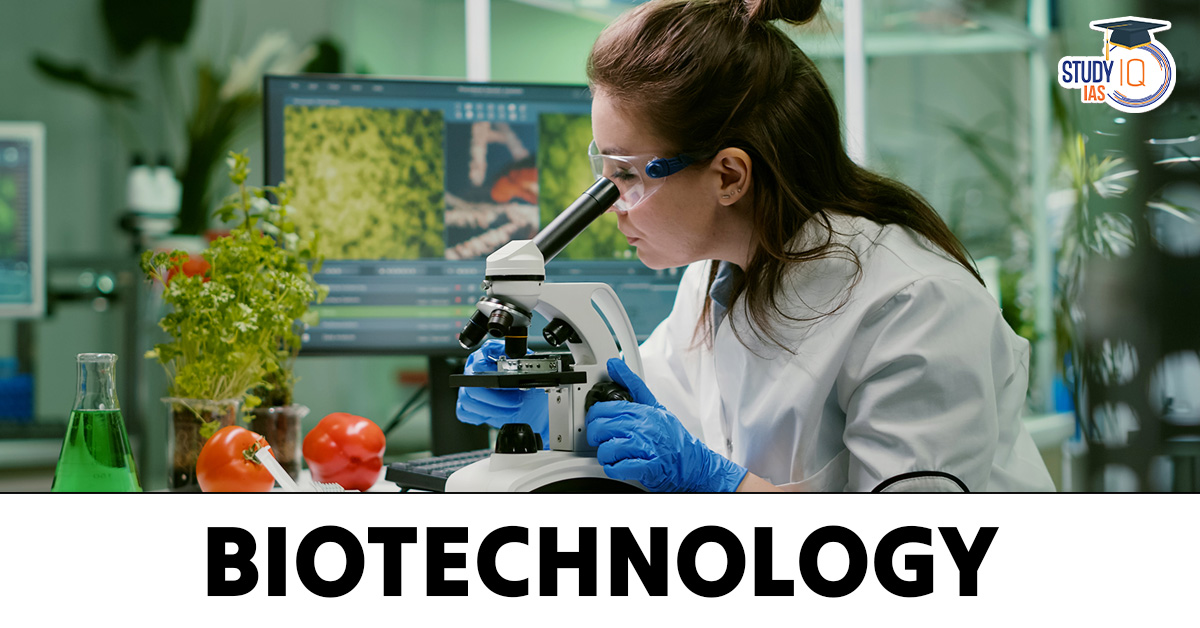
Context: Biotechnology is rapidly transforming sectors like healthcare, agriculture and industry, yet societies show uneven acceptance—embracing gene therapy while resisting GM crops
Potential of Biotechnology
- Healthcare Revolution: Enables treatment of genetic and chronic diseases through gene therapy, CAR-T cell therapy and biologics, improving survival. (e.g. sickle-cell disease, cancer immunotherapy).
- Pharmaceutical Innovation: Production of drugs like insulin, vaccines and monoclonal antibodies using recombinant DNA technology ensures cost-effective healthcare solutions.
- Agriculture & Food Security: GM crops provide pest resistance, higher yield and climate resilience, helping tackle hunger and climate stress (e.g. Bt cotton, drought-resistant crops).
- Industrial Biotechnology: Synthetic biology enables the production of biofuels, chemicals and enzymes, reducing dependence on fossil fuels and supporting the green economy.
- Environmental Applications: Use of microbes for bioremediation, waste management and carbon capture, addressing pollution and sustainability challenges.
- Emerging Areas: Advanced tools like CRISPR gene editing, synthetic biology and bio-manufacturing are expanding possibilities in personalised medicine and materials science.
Also Check: Types of Biotechnology
Differential Acceptance of Biotechnology
- Healthcare (High Acceptance): Widely accepted due to direct life-saving benefits and patient demand, with minimal ethical resistance for somatic therapies.
- Industrial Biotech (Moderate Acceptance): Accepted as benefits are indirect but proven (e.g. vaccines, insulin), though concerns remain about cost and access.
- Agriculture (Low Acceptance): GM crops face societal resistance due to perceived environmental risks and corporate dominance, despite scientific validation.
- Germline Editing (Highly Restricted): Strongly opposed globally due to ethical concerns and irreversible genetic changes across generations.
Reasons for Divergence
- Perceived Risk vs Benefit: Technologies with immediate personal benefits (healthcare) are accepted, while those with diffuse or long-term risks (agriculture) face resistance.
- Ethical Concerns: Germline editing raises issues of “playing God”, genetic inequality and intergenerational impact.
- Environmental Concerns: Fear of biodiversity loss, monoculture and ecological imbalance drives opposition to GM crops.
- Market & Corporate Control: Concerns over patents, seed monopolies and farmer dependency influence resistance in agriculture.
- Information & Awareness Gap: Lack of scientific understanding leads to misconceptions and precautionary attitudes.
- Historical & Cultural Factors: Societal values and past experiences shape acceptance differently across regions.
Regulatory Challenges
Issues of Over-Regulation
- Innovation Slowdown: Strict approvals delay breakthroughs
- Eg. delays in approval of GM crops like Bt brinjal in India despite scientific clearance.
- Economic Loss: Leads to dependence on foreign technologies
- Eg. India imports GM soy-based animal feed while restricting domestic GM crop cultivation.
- Discourage innovation: Encourages imitation over innovation
- Eg. success largely restricted to Bt cotton, with slow progress in other GM crops).
- Policy Complexity: Frequent regulatory changes discourage investment
- Eg. ambiguity around gene-editing (SDN-1/SDN-2) approvals affecting biotech startups)
- Global Lag: India risks falling behind in emerging areas
- Eg. slower adoption of CRISPR-based crops compared to China and the U.S.).
Issues of Under-Regulation
- Safety Risks: Weak oversight can allow harmful outcomes
- Eg. reports of illegal HT Bt cotton cultivation in some states
- Ethical Concerns: Misuse of technology without safeguards
- Eg. concerns around unregulated human gene-editing research in private labs)
- Public Trust Deficit: Failures reduce confidence in science
- Eg. protests and controversies around GM mustard trials).
- Market Instability: Lack of clear rules discourages long-term investment
- Eg. biotech firms are hesitant due to unclear approval pathways for new crops.
- Environmental Risks: Potential unintended ecological impacts
- Eg. concerns over monoculture and biodiversity loss linked to GM crop expansion).
Implications for India
- Biotech Opportunity Hub: India has strong potential with large biodiversity, skilled workforce and growing biotech sector, but needs scale and innovation.
- Agriculture vs Healthcare Divide: While India adopts biotech in healthcare, it remains cautious in agriculture (e.g. GM crop restrictions), limiting productivity gains.
- Global South Leadership: India can position itself as a balanced model combining innovation with ethical safeguards.
- Economic Potential: Biotechnology can drive jobs, exports and industrial growth, especially in pharmaceuticals and bio-manufacturing.
Way Forward
- Balanced Regulatory Framework: Develop risk-based, enabling regulations that promote innovation while ensuring safety.
- Public Awareness & Engagement: Improve science communication to address misconceptions and build trust in biotechnology.
- Boost R&D Investment: Strengthen funding in genomics, synthetic biology and agricultural biotech.
- Encourage Private Sector Participation: Promote startups, industry-academia collaboration and FDI in biotech sectors.
- Sector-Specific Policies: Differentiate regulation for healthcare, agriculture and industrial biotech based on risk profiles.
- Global Collaboration: Engage in international research partnerships and standard-setting frameworks.
- Ethical Governance: Ensure strong oversight for sensitive areas like gene editing and germline modification.
Biotechnology holds transformative potential, but its future depends on resolving the paradox of uneven societal acceptance through balanced regulation, awareness and innovation-driven policies, especially for countries like India aiming for global leadership.

 QDENGA Dengue Vaccine: India’s First A...
 Skyroot Vikram-1 Mission Aagaman: India'...
 Oor Pare Prehistoric Site: Location, Roc...












 WhatsApp