Table of Contents
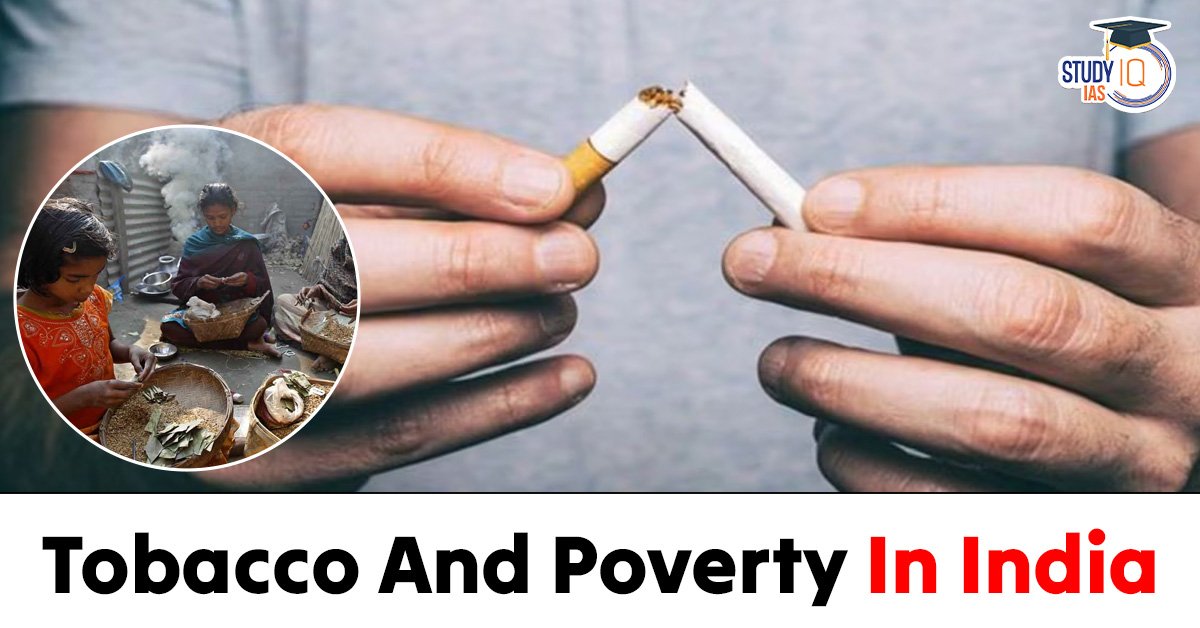
Context: A study in BMJ Global Health by researchers from ICMR-NICPR and TISS highlights the economic toll of tobacco use in India. It estimates that nearly one in ten households could move into a higher income category if tobacco consumption were eliminated, underlining its role as a significant financial drain.
| Key Data |
|
Key Findings of the Study on Tobacco Use and Poverty in India
- Economic Mobility: The research shows that tobacco purchases take up a notable portion of disposable income in low- and middle-income households. Eliminating this expense could help many families climb at least one level in the economic hierarchy.
- Crowding-Out Effect: Spending on tobacco often displaces essential expenses. Compared to similar-income non-users, tobacco-consuming households typically allocate less money to items like milk, vegetables, and education.
- The Poverty Trap: Frequent tobacco use is closely linked with rising medical costs from related illnesses, creating a cycle where health expenses and debt reinforce each other.
The Multi-Dimensional Burden of Tobacco
- Healthcare Costs: Beyond the purchase price, tobacco leads to substantial financial strain through the treatment of conditions such as cancer, heart disease, and respiratory disorders, often resulting in severe out-of-pocket expenses.
- Loss of Productivity: Illness and early death caused by tobacco reduce household income, especially when the primary earner is affected, pushing families deeper into financial distress.
- Impact on Human Capital: When money is diverted from education and nutrition toward tobacco, it weakens the long-term earning capacity of the next generation.
Challenges in Tobacco Control
- Affordability and Accessibility: Even with taxes, products like bidis and smokeless tobacco remain inexpensive and widely available, particularly for low-income groups.
- Social Acceptance: In many rural and disadvantaged communities, tobacco use is socially normalized, making it difficult to shift behaviour.
- Influence of the Industry: The sector contributes significantly to employment and government revenue, which can complicate stricter regulatory efforts.
Way Forward
- Taxation as a Tool: Raising taxes across all tobacco products in line with global health recommendations can reduce affordability, particularly among youth and low-income users.
- Integrated Health Programs: Incorporating cessation services into primary healthcare and maternal-child health initiatives can expand reach among vulnerable populations.
- Awareness Campaigns: Messaging should emphasize the financial gains of quitting, positioning tobacco control as a pathway to economic empowerment, not just improved health.
- Support for Substitutes: Improving access to nicotine replacement therapies and counseling through public health systems can make quitting more achievable.
| Related Articles | |
| Tobacco Taxation in India | Tobacco Epidemic in India |
| Tobacco Cultivation in India | World No Tobacco Day |

 Circular Economy in India: Benefits, Cha...
 India Forex Reserve 2026: Record $785.7 ...
 Skyroot Vikram-1 Mission Aagaman: India'...














 WhatsApp