Table of Contents
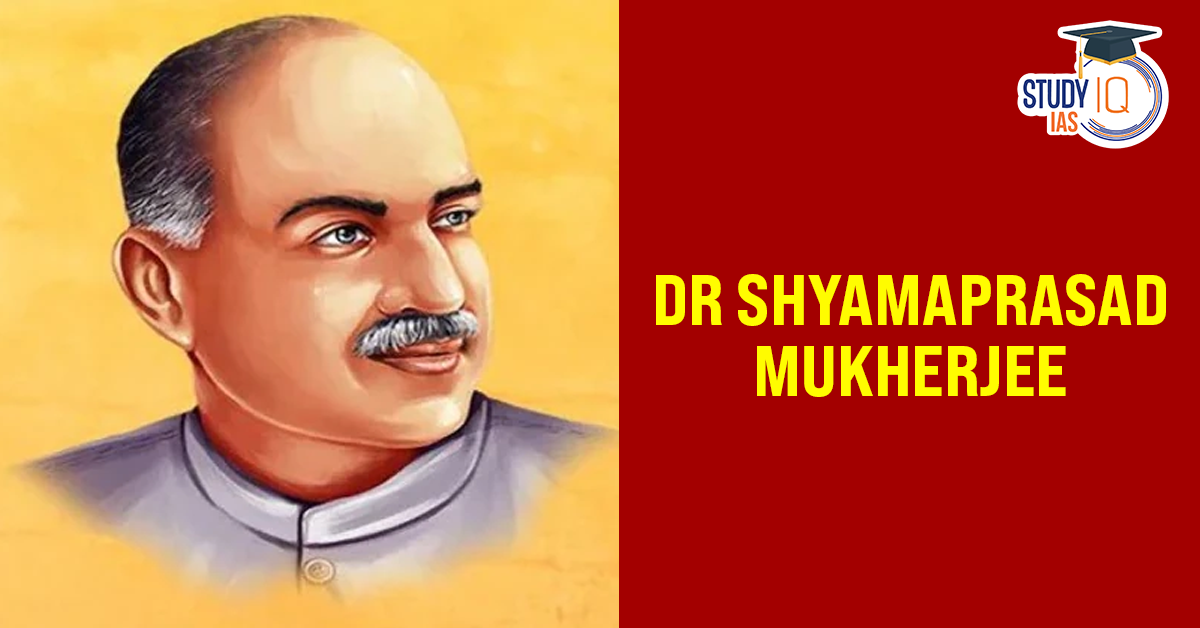
The 125th Birth Anniversary of Dr. Shyama Prasad Mukherjee is being observed on 6 July 2026, commemorating the life and contributions of one of India’s most influential political leaders, educationists, and nationalists. Born on 6 July 1901 in Calcutta (now Kolkata), Dr. Mukherjee played a pivotal role in shaping modern India’s political and educational landscape. His contributions as an academic, parliamentarian, Cabinet minister, and founder of the Bharatiya Jana Sangh continue to inspire generations.
This occasion provides an opportunity to revisit his remarkable journey, his role in India’s early years after Independence, and his enduring legacy in public life.
Dr. Shyama Prasad Mukherjee Birth Anniversary
Dr. Shyama Prasad Mukherjee’s birth anniversary is observed every year on 6 July to commemorate the birth of one of India’s distinguished educationists, nationalist leaders, and politicians. Born in 1901 in Calcutta (now Kolkata), he served as India’s first Minister for Industry and Supply and founded the Bharatiya Jana Sangh in 1951. His contributions to education, industrial development, democratic governance, and national integration continue to inspire generations and remain an important part of India’s political history.
Dr. Shyama Prasad Mukherjee’s Biography
| Facts about Dr. Shyama Prasad Mukherjee | |
| Born | July 6, 1901, in Kolkata, Bengal Presidency, British India |
| Death | June 23, 1953 |
| Father | Sir Ashutosh Mukherjee |
| Founder | Bharatiya Jana Sangh in 1951 |
| Political Career |
|
Early Life and Education
Dr. Shyama Prasad Mukherjee was born on July 6, 1901, in Calcutta (now Kolkata), to a prominent Bengali family. His father, Sir Ashutosh Mukherjee, was a renowned educationist and Vice-Chancellor of Calcutta University. Dr. Mukherjee grew up in an environment that fostered a passion for academics, politics, and social reform.
Dr. Mukherjee excelled academically and completed his schooling at the renowned Presidency College in Calcutta. He went on to study at the University of Calcutta, where he earned a degree in law. His academic brilliance was evident when he was awarded a Doctorate in Law from the University of Cambridge in the United Kingdom. During his time at Cambridge, he developed a deep interest in the political and social issues facing India, which would later shape his career.
Dr Shyamaprasad Mukherjee’s Political Journey and Contributions
Involvement in the Indian Freedom Struggle
Dr. Shyama Prasad Mukherjee was deeply influenced by nationalist movements from an early age. While he was a young student at Cambridge, the growing freedom struggle under leaders like Mahatma Gandhi inspired him to dedicate himself to the cause of India’s independence. In the 1920s, he joined the Indian National Congress and became an active member of the youth wing.
However, Dr. Mukherjee’s vision for India diverged from that of the Congress leadership, especially regarding the role of the princely states and the structure of the Indian federation. This difference led him to become increasingly disillusioned with the Congress Party.
Founding the Bharatiya Jana Sangh
In 1951, Dr. Shyama Prasad Mukherjee took a significant step in Indian politics by founding the Bharatiya Jana Sangh (BJS), a political party that aimed to promote nationalism, cultural integration, and the ideology of a strong, unified India. The BJS was the precursor to the present-day Bharatiya Janata Party (BJP).
One of the key pillars of Mukherjee’s ideology was his opposition to the policy of appeasement towards Pakistan, especially regarding the special status granted to Jammu and Kashmir under Article 370 of the Indian Constitution. He believed that Jammu and Kashmir should be fully integrated into India, without any special privileges that could hinder the country’s unity.
Role in the Kashmir Issue
Dr. Mukherjee is particularly remembered for his staunch stand on the Kashmir issue. He opposed the special status granted to Jammu and Kashmir by Article 370 and was vocal in advocating for its abrogation. His famous slogan, “One Nation, One Constitution,” reflected his belief in equal rights for all Indian citizens, irrespective of the state they belonged to.
In 1953, Dr. Mukherjee was arrested while leading a protest against the government’s policies regarding Kashmir. His arrest and subsequent death in custody in June 1953 under suspicious circumstances further solidified his place in the history of Indian politics as a martyr for the cause of national unity.
Dr Shyamaprasad Mukherjee’s Key Ideologies and Beliefs
Dr. Shyama Prasad Mukherjee’s ideologies were grounded in a vision of a strong, united India. His core beliefs included:
- Nationalism and Cultural Unity: Dr. Mukherjee believed in the unification of India under one national identity, without divisions based on regional, cultural, or religious lines. He championed the cause of Hindu nationalism, but his vision also encompassed the broader spectrum of Indian culture and identity.
- Strong and Integrated India: Dr. Mukherjee was a firm believer in the need for a strong central government to maintain the integrity and sovereignty of India. He was against the policy of appeasement and believed that regions like Jammu and Kashmir should be fully integrated into the Indian Union.
- Opposition to Communism: Mukherjee was opposed to the spread of communism and leftist ideologies in India. He saw communism as a threat to India’s democratic values and sovereignty.
- Economic Development: He advocated for economic policies that prioritised the welfare of the people and aimed to reduce inequalities in society. He was also a strong proponent of a robust defence policy to protect India’s borders.
Legacy and Influence of Dr Shyama Prasad Mukherjee
Dr. Shyama Prasad Mukherjee’s legacy is deeply embedded in the Indian political landscape. His contributions laid the foundation for the rise of the Bharatiya Janata Party (BJP), which later became one of the largest political parties in India. The ideology of the BJP is strongly influenced by the vision of Dr. Mukherjee, particularly his emphasis on nationalism, strong governance, and the importance of national unity.
His life and work continue to inspire generations of leaders and political thinkers in India. The annual Shyama Prasad Mukherjee Jayanti, celebrated on July 6, serves as a reminder of his contributions to the nation.
Latest UPSC Updates
| Resource | Link |
|---|---|
| UPSC Prelims Result 2026 | Check Here |
| UPSC Exam Calendar 2027 | View Calendar |
| UPSC Question Paper 2026 | Download PDF |
| UPSC Prelims Answer Key 2026 | Check Answer Key |
| UPSC Cut Off 2026 | View Cut Off |
| UPSC Syllabus 2026 | Read Syllabus |
| Daily Current Affairs 2026 | Read Updates |
| StudyIQ UPSC IAS Foundation 2027 (English) | Join Course |
| StudyIQ UPSC IAS Foundation 2027 (Hindi) | Join Course |
| StudyIQ UPSC IAS Foundation 2027 (Bilingual) | Join Course |
Dr. Shyama Prasad Mukherjee’s Death
Dr. Shyama Prasad Mukherjee’s sudden death on June 23, 1953, under mysterious circumstances in a Jammu and Kashmir prison while he was in custody has been the subject of much speculation. His death is seen as martyrdom by his followers, who believe that he was silenced because of his outspoken stance on the Kashmir issue.
Dr. Shyama Prasad Mukherjee was a visionary leader whose commitment to India’s unity and sovereignty has left a lasting impact on the country’s political fabric. His legacy continues to inspire not just political leaders but also common citizens who believe in the ideals of nationalism, unity, and national pride. His life is a testament to the strength of conviction and the power of standing up for what one believes is right, no matter the personal cost.
Key Facts About Dr. Shyama Prasad Mukherjee
| Particular | Details |
| Full Name | Dr. Shyama Prasad Mukherjee |
| Date of Birth | 6 July 1901 |
| Birthplace | Calcutta (now Kolkata), West Bengal |
| Profession | Politician, Lawyer, Educationist, Parliamentarian |
| Father | Sir Ashutosh Mukherjee |
| Youngest Vice-Chancellor | University of Calcutta (1934) |
| Cabinet Position | Minister for Industry and Supply (1947) |
| Political Party Founded | Bharatiya Jana Sangh (1951) |
| Year of Death | 23 June 1953 |

 Bhikaji Cama Birth Anniversary 2026: Lif...
 Subhas Chandra Bose Death Anniversary 20...
 Chandrashekhar Azad Jayanti 2026: Biogra...














 WhatsApp