Table of Contents
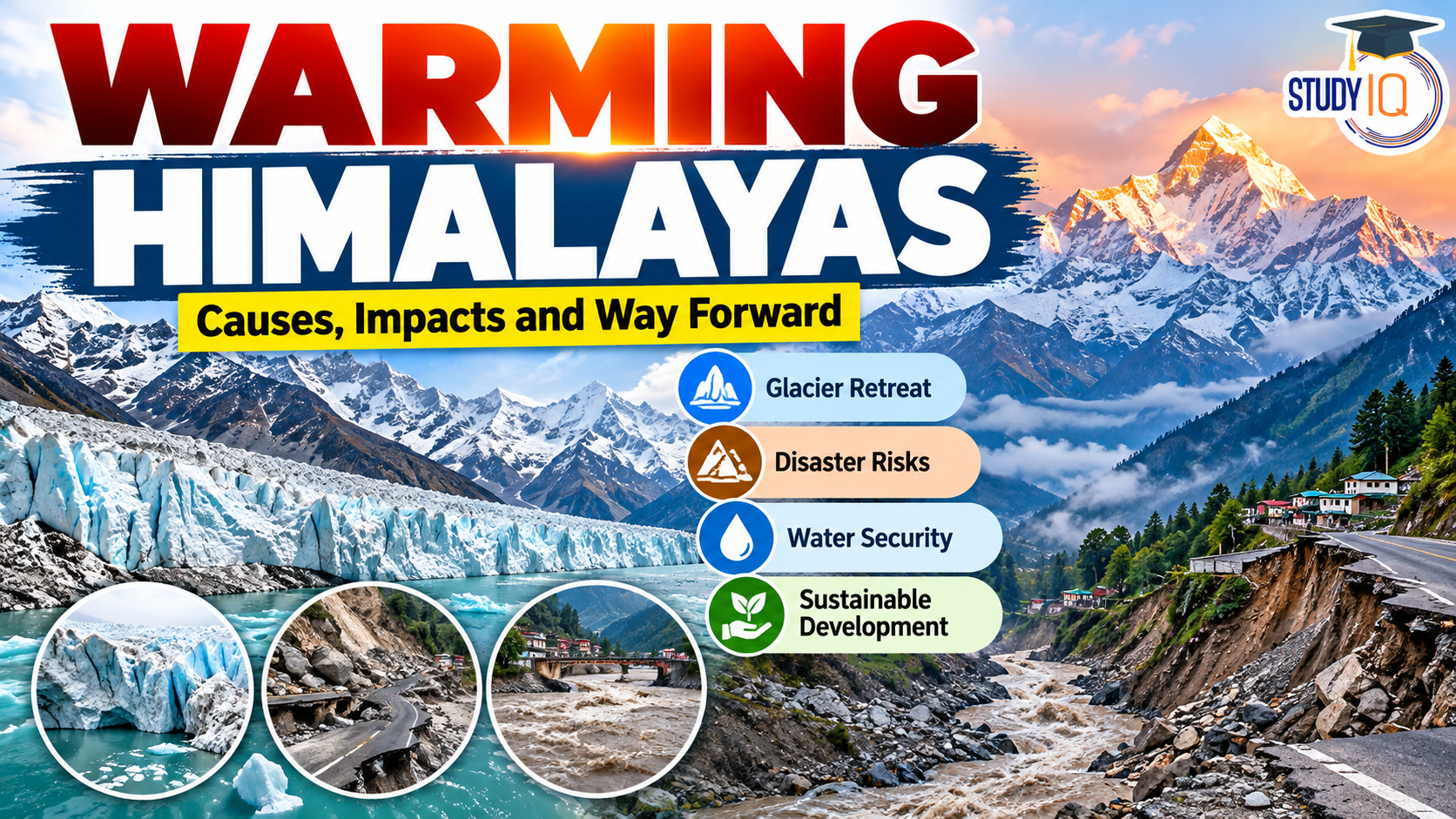
The Himalayas are vital for India’s water security, biodiversity, livelihoods and strategic connectivity. However, rising temperatures, glacier retreat, permafrost thaw and unplanned infrastructure development are increasing the vulnerability of this fragile mountain ecosystem. Himalayan warming demands a shift towards climate-resilient and ecologically sustainable development.
Read Also: UPSC Daily Current Affairs 2026
What Is Warming Himalayas?
Himalayan warming refers to rising temperatures across the Himalayan and Hindu Kush Himalayan (HKH) region, affecting glaciers, snow cover, ecosystems and water availability.
According to ICIMOD’s 2023 assessment, glacier loss during 2011–2020 was 65% faster than during 2000–2009. Under a high-emissions scenario, the region could lose up to 80% of its current glacier volume by 2100.
Causes of Himalayan Warming
1. Climate change: Greenhouse gas emissions increase temperatures and alter precipitation patterns, accelerating glacier melt and affecting seasonal water availability.
2. Glacier retreat and permafrost thaw: Melting ground ice can weaken mountain slopes, increasing the potential for rockfalls, landslides and ice-rock avalanches.
3. Fragile geology: The young, tectonically active Himalayas have steep slopes and fractured rocks, making several areas vulnerable to earthquakes, erosion and landslides.
4. Unplanned infrastructure: Poorly executed hill cutting, tunnelling, blasting and improper disposal of construction debris can destabilise slopes and obstruct natural drainage.
5. Land-use change: Deforestation, unplanned urbanisation and excessive tourism pressure can degrade ecosystems and increase local environmental stress.
Major Impacts
1. Water Insecurity
Glacier loss can alter river flows and reduce long-term meltwater availability. These changes affect drinking water, irrigation, hydropower and downstream communities.
2. Increasing Disaster Risks
Glacial lake outburst floods (GLOFs), flash floods, landslides and rock-ice avalanches threaten settlements and infrastructure. Climate change interacts with local geology, rainfall and human activities to influence these risks.
3. Biodiversity Loss
Changing temperatures and snow patterns threaten alpine ecosystems and species adapted to specific climatic conditions. Habitat fragmentation and forest degradation can worsen these impacts.
4. Economic and Strategic Consequences
Disasters damage roads, bridges, hydropower projects and tourist facilities, disrupting livelihoods and increasing reconstruction costs. Infrastructure damage can also affect border connectivity and emergency response.
Government Initiatives
- National Mission for Sustaining the Himalayan Ecosystem (NMSHE): Promotes research, monitoring and climate adaptation.
- Central Water Commission: Monitors glacial lakes using satellite remote sensing to support hazard assessment.
- Environmental Impact Assessment (EIA): Provides prior environmental clearance procedures for covered projects.
- National Mission on Himalayan Studies: Supports research and conservation of Himalayan ecological and socioeconomic resources.
Way Forward
- Risk-based planning: Map landslide-prone slopes, floodplains and vulnerable glacial lakes before approving projects.
- Cumulative impact assessment: Evaluate the combined effects of hydropower, roads and other projects at the river-basin level.
- Climate-resilient infrastructure: Improve drainage, slope stabilisation and scientific disposal of excavated material.
- Early-warning systems: Integrate satellite monitoring, ground sensors, weather forecasts and community alerts.
- Ecosystem restoration: Protect forests, wetlands and natural drainage systems.
- Community participation: Incorporate local knowledge, strengthen disaster preparedness and promote sustainable livelihoods.
Conclusion
Himalayan warming is both a climate challenge and a development-planning challenge. India must balance infrastructure, energy security and strategic connectivity with ecological protection. A science-led, community-centred and climate-resilient approach is essential to safeguard the Himalayas and the millions of people who depend on them.

 Nobel Prize in Economic Sciences 2026: W...
 Appointment of Deputy Election Commissio...
 Daily Current Affairs PDF 2026: Download...














 WhatsApp