Table of Contents
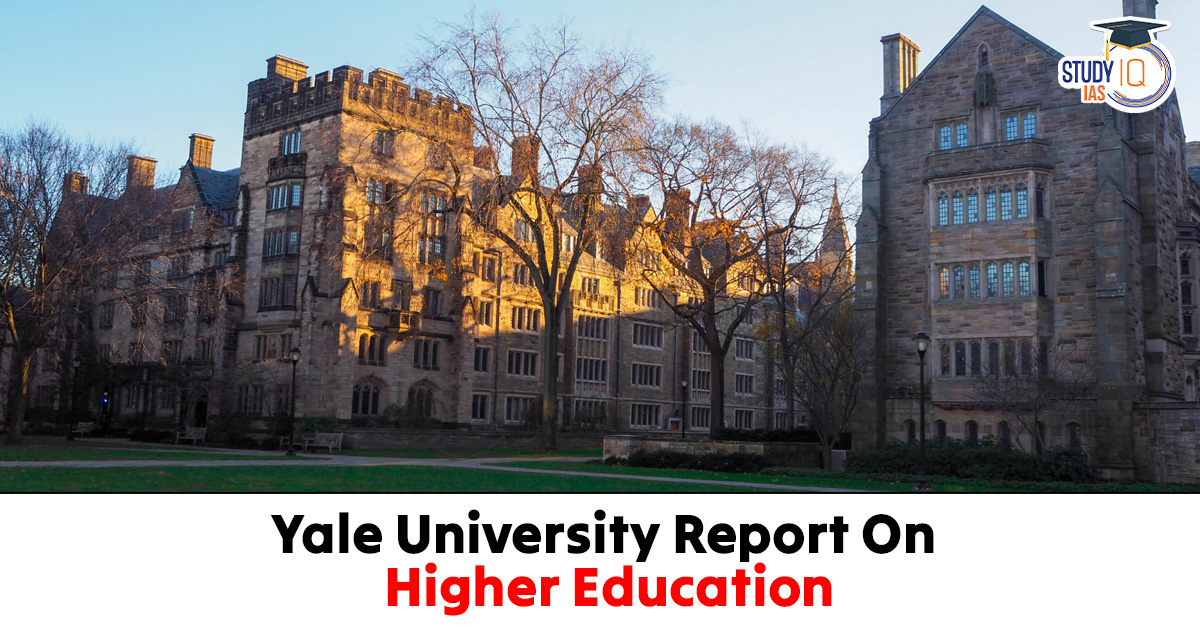
Context: Amid rising doubts about the value of college education in the United States and falling enrollment numbers, a recent report points to deep structural and credibility issues confronting universities.
Yale University Report on Higher Education: Key Findings
- Rising Tuition Costs: Excessively high fees have eroded public confidence in higher education.
- Opaque Admissions: The discretionary and non-transparent nature of admissions, particularly in elite institutions like Yale University, has intensified mistrust.
- Inconsistent Academic Quality: Variations in standards across institutions contribute to scepticism about educational outcomes.
- Free Speech Concerns: Campus debates over freedom of expression have emerged as a major source of anxiety.
Context and Causes
- The report emerged during a phase of turbulence in US universities, including actions by the Trump administration, which suspended funding to certain institutions over allegations of antisemitism and disputes around Diversity, Equity, and Inclusion (DEI) programmes.
- Changes in immigration policies and probes into race-based admissions practices have further complicated the landscape.
- High costs and lack of transparency have reinforced the perception that higher education—especially at elite institutions is inaccessible.
- Additionally, a weak job market has made families increasingly question the return on investment in college education.
Suggested Reforms
- Improve financial transparency to restore public trust.
- Reinforce institutional commitment to protecting free speech on campuses.
Lessons for India
The US experience illustrates that once public trust in higher education declines, restoring it is difficult, offering a cautionary lesson for countries like India to prioritise transparency, accessibility, and credibility in their academic systems.

 Skyroot Vikram-1 Mission Aagaman: India'...
 Oor Pare Prehistoric Site: Location, Roc...
 Assam Election 2026: Exit Poll, Result D...













 WhatsApp