
Table of Contents
Context
Fertiliser imports are becoming a major economic and strategic concern for India due to rising geopolitical tensions in West Asia, supply disruptions, and currency depreciation.
Read Also: UPSC Daily Current Affairs 2026
|
Current Status of Fertiliser Imports in India |
| ● Fertiliser import bill:
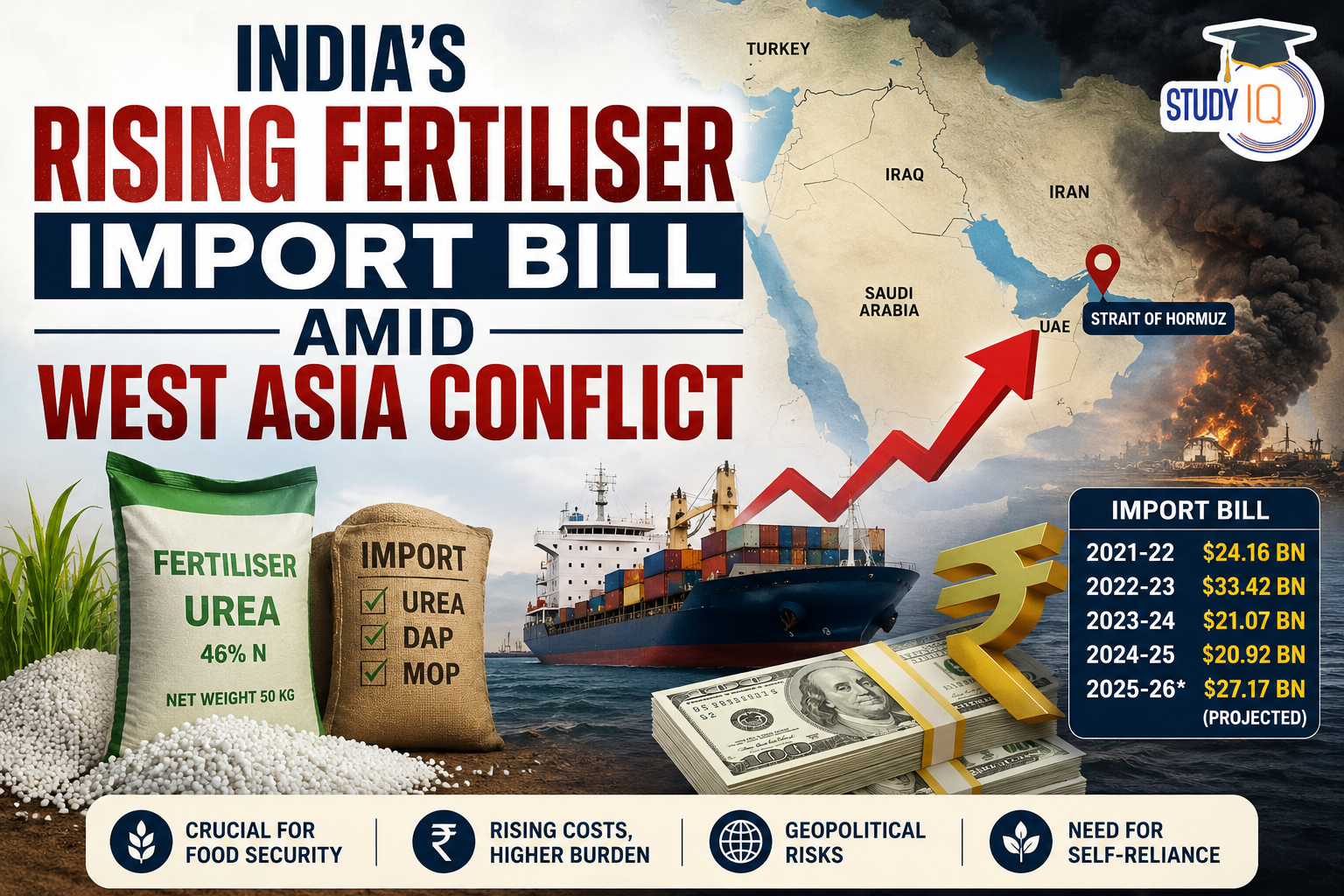
○ $24.16 billion (2021–22) ○ $33.42 billion (2022–23 record high) ○ $21.07 billion (2023–24) ○ $20.92 billion (2024–25) ○ $27.17 billion projected (2025–26) ● Imports in 2025–26: ○ 28.2 million tonnes (mt) of fertilisers Including: ■ 11.2 mt urea ■ 6.4 mt DAP ■ 3.7 mt MOP |
Reasons for Rising Import Bill
- Rising International Prices: Global fertiliser prices have increased significantly because of conflicts in Russia-Ukraine and West Asia. Energy price volatility has further raised manufacturing and transportation costs.
- Rupee Depreciation Increasing Costs: Since fertiliser trade occurs largely in US dollars, depreciation of the rupee raises import costs even when quantities remain unchanged.
- Rupee weakened from around ₹85.2/$ to nearly ₹95.2/$: This increases the landed cost of fertilisers and ultimately raises subsidy expenditure borne by the government.
Why Fertiliser Imports Matter for India
- Food Security: Fertilisers are essential for maintaining agricultural productivity and ensuring food security for India’s large population. Any shortage can directly affect crop yields and food prices.
- Agricultural Growth: India’s intensive farming system depends heavily on chemical fertilisers to sustain high productivity levels.
- Price Stability: Subsidised fertilisers help reduce input costs for farmers and prevent a sharp rise in food inflation. Lower cultivation costs also support the Public Distribution System (PDS).
Challenges in India’s Fertiliser Sector
- Geopolitical Vulnerability: Conflicts in West Asia and the Russia-Ukraine war have disrupted shipping routes, energy supplies, and fertiliser trade flows globally.
- Strategic chokepoints such as the Strait of Hormuz remain vulnerable, increasing risks of supply disruptions and price spikes.
- Excessive Import Dependence: India’s overdependence on imports for fertilisers and raw materials creates long-term strategic and economic vulnerabilities.
- Rising Subsidy Burden: Higher import prices increase the government’s fertiliser subsidy expenditure because retail prices for farmers remain controlled.
- Currency Risks: A weakening rupee makes imports costlier even if international prices remain stable. This creates additional uncertainty in subsidy planning and budgeting.
- Supply Chain Disruptions: Global shipping disruptions, freight cost increases, and export restrictions by producing countries can delay fertiliser availability during critical sowing seasons.
|
Government Initiatives in the Fertiliser Sector |
| ● Nutrient Subsidy: Nutrient-Based Subsidy (NBS) scheme provides fixed support for P&K fertilisers, promoting balanced nutrient use.
● ONOF Scheme: One Nation One Fertiliser standardises branding under ‘Bharat’ for transparency and quality. ● Nano Fertilisers: Promotes nano urea, nano DAP, and neem-coated urea for efficient nutrient use. ● Digital Platforms: iFMS (Integrated Fertiliser Management System) and mFMS (Mobile Fertiliser Management System) track fertiliser supply and enable real-time access for farmers. ● PM-PRANAM Scheme: Aimed at reducing the use of chemical fertilisers and encouraging balanced nutrient application. |
Way Forward
- Diversification of Import Sources: India should diversify fertiliser imports across multiple countries to reduce geopolitical and supply chain risks.
- Strengthening Domestic Manufacturing: Greater investment is needed in urea plants, phosphatic fertilisers, and alternative fertiliser technologies.
- Promotion of Balanced Nutrient Use: Excessive dependence on urea must be reduced through Soil Health Cards, precision farming, fertigation, and micronutrient management.
- Strategic Fertiliser Reserves: India should maintain strategic reserves of key fertilisers and raw materials to manage temporary global disruptions.
Conclusion
“The future of Indian agriculture depends not only on food production, but also on securing the inputs that make production possible.”
|
Read More Notes |
|
| Environment Notes | Art and Culture Notes |
| Science and Tech | History Notes |
| Geography Notes | Indian Polity Notes |
| General Knowledge | International Relation |
|
Explore StudyIQ Courses |
|
 Why Do Stampedes Occur in India? Crowd P...
 Strategic Disinvestment in India: IDBI B...
 Women’s Livelihoods in India: Challeng...














 WhatsApp





