Table of Contents
Context
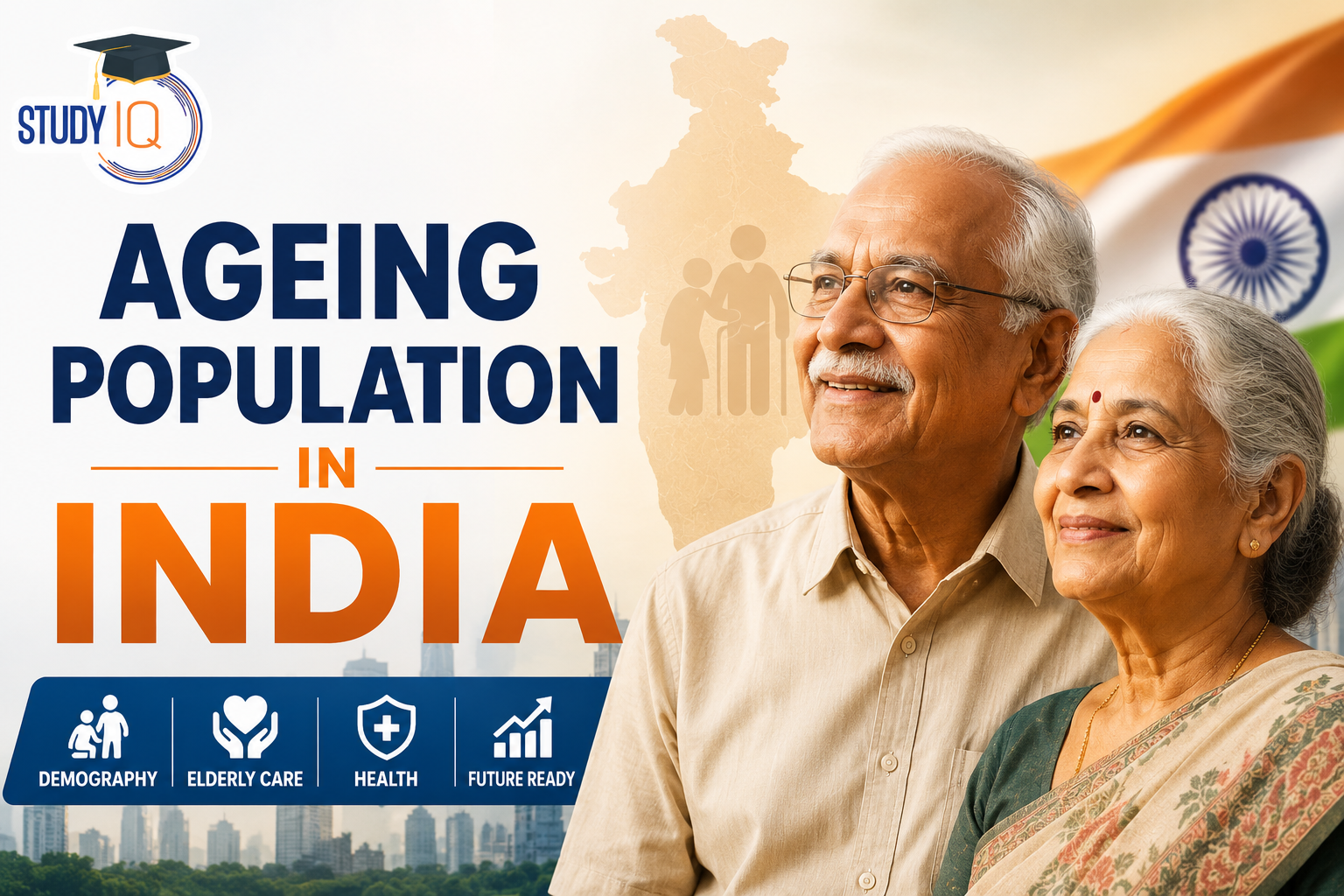
Kerala has set up India’s first dedicated Department for the Welfare of Elderly People, signalling a proactive response to India’s rapidly ageing demography.
Read Also: UPSC Daily Current Affairs 2026
Status of the Elderly Population in India
| Indicator | Data |
| Elderly population (60+)- National | 10.1% of total population (2021) |
| Elderly population (60+)-Kerala | 16.9% (India’s most rapidly ageing state) |
| Total Fertility Rate (Kerala) | 1.35 — below replacement level of 2.1 |
| Elderly sex ratio (projected by 2026) | 1,060 women per 1,000 men (feminisation of ageing) |
| Elderly with chronic illness | 75% suffer from at least one chronic disease (LASI) |
| Projected elderly by 2050 | ~34.7 crore (significant policy challenge) |
Need for Elderly Care in India
- Harnessing the “Silver Dividend”: Senior citizens possess immense professional experience, institutional memory, and cultural wisdom. Ensuring their healthy and active participation in society can transform them into valuable contributors through mentorship, community guidance, and part-time economic engagement.
- Strengthening Intergenerational Bonds: Elderly citizens play a vital role in preserving cultural continuity and transmitting moral values across generations. In traditional joint families, grandparents often provide emotional support, stability, and ethical guidance to younger members.
- Promoting Social Stability: The social experience and cultural maturity of older generations help reduce intolerance, social fragmentation, and violent tendencies within society.
- Reducing Burden on Working-Age Population: In the absence of institutional elder-care infrastructure such as assisted living facilities, trained caregivers, and day-care centres, caregiving responsibilities largely fall upon family members.
- Moral and Ethical Responsibility: Providing care to the elderly represents society’s obligation towards individuals who have contributed physically, emotionally, socially, and economically throughout their lives.
- Constitutional Commitment: Article 41 of the Indian Constitution directs the State to ensure public assistance in cases of old age, sickness, and disability. Elderly care therefore forms part of the constitutional vision of social welfare.
Challenges Faced by the Elderly Population
- Social Isolation and Neglect: Urbanisation, nuclear families, migration, and changing social values have increasingly weakened traditional support structures, leading to neglect of elderly citizens.
- Elder Abuse: Senior citizens often face physical, emotional, financial, and psychological abuse. Emotional neglect and verbal humiliation significantly affect their dignity and mental well-being.
- Caste-Based Vulnerabilities: Lower-caste elderly individuals frequently continue working in old age due to financial necessity, while upper-caste seniors may experience loss of identity and self-worth because of declining occupational opportunities.
- Feminisation of Ageing: Ageing in India has become increasingly feminised. More than half of elderly women are widows, making them vulnerable to economic dependence, social exclusion, property deprivation, and gender-based discrimination.
- Absence of Adequate Social Security: Nearly 90% of India’s workforce operates in the informal sector, limiting access to pensions and retirement benefits for a majority of citizens.
- Weak Pension Support: Government pension expenditure remains limited. Existing schemes such as the Indira Gandhi National Old Age Pension Scheme are often criticised for inadequate financial support.
- Housing and Basic Amenities: Many elderly individuals lack age-friendly housing, accessible infrastructure, and essential amenities suitable for their physical needs.
- Burden of Chronic Diseases: Data from the Longitudinal Ageing Study in India (LASI) indicates that nearly three-fourths of senior citizens suffer from at least one chronic disease such as diabetes, hypertension, arthritis, or cardiovascular disorders.
- Mental Health Issues: Depression, anxiety, dementia, and Alzheimer’s disease affect a significant proportion of elderly citizens. Social stigma and lack of trained geriatric specialists aggravate the problem.
Government Initiatives for Elderly Care
| Scheme / Policy | Key Provisions |
| Maintenance & Welfare of Parents & Senior Citizens Act, 2007 | Mandates old age homes per district; penal provisions for non-maintenance; property revocation on neglect |
| National Policy for Older Persons (2011) | Income security, home care, health insurance, age-friendly environments |
| Pradhan Mantri Vaya Vandana Yojana | Assured pension/return scheme for senior citizens’ income security |
| Rashtriya Vayoshri Yojana | Physical aids and assisted-living devices for BPL senior citizens |
| SAGE Initiative | Promotes innovative products and services for elderly care |
| SAMPANN Project | Online pension processing system for telecom pensioners |
| SACRED Portal | Job opportunities for citizens above 60 years |
| National Council for Senior Citizens | Advisory body to Central and State Governments on senior welfare |
Way Forward
- Formalising Caregiving Economy: India must recognise caregiving as a formal economic activity by improving working conditions, training, and social recognition for caregivers.
- Pension Reforms: Old-age pensions should be revised regularly and linked with inflation to ensure basic dignity and livelihood security.
- Strengthening Geriatric Healthcare: Dedicated geriatric departments and specialised healthcare infrastructure should be established in all medical institutions.
- Adopting Innovative Models: India can adapt initiatives like Switzerland’s “Time Bank” system, where younger individuals earn future care credits by assisting senior citizens.
- Promoting the Silver Economy: The government should encourage startups and private enterprises developing elderly-friendly technologies, assistive devices, and specialised living facilities.
- Public-Private Partnerships: Private healthcare institutions should be incentivised to establish geriatric care centres, especially in rural and semi-urban regions.
- Addressing Feminisation of Ageing: Policies should prioritise elderly women by ensuring property rights, survivor pensions, healthcare access, and protection from exploitation.
- Rationalising Subsidies and Investments: Ageing States may need to rationalise subsidies to accommodate rising pension liabilities, while younger States should focus on investing in human capital development.
|
Read More Notes |
|
| Environment Notes | Art and Culture Notes |
| Science and Tech | History Notes |
| Geography Notes | Indian Polity Notes |
| General Knowledge | International Relation |
|
Explore StudyIQ Courses |
|
 Why Do Stampedes Occur in India? Crowd P...
 Strategic Disinvestment in India: IDBI B...
 Women’s Livelihoods in India: Challeng...













 WhatsApp