Table of Contents
Context: A study published in Nature Climate Change warns that global warming is weakening the sea-land breeze cycles essential for the health and habitability of coastal megacities.
About Sea-Land Breeze
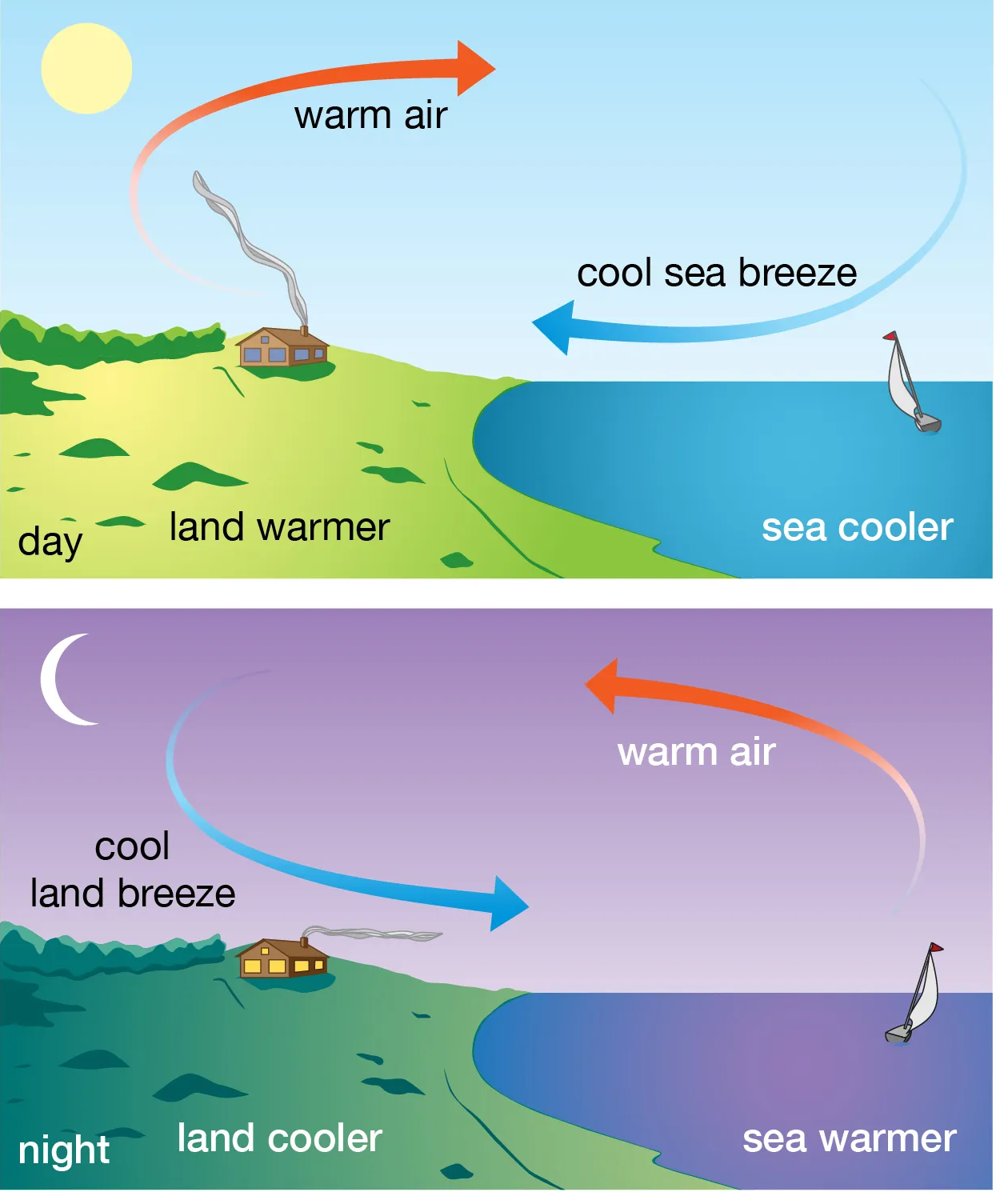
The sea-land breeze is a localised atmospheric circulation driven by the differential heating of land and water surfaces.
- Daytime (Sea Breeze): Land heats up faster than the sea. The warm air over land rises, creating a low-pressure area that “pulls” cooler, high-pressure air from the sea toward the coast.
- Nighttime (Land Breeze): The land cools down faster than the ocean. The air over the relatively warmer sea rises, and the breeze reverses, flowing from the land toward the water.
Impact of Global Warming
- Reduced Temperature Gap: While both land and sea are warming, the significant increase in ocean temperatures is reducing the thermal contrast between the two.
- Weakened Circulation: Since the breeze depends on the magnitude of the temperature difference, a smaller gap results in weaker, less frequent breezes.
- Historical Decline: The analysis shows that ocean warming has already reduced the number of “breeze days” by approximately 3% in most studied cities.
- Most Affected Cities: Mid-latitude megacities such as London, New York, Shanghai, and Buenos Aires have witnessed the most dramatic declines in sea breeze activity.

 Astronomy in the Atacama Desert: Telesco...
 Why Below-Average Rains Don’t Rule Out...
 Mahanadi River: Location, Major Tributar...














 WhatsApp