
Table of Contents
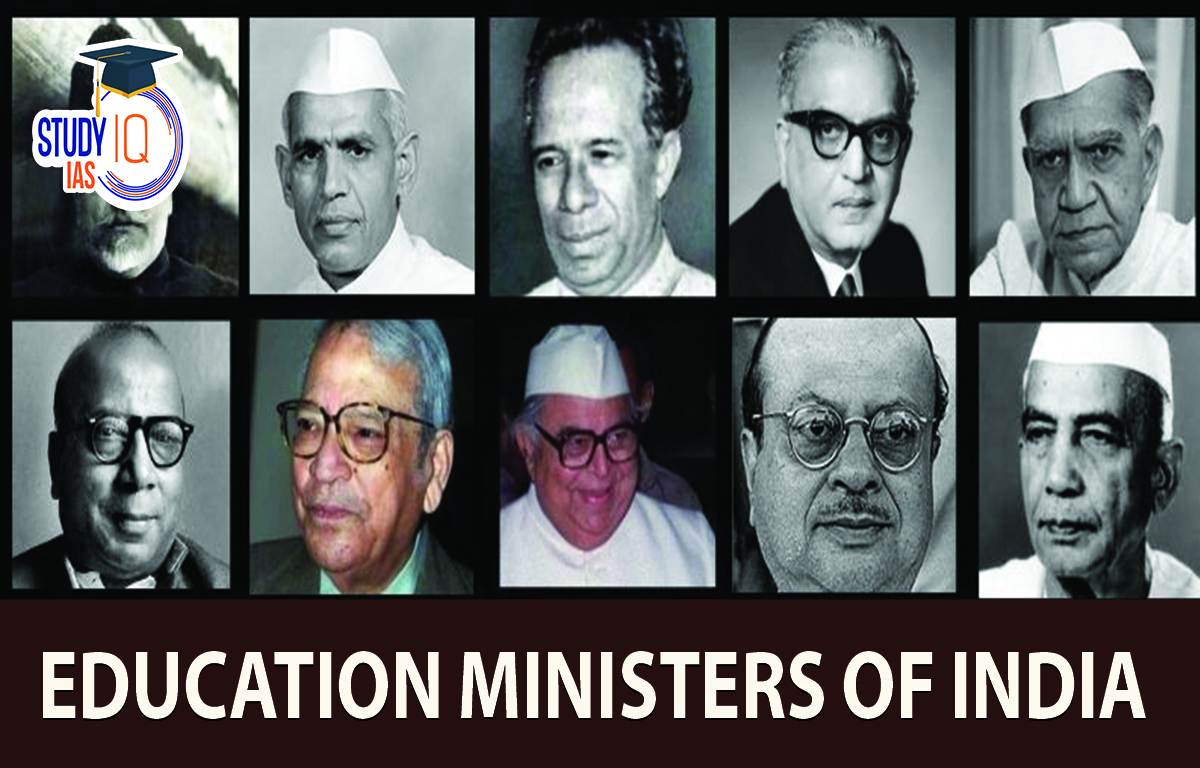
Education Ministers of India (1947–2026): India’s Education Minister plays a crucial role in shaping the nation’s human capital by designing policies that improve literacy, school education, higher education, research, and skill development. Since Independence in 1947, several distinguished leaders have headed the Ministry of Education, introducing landmark reforms that transformed India’s education system.
From Maulana Abul Kalam Azad, India’s first Education Minister, to the current leadership under Pralhad Joshi, every minister has contributed to expanding educational access, improving quality, and modernizing learning through digital initiatives and policy reforms.
In this article, you will find the complete list of Education Ministers of India from 1947 to 2026, along with their tenure, major contributions, the history of the Education Ministry, and the latest updates.
Who is the Current Education Minister of India in 2025?
As of July 2026, Shri Pralhad Joshi is serving as the Union Education Minister of India (holding additional charge).
He was entrusted with the Ministry of Education after President Droupadi Murmu accepted the resignation of Shri Dharmendra Pradhan on 25 July 2026. Along with Education, Pralhad Joshi continues to handle his existing ministerial responsibilities.
Current Education Minister at a Glance
| Particular | Details |
|---|---|
| Current Minister | Pralhad Joshi |
| Assumed Charge | 25 July 2026 |
| Status | Holding Additional Charge |
| Previous Minister | Dharmendra Pradhan |
List of Education Ministers of India from 1947-2025
Here’s the complete Education Ministers of India List:
| S.No | Education Minister | Tenure |
|---|---|---|
| 1 | Maulana Abul Kalam Azad | 1947–1958 |
| 2 | Dr. K. L. Shrimali | 1958–1963 |
| 3 | Humayun Kabir | 1963 |
| 4 | M. C. Chagla | 1963–1966 |
| 5 | Fakhruddin Ali Ahmed | 1966–1967 |
| 6 | Triguna Sen | 1967–1969 |
| 7 | V. K. R. V. Rao | 1969–1971 |
| 8 | S. S. Ray | 1971–1972 |
| 9 | Syed Nurul Hasan | 1972–1977 |
| 10 | P. C. Chunder | 1977–1979 |
| 11 | B. Shankaranand | 1979–1980 |
| 12 | S. B. Chavan | 1980–1981 |
| 13 | Syed Nurul Hasan | 1981–1982 |
| 14 | K. C. Pant | 1982–1984 |
| 15 | P. V. Narasimha Rao | 1984–1985 |
| 16 | K. C. Pant | 1985–1986 |
| 17 | P. V. Narasimha Rao | 1986–1988 |
| 18 | R. Venkataraman | 1988–1989 |
| 19 | P. Shiv Shankar | 1989–1990 |
| 20 | V. P. Singh | 1990 |
| 21 | Arjun Singh | 1991–1994 |
| 22 | Madhavrao Scindia | 1994–1995 |
| 23 | S. R. Bommai | 1995–1996 |
| 24 | Atal Bihari Vajpayee | 1996 |
| 25 | Mufti Mohammad Sayeed | 1996–1997 |
| 26 | Ramlakhan Singh Yadav | 1997–1998 |
| 27 | Dr. Murli Manohar Joshi | 1998–2004 |
| 28 | Arjun Singh | 2004–2009 |
| 29 | Kapil Sibal | 2009–2012 |
| 30 | M. M. Pallam Raju | 2012–2014 |
| 31 | Smriti Irani | 2014–2016 |
| 32 | Prakash Javadekar | 2016–2019 |
| 33 | Ramesh Pokhriyal ‘Nishank’ | 2019–2021 |
| 34 | Dharmendra Pradhan | 2021–25 July 2026 |
| 35 | Pralhad Joshi (Additional Charge) | 25 July 2026 – Present |
Current Education Minister of India?
Pralhad Joshi is a senior Bharatiya Janata Party (BJP) leader and Member of Parliament from Dharwad, Karnataka.
Following the resignation of Dharmendra Pradhan in July 2026, he was assigned the additional charge of the Ministry of Education by the President of India on the advice of the Prime Minister.
Key Facts
- Senior BJP leader from Karnataka
- Five-time Lok Sabha MP from Dharwad
- Holds additional charge of the Ministry of Education
- Continues to oversee Consumer Affairs, Food & Public Distribution, and New & Renewable Energy
Previous Education Minister: Dharmendra Pradhan
Shri Dharmendra Pradhan served as the Union Education Minister from 7 July 2021 to 25 July 2026.
During his tenure, the Ministry focused on:
- Implementation of National Education Policy (NEP) 2020
- Expansion of digital education
- Academic Bank of Credits
- NIPUN Bharat
- PM SHRI Schools
- Skill-based learning
- Multidisciplinary higher education reforms
His resignation was accepted by the President of India on 25 July 2026.
First Education Minister of India
Maulana Abul Kalam Azad became Independent India’s first Education Minister in 1947.
His major contributions include:
- Establishment of the IIT system
- Strengthening UGC
- Promotion of scientific education
- Expansion of higher education
- Emphasis on universal primary education
His birth anniversary (11 November) is celebrated as National Education Day.
First Female Union Education Minister of India
Smriti Irani became the first woman Union Minister to head the Ministry of Human Resource Development (Education) in 2014.
Note: The earlier statement that Anandiben Patel was the first female Education Minister of India is incorrect. Anandiben Patel served as Education Minister of Gujarat, not the Union Education Minister.
Evolution of the Ministry of Education
1947
Ministry of Education established.
1985
Renamed as the Ministry of Human Resource Development (MHRD).
2020
Renamed back to the Ministry of Education under the National Education Policy (NEP) 2020.
The Ministry presently functions through:
- Department of School Education & Literacy
- Department of Higher Education
Major Educational Reforms
National Education Policy (1986)
Introduced under Prime Minister Rajiv Gandhi.
Major features:
- Universal elementary education
- Teacher education reforms
- Adult literacy
- Equal educational opportunities
Right to Education Act (2009)
Implemented during the UPA government.
Key provisions:
- Free and compulsory education
- Children aged 6–14 years
- Education as a Fundamental Right
National Education Policy (2020)
One of India’s biggest education reforms.
Highlights include:
- 5+3+3+4 curriculum structure
- Multidisciplinary education
- Mother tongue instruction in early grades
- Vocational education from school level
- Multiple entry and exit in higher education
- Digital learning ecosystem
- Academic Bank of Credits
Digital Education Initiatives
Recent Education Ministers have promoted:
- DIKSHA
- SWAYAM
- PM eVidya
- National Digital Library
- PM SHRI Schools
- Virtual Labs
- Skill India integration
- AI-enabled learning initiatives
Responsibilities of the Education Minister
The Union Education Minister is responsible for:
- National Education Policy formulation
- School education
- Higher education
- Teacher training
- Digital learning
- Research and innovation
- Educational funding
- International academic cooperation
- Skill development coordination
Landmark Educational Reforms
| Year | Reform | Minister |
|---|---|---|
| 1986 | National Policy on Education | P. V. Narasimha Rao |
| 2009 | Right to Education Act | Kapil Sibal (implemented during his tenure after enactment) |
| 2020 | National Education Policy | Ramesh Pokhriyal ‘Nishank’ |
| 2021–2026 | Implementation of NEP | Dharmendra Pradhan |
| 2026 | Continuation of NEP implementation | Pralhad Joshi (Additional Charge) |
Conclusion
Since Independence, India’s Education Ministers have played a defining role in expanding educational access, improving quality, and modernizing the country’s learning ecosystem. From Maulana Abul Kalam Azad’s foundational vision to the implementation of the National Education Policy 2020 and the ongoing reforms under the current leadership, the Ministry continues to shape India’s future through education.
As of July 2026, Pralhad Joshi is serving as the Union Education Minister (holding additional charge) following the resignation of Dharmendra Pradhan. The Ministry remains focused on implementing NEP 2020, expanding digital education, strengthening research, and building a globally competitive education system.

 World Bamboo Day 2026: Date, Theme, Hist...
 Pangwala Tribal Community: History, Loca...
 Places in News: Sohar Port, Oman-Locatio...


 WhatsApp





