Table of Contents
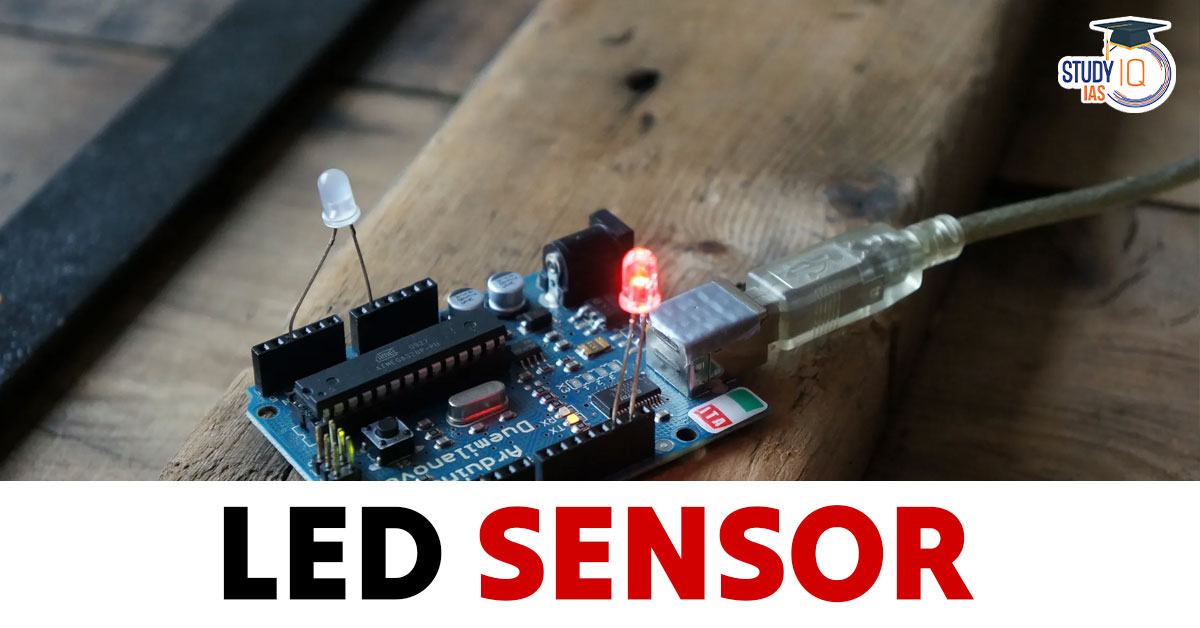
Context: Modern automation systems like automatic taps, doors, remotes and sanitiser dispensers use LED-based sensors.
How the LED Sensor Works
- IR Light Emission: An IR LED emits invisible infrared light (below visible red frequency) into the surroundings.
- Transmission of Light: The emitted IR waves travel forward and normally do not return to the sensor without an object.
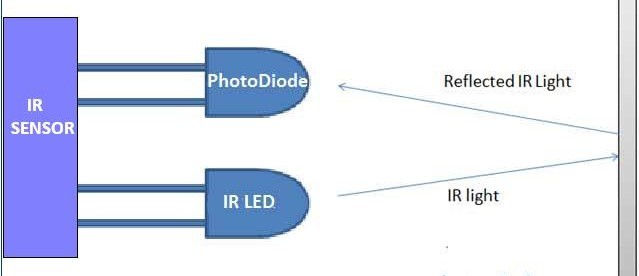
- Reflection from Object: When an object (hand/person) comes near, it reflects IR light toward the sensor.
- Eg. hand under an automatic tap reflects IR rays
- Detection by Photodiode: A photodiode sensor detects reflected IR light and allows current flow (acts like a switch).
- Signal Processing & Activation: The electrical signal activates the connected system, triggering action.
- Eg, water flows, door opens, device switches ON.
Applications in Different Areas
- Consumer Electronics (Remotes): IR LED sends coded signals, which are received by sensors in devices.
- Eg. TV remote transmits IR signal → TV sensor decodes → channel changes)
- Smart Sanitation Systems: Used in automatic taps, soap dispensers and dryers for hygiene.
- Eg. hand reflection triggers water flow without touch
- Automatic Doors & Elevators: Detect human presence to enable entry/exit.
- Eg. movement alters the IR signal → triggers the alert system
- Industrial Automation: Detects objects in manufacturing processes.
- Eg. items on conveyor belt reflect IR → counted or sorted automatically
- Smart Devices (Proximity Sensors): Used in smartphones and gadgets.
- Eg. phone screen turns off when face is detected during calls
- LED-based IR sensors operate on a simple principle of light emission and reflection, enabling fast, contactless and reliable automation across sectors. They form the backbone of modern smart systems, hygiene solutions and intelligent devices.

 QDENGA Dengue Vaccine: India’s First A...
 Skyroot Vikram-1 Mission Aagaman: India'...
 Oor Pare Prehistoric Site: Location, Roc...














 WhatsApp