Table of Contents
Context
-
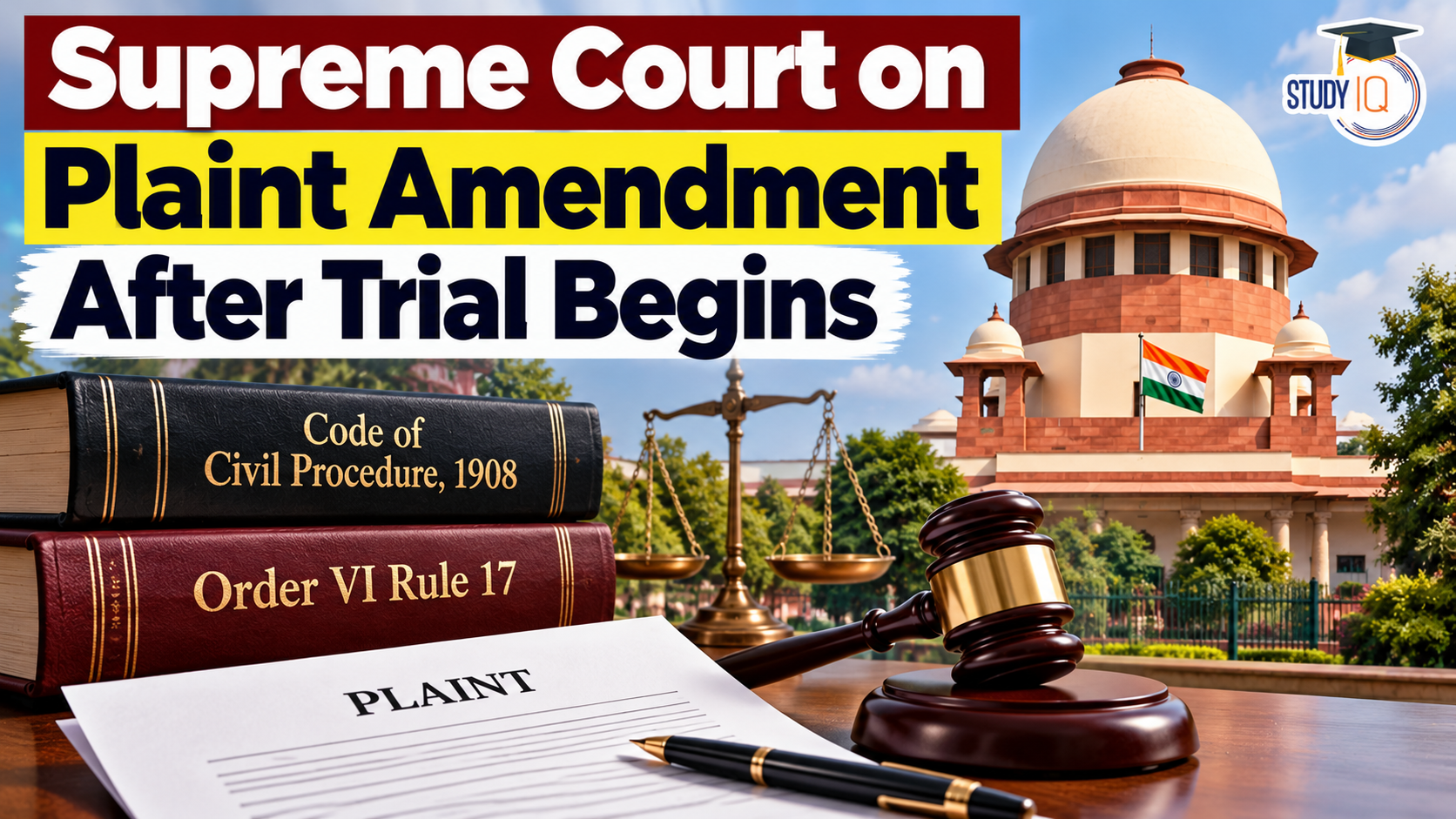
The Supreme Court, in Haramani Sahoo v. Lalita Nayak (2026 LiveLaw (SC) 1041), examined amendment of pleadings under Order VI Rule 17 of the Code of Civil Procedure (CPC), 1908.
-
The case concerned a property dispute and a previously discovered compromise decree affecting the same land.
Key Facts
-
The original suit was filed in 2009 for declaration of title, possession and rectification of sale deeds.
-
The plaintiff later discovered a 1998 compromise decree concerning the disputed property.
-
The plaintiff sought to amend the plaint to challenge that decree.
-
The lower courts rejected the amendment, citing delay and expansion of the dispute.
-
The Supreme Court allowed the amendment subject to ₹25,000 in costs, keeping limitation, maintainability and merits open for trial.
Supreme Court’s Key Observations
-
Direct Nexus Test: Additional facts and reliefs may be permitted when directly connected to the original dispute.
-
No Fundamental Alteration: Expanding factual or legal issues does not automatically change the nature of a suit.
-
Avoid Multiplicity of Litigation: Amendments can help resolve connected disputes in one proceeding.
-
Prejudice and Delay: Courts may address prejudice through costs and an opportunity for the defendant to file an additional written statement.
-
Limitation and Merits: Allowing an amendment does not establish the truth of new allegations or automatically decide limitation.
Order VI Rule 17 CPC: Important Provisions
-
Courts may permit amendments to pleadings on just terms.
-
Amendments necessary to determine the real questions in controversy should be considered.
-
After trial begins, an amendment cannot be allowed unless the court is satisfied that, despite due diligence, the party could not have raised the matter earlier.
-
Order VI Rule 18 CPC generally requires the amendment to be carried out within 14 days if the court has not specified another period, unless the court extends the time.
Significance for Judiciary and UPSC
-
Judiciary/APO: Important for civil procedure, amendment of pleadings and judicial discretion.
-
UPSC GS Paper II: Access to justice and procedural fairness.
-
Mains Answer Writing: Illustrates the balance between procedural discipline and complete adjudication.
Conclusion
The key takeaway from Haramani Sahoo v. Lalita Nayak (2026) is that courts should examine whether a proposed amendment has a direct nexus with the existing dispute, rather than rejecting it merely because it expands the issues for adjudication. Delay, prejudice and limitation must be considered within the framework of Order VI Rule 17 CPC.
Read Also: Judiciary Current Affairs
 Supreme Court on Children's Right to Int...
 Supreme Court Dowry Enforcement Order 20...
 Supreme Court Modifies 3-Year Practice R...





 WhatsApp