Table of Contents
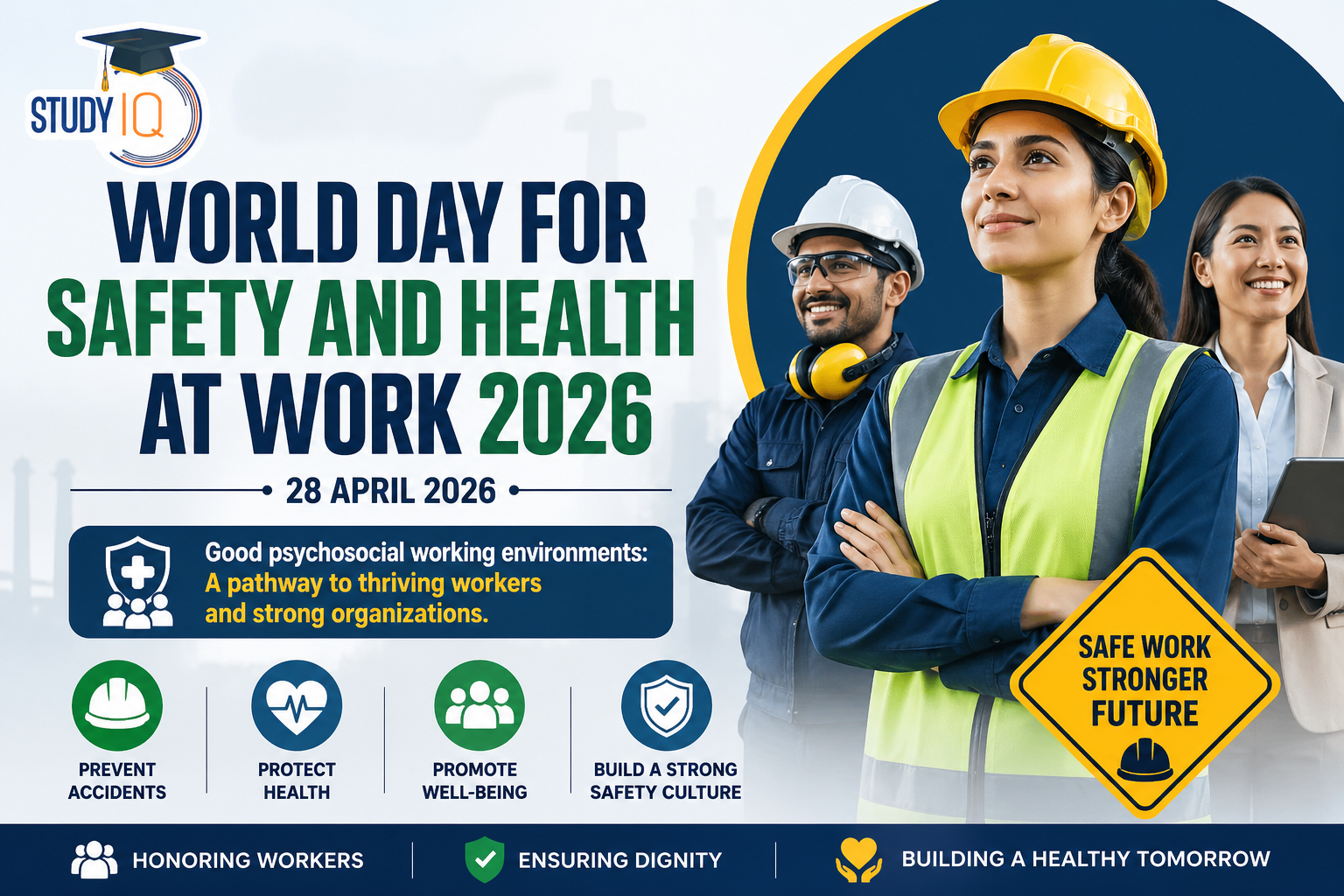
World Day for Safety and Health at Work 2026 is observed globally on 28 April to promote safe, healthy, and decent working conditions across industries. Led by the International Labour Organization, this international observance focuses on preventing workplace accidents, occupational diseases, and ensuring worker well-being. It also serves as a reminder of the human cost of unsafe workplaces and the need for stronger safety systems worldwide.
UPSC Daily Current Affairs 2026
Theme 2026: Focus on Psychosocial Work Environment
The official theme for 2026 is:
“Good psychosocial working environments: A pathway to thriving workers and strong organizations.”
This theme highlights a crucial shift in workplace safety thinking—from physical hazards to mental and emotional well-being.
Key Aspects of the 2026 Theme
- Mental health at the workplace
- Stress management and burnout prevention
- Fair treatment and inclusive work culture
- Workload balance and job design
- Supportive leadership and communication
A psychosocial working environment refers to how work structure, relationships, and organizational culture affect employees’ mental health and performance.
The 2026 campaign emphasizes that psychological safety is as important as physical safety, especially in modern workplaces influenced by digitalization and high work pressure.
Background and History
- The day is observed annually on 28 April worldwide.
- It was officially established by the International Labour Organization in 2003 to promote a global culture of prevention in occupational safety and health.
- It is closely linked with the Workers’ Memorial Day (since 1996), which honors workers who lost their lives due to workplace accidents or diseases.
Historical Evolution
- Originated from labour rights movements demanding safer working conditions
- Strengthened after the Industrial Revolution, when unsafe workplaces led to reforms
- Expanded today to include mental health, digital risks, and climate-related hazards
Objectives of the Day
The primary goals of World Day for Safety and Health at Work include:
- Prevent workplace accidents and occupational diseases
- Promote a culture of safety and prevention
- Raise global awareness about workplace risks
- Encourage policy reforms and compliance with labour standards
- Protect worker dignity, rights, and well-being
The observance encourages collaboration between governments, employers, workers, and international organizations to improve workplace safety frameworks.
Global Importance of Workplace Safety
1. Rising Workplace Risks
Despite progress, workplace hazards remain a major concern:
- Around 2.93 million workers die annually due to work-related causes
- Nearly 395 million non-fatal injuries occur each year globally
These figures highlight the urgent need for stronger safety systems and awareness.
2. Expanding Scope of Safety
Workplace safety is no longer limited to physical hazards like machinery or chemicals. It now includes:
- Mental health issues (stress, anxiety, burnout)
- Digital workplace pressure
- Work-life imbalance
- Organizational culture and leadership
The 2026 theme reinforces that unsafe mental environments can also lead to physical accidents.
3. Link with Economic Growth
Safe workplaces contribute to:
- Higher productivity
- Reduced absenteeism
- Improved employee satisfaction
- Sustainable economic development
Thus, occupational safety is not just a social issue but also an economic priority.
4. Alignment with Global Goals
The observance aligns with:
- SDG 8: Decent Work and Economic Growth
- Global labour standards set by the International Labour Organization
It promotes the idea that a safe and healthy working environment is a fundamental right at work.
Modern Challenges in Workplace Safety
1. Psychosocial Risks
- Work stress, fatigue, and burnout
- Lack of support and poor communication
- Job insecurity and excessive workload
2. Digitalization & AI
- Increased screen time and mental fatigue
- Blurring of work-life boundaries
- Algorithm-driven work pressure
3. Informal Sector Issues (Important for India)
- Lack of regulation
- Unsafe working conditions
- Limited access to healthcare and safety equipment
Measures to Improve Workplace Safety
For Governments
- Strengthening labour laws and enforcement
- Promoting occupational safety policies
- Expanding social security coverage
For Employers
- Creating a positive work culture
- Providing safety training and awareness programs
- Ensuring mental health support systems
For Workers
- Following safety protocols
- Reporting hazards
- Participating in safety training
Relevance for India
In India, workplace safety is governed by laws such as:
- Occupational Safety, Health and Working Conditions Code, 2020
- Factories Act and labour reforms
With a large informal workforce, India faces challenges like:
- Poor enforcement of safety standards
- Limited awareness about occupational health
- Increasing mental stress in urban workplaces
Thus, the 2026 theme is highly relevant for India’s evolving labour market.
|
Read More Notes |
|
| Environment Notes | Art and Culture Notes |
| Science and Tech | History Notes |
| Geography Notes | Indian Polity Notes |
| General Knowledge | International Relation |
|
Explore StudyIQ Courses |
|
 Ladakh Governance Crisis 2026: Statehood...
 UN Reform 2026: Challenges, Proposals an...
 China Zorrilla: World’s Largest Batter...














 WhatsApp