
Table of Contents
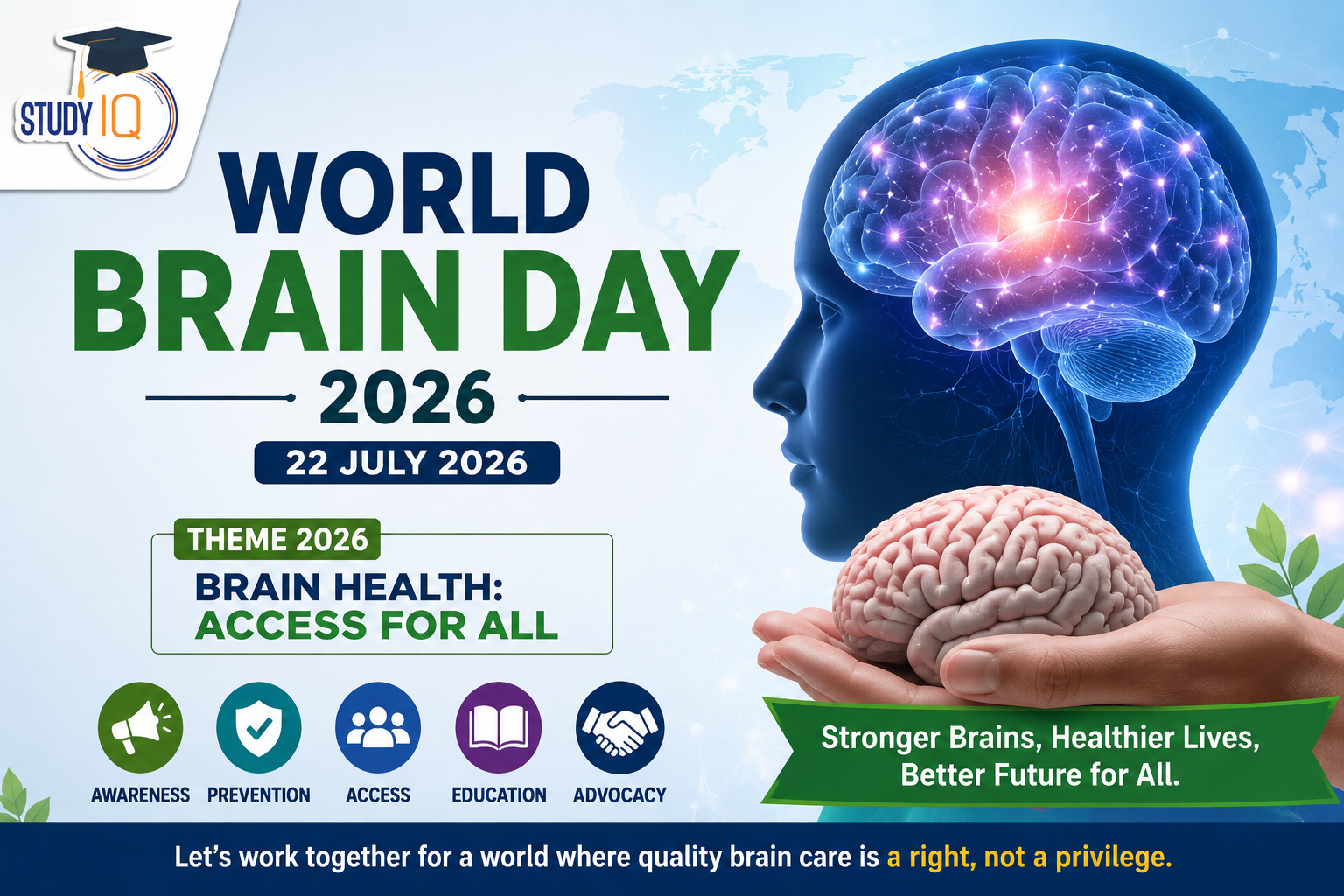
World Brain Day 2026 is observed globally on 22 July 2026 to spread awareness about brain health and the growing burden of neurological disorders. Organized annually by the World Federation of Neurology (WFN), the campaign highlights the importance of early diagnosis, prevention, equitable healthcare access, and public awareness to reduce the impact of neurological diseases.
The World Brain Day 2026 theme, “Brain Health: Access For All,” emphasizes that quality neurological care should be available to everyone, regardless of income, location, or social background. The campaign also encourages governments, healthcare professionals, and communities to work together to improve brain healthcare systems worldwide.
Read Also: UPSC Daily Current Affairs 2026
World Brain Day 2026 Overview
| Particular | Details |
|---|---|
| Event | World Brain Day 2026 |
| Date | 22 July 2026 |
| Day | Wednesday |
| Theme | Brain Health: Access For All |
| Organized By | World Federation of Neurology (WFN) |
| First Observed | 2014 |
| Purpose | Promote awareness about neurological disorders and improve access to brain healthcare |
| Official Website | https://wfneurology.org |
World Brain Day 2026 Theme
The official World Brain Day 2026 Theme is:
“Brain Health: Access For All”
This year’s campaign calls for universal access to quality neurological healthcare. Millions of people worldwide continue to face barriers in receiving timely diagnosis, treatment, rehabilitation, and specialist care for neurological disorders.
The campaign stresses that brain health is a basic human right, not a privilege available only to a few.
Key Objectives of the Theme
- Improve access to neurological healthcare worldwide.
- Ensure affordable diagnosis and treatment.
- Promote early detection of neurological diseases.
- Reduce inequalities in healthcare delivery.
- Strengthen healthcare infrastructure.
- Increase awareness about brain health.
- Support rehabilitation services for neurological patients.
- Encourage government investment in neurological research.
What is World Brain Day?
World Brain Day is an international awareness campaign celebrated every year on 22 July to educate people about brain health and neurological diseases.
The campaign brings together:
- Neurologists
- Healthcare professionals
- Governments
- Medical institutions
- Patient organizations
- Researchers
Together, they work to improve awareness, prevention, treatment, rehabilitation, and research related to neurological disorders.
History of World Brain Day
The history of World Brain Day is closely associated with the World Federation of Neurology (WFN).
| Year | Key Milestone |
|---|---|
| 22 July 1957 | The World Federation of Neurology (WFN) was established, laying the foundation for global collaboration in neurological care and research. |
| 2013 | The WFN Advocacy Committee proposed the creation of World Brain Day during the World Congress of Neurology (WCN) Delegates’ Council meeting to promote global awareness of brain health. |
| February 2014 | The proposal was officially approved by the WFN Board of Trustees, making World Brain Day an annual global awareness campaign. |
| 22 July 2014 | The first World Brain Day was observed worldwide, marking the beginning of a global initiative to promote brain health and raise awareness about neurological disorders. |
| 2015–Present | World Brain Day has grown into a major international campaign, with each year focusing on a specific theme to promote awareness, prevention, early diagnosis, equitable access to neurological care, and global collaboration in brain health. |
Why is World Brain Day Celebrated?
Brain disorders affect hundreds of millions of people globally and are among the leading causes of disability and premature death.
World Brain Day is celebrated to:
- Raise awareness about neurological diseases.
- Encourage healthy lifestyle habits.
- Promote early diagnosis.
- Improve access to treatment.
- Reduce stigma associated with neurological disorders.
- Support patients and caregivers.
- Encourage research and innovation.
The campaign reminds people that prevention and early intervention can significantly improve outcomes.
Significance of World Brain Day
World Brain Day is important because neurological disorders continue to rise due to:
- Increasing life expectancy
- Sedentary lifestyles
- Diabetes
- Hypertension
- Obesity
- Air pollution
- Smoking
- Stress
The campaign encourages governments and healthcare organizations to invest more in neurological services and public awareness.
Its significance includes:
- Promoting healthy lifestyles.
- Reducing preventable brain diseases.
- Improving healthcare accessibility.
- Supporting neurological research.
- Encouraging early medical consultation.
- Enhancing quality of life for patients.
Objectives of World Brain Day
The World Federation of Neurology (WFN) aims to achieve the following objectives through World Brain Day:
- Awareness: Promote understanding of brain health and neurological disorders.
- Prevention: Encourage healthy lifestyle habits to reduce the risk of brain diseases.
- Access: Ensure equitable access to diagnosis, treatment, and rehabilitation services.
- Education: Improve public knowledge and dispel myths about neurological conditions.
- Advocacy: Strengthen global collaboration to improve brain health policies, research, and care.
Common Neurological Disorders
Some of the most common brain and nervous system disorders include:
- Stroke
- Alzheimer’s disease
- Parkinson’s disease
- Dementia
- Epilepsy
- Migraine
- Multiple Sclerosis
- Brain Tumours
- Peripheral Neuropathy
- Huntington’s disease
- Cerebral Palsy
- Meningitis
Warning Signs of Neurological Disorders
Early diagnosis can improve treatment outcomes.
Consult a healthcare professional if you experience:
- Frequent memory loss
- Sudden weakness
- Difficulty speaking
- Loss of balance
- Persistent severe headaches
- Seizures
- Vision problems
- Tremors
- Confusion
- Numbness
10 Healthy Brain Tips
Maintaining brain health begins with everyday lifestyle choices.
| Healthy Habit | How It Helps Your Brain |
|---|---|
| Exercise Regularly | Improves blood circulation, boosts memory, and promotes the growth of new brain cells. |
| Eat a Balanced Diet | Consume fruits, vegetables, whole grains, nuts, fish, and healthy fats to nourish brain function. |
| Get Quality Sleep | Aim for 7–9 hours of sleep to support memory, learning, and brain repair. |
| Keep Your Mind Active | Read, solve puzzles, learn new skills, or play musical instruments to strengthen cognitive abilities. |
| Manage Stress | Practice meditation, yoga, or deep breathing to reduce stress and improve focus. |
| Stay Socially Connected | Maintain meaningful relationships and engage in social activities to support mental and emotional well-being. |
| Control Blood Pressure & Diabetes | Manage chronic conditions to reduce the risk of stroke, dementia, and cognitive decline. |
| Avoid Smoking & Limit Alcohol | Protect brain cells by avoiding tobacco and consuming alcohol only in moderation. |
| Stay Hydrated | Drink adequate water throughout the day to maintain concentration, memory, and alertness. |
| Get Regular Health Check-ups | Early screening and timely medical care help detect and treat neurological disorders effectively. |
World Brain Day Themes (Recent Years)
| Year | Theme |
|---|---|
| 2026 | Brain Health: Access For All |
| 2025 | Brain Health for All Ages |
| 2024 | Brain Health and Prevention |
| 2023 | Brain Health and Disability |
| 2022 | Brain Health for All |
| 2021 | Stop Multiple Sclerosis |
| 2020 | Move Together to End Parkinson’s Disease |
| 2019 | Migraine – The Painful Truth |
| 2018 | Clean Air for Brain Health |
| 2017 | Stroke is a Brain Attack |
How Can You Participate in World Brain Day?
You can contribute by:
- Sharing awareness messages on social media.
- Attending health camps and webinars.
- Learning about neurological disorders.
- Encouraging family members to adopt healthy habits.
- Supporting organizations working for brain health.
- Scheduling regular health check-ups.
 Supreme Court on Children's Right to Int...
 Daily Current Affairs PDF 2026: Download...
 Daily Mains Articles 2026 – Updated Da...













 WhatsApp





