
Table of Contents
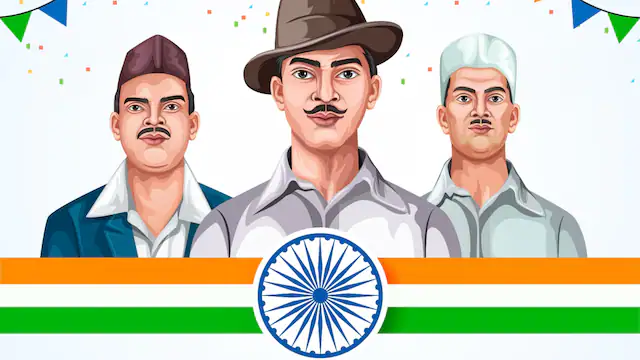
Shaheed Diwas 2026, observed on March 23, is a day of immense national importance in India. It commemorates the supreme sacrifice of three young revolutionaries, Bhagat Singh, Shivaram Rajguru, and Sukhdev Thapar, who were executed by British colonial authorities in 1931.
Their courage, ideological clarity, and fearless resistance against oppression continue to inspire generations.
Historical Background of Shaheed Diwas 2026
The roots of Shaheed Diwas lie in the turbulent phase of India’s freedom struggle during the late 1920s.
Simon Commission Protest and Lala Lajpat Rai
In 1928, the British government sent the Simon Commission to India without a single Indian member. This led to nationwide protests.
During one such protest in Lahore, Lala Lajpat Rai was brutally lathi-charged by police and later succumbed to his injuries.
Revenge and Saunders Assassination
Angered by Rai’s death, Bhagat Singh and his associates planned to assassinate British officer James Scott. However, they mistakenly killed John Saunders instead.
Central Legislative Assembly Bombing (1929)
On April 8, 1929, Bhagat Singh and Batukeshwar Dutt threw non-lethal bombs in the Central Legislative Assembly to protest oppressive laws. Their aim was symbolic — “to make the deaf hear.”
Execution on March 23, 1931
Eventually, Bhagat Singh, Rajguru, and Sukhdev were arrested, tried, and executed in Lahore Central Jail, marking one of the most emotional chapters in Indian history.
Who Were Bhagat Singh, Rajguru, and Sukhdev?
On March 23, 1931, Bhagat Singh, Shivaram Rajguru, and Sukhdev Thapar were hanged at Lahore Central Jail for their involvement in the Lahore Conspiracy Case. Their execution was a turning point in India’s independence movement, igniting widespread protests and inspiring generations of revolutionaries.
| Freedom Fighter | Contribution |
|---|---|
| Bhagat Singh | Revolutionary leader, writer, and member of Hindustan Socialist Republican Association (HSRA). Played a key role in the assembly bombing case. |
| Shivaram Rajguru | Brave nationalist known for his role in the assassination of British police officer J.P. Saunders. |
| Sukhdev Thapar | Freedom fighter and key strategist in India’s revolutionary movement. |
These revolutionaries sought to overthrow British rule through direct action, believing that independence could be achieved only through armed resistance.
Significance of Shaheed Diwas
Shaheed Diwas holds immense significance in India’s history and national consciousness:
- Tribute to Freedom Fighters: A day to remember and honor those who sacrificed their lives for India’s independence.
- Inspiration for Youth: Bhagat Singh’s ideologies continue to inspire young generations to work towards a just and progressive society.
- Nationalism and Patriotism: It reinforces the spirit of nationalism and reminds citizens of the sacrifices made for India’s freedom.
- Lessons in Courage and Justice: Their struggle highlights the values of courage, selflessness, and fighting against injustice.
How is Shaheed Diwas Observed?
Various events and programs take place across the country on this day:
- Tributes and Floral Offerings: Political leaders, social activists, and citizens pay homage at Shaheed Smarak (Martyrs’ Memorials) across India.
- School and College Events: Educational institutions organize debates, essay competitions, and seminars on the lives of freedom fighters.
- Documentaries and Films: Special programs on Bhagat Singh and other martyrs are aired on television and online platforms.
- Processions and Public Gatherings: Patriotic marches and candlelight vigils are held to commemorate their sacrifices.
Shaheed Diwas 2026: Special Observances
- Official Tributes: Wreath-laying at memorials like Hussainiwala National Martyrs Memorial; speeches by leaders.
- Educational Activities: School assemblies, debates, essay competitions, film screenings.
- Public Participation: Candle marches, street plays, patriotic programs.
- Social Initiatives: Blood donation drives, awareness campaigns (shift toward service-based tribute).
- Memorial Visits: Citizens visit sites linked to Bhagat Singh, Rajguru, Sukhdev.
- Digital Observance: Social media campaigns, sharing quotes and history.
- Symbolic Acts: Two-minute silence, flag hoisting.
Bhagat Singh’s Ideology and Relevance Today
Bhagat Singh was not just a freedom fighter but also a thinker who deeply analyzed social and economic inequalities. His vision included:
- A secular and socialist India
- Eradication of caste-based discrimination
- Empowerment of youth and workers
- Resistance against colonial and oppressive forces
Key Quotes by Bhagat Singh
- “Bombs and pistols do not make a revolution. The sword of revolution is sharpened on the whetting stone of ideas.”
- “It is easy to kill individuals, but you cannot kill the ideas. Great empires crumbled, while the ideas survived.”
Conclusion
Shaheed Diwas is not merely about remembering the past; it is about understanding the ideological strength, courage, and vision of India’s youth who challenged an empire.
The legacy of Bhagat Singh, Rajguru, and Sukhdev continues to guide India’s democratic and moral compass. Their sacrifice reminds us that freedom is not just inherited, it must be understood, preserved, and strengthened.

 Gandhi Jayanti 2026: History, Significan...
 Right to Vote in India: Constitutional S...
 Daily Mains Articles 2026 – Updated Da...













 WhatsApp





