Table of Contents
Context
U.S. Departments of Energy and Defense transported a nuclear microreactor by a C-17 military aircraft from California to Utah. The event demonstrated that such reactors can be safely moved by air, showcasing rapid deployment capability.
|
What are Nuclear Microreactors? |
|||||||||||||||
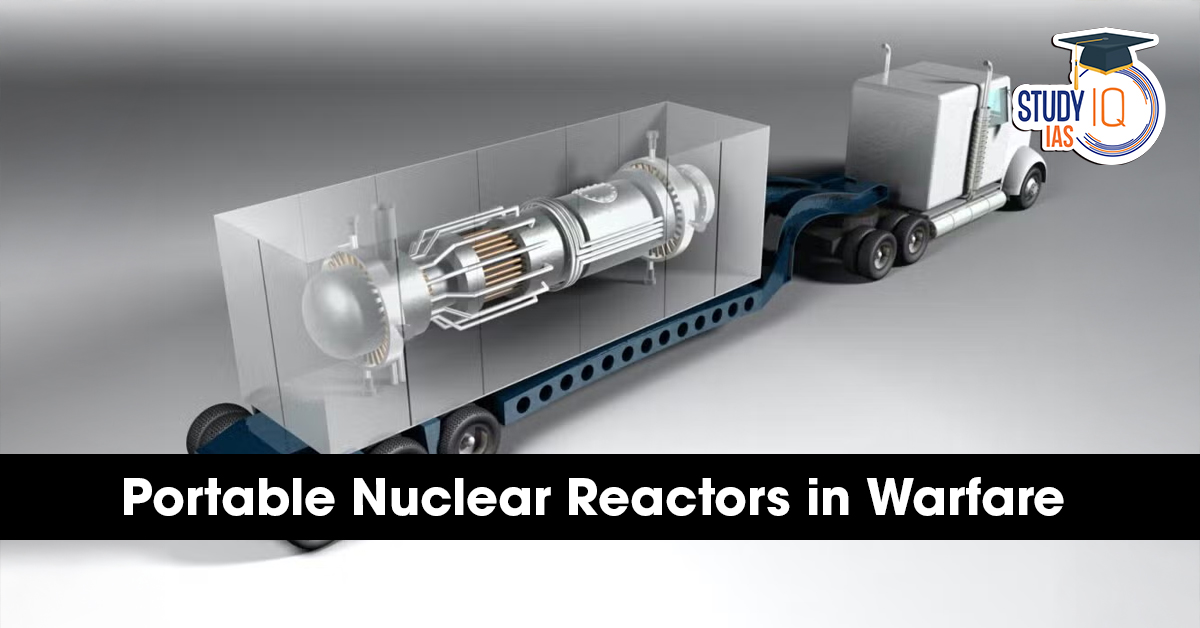
| ● Definition and Size: It generate between 1 to 20 megawatts (MW) of electricity. Unlike large nuclear plants producing over 1,000 MW, microreactors are compact and designed for localised power needs.
● Portable and Modular Design: They are built in factories and transported as nearly complete units. ● Intended Applications: They are meant to power military bases, remote communities, mining sites, research stations, and disaster-hit areas where grid electricity is unavailable or unreliable. Basic Configuration of a Microreactor ● Reactor Core: The reactor core contains enriched uranium fuel. When nuclear fission occurs, it releases heat in a controlled manner, forming the primary source of energy. ● Heat Removal System: The heat generated is transferred using coolants such as gas, liquid metal, or molten salt. This prevents overheating and ensures safe operation. ● Power Conversion Unit: The heat is converted into electricity through turbines or advanced power conversion systems, similar to traditional power plants but on a smaller scale. ● Containment and Safety Features: Microreactors are sealed units with passive safety systems. These systems automatically shut down the reactor if problems arise, reducing dependence on human intervention. Difference Between Microreactors and Small Modular Reactors (SMRs)
|
Strategic Significance of the Recent Transportation
- Rapid Military Deployment Capability: Transporting the microreactor via military aircraft shows that nuclear power can be deployed quickly to strategic locations. This enhances battlefield energy independence and reduces logistical vulnerabilities.
- Reduced Fuel Convoy Risks: Military fuel convoys are often targeted in conflict zones. Microreactors reduce the need for constant diesel fuel supply, thereby lowering security risks.
- Support for AI and Advanced Infrastructure: As AI data centres require massive energy, small nuclear reactors could provide reliable, carbon-free power for critical digital infrastructure.
- Geopolitical Signalling: The demonstration sends a message that the U.S. is investing in next-generation nuclear technology, strengthening its technological leadership amid global competition with China and Russia.
Scientific Significance
- Advancement in Compact Nuclear Engineering: It represents innovation in miniaturising nuclear technology while maintaining efficiency and safety. This marks a shift from large centralised reactors to decentralised power systems.
- Use of Advanced Fuels (HALEU): It increases efficiency and extends fuel life. However, this requires specialised enrichment facilities.
- Factory-Based Manufacturing Model: Unlike traditional reactors built on-site over years, microreactors are factory-assembled. This reduces construction delays and improves quality control.
Challenges
- High Cost of Electricity: Experts argue that microreactors may generate electricity at a higher cost compared to solar, wind, or even large nuclear reactors, raising doubts about commercial viability.
- Nuclear Waste Disposal: Even small reactors generate radioactive waste. The long-term disposal of nuclear waste remains unresolved globally, creating environmental and political concerns.
- Fuel Supply Constraints: The requirement of HALEU fuel creates supply chain challenges, as enrichment capacity is limited and geopolitically sensitive.
- Safety and Proliferation Risks: Although designed with advanced safety features, concerns remain about the security of enriched uranium and potential misuse.
 Child Marriage in India: Causes, Impacts...
 World Development Report 2026: The Promi...
 US Suspension of PERM Filings by Major I...














 WhatsApp