Table of Contents
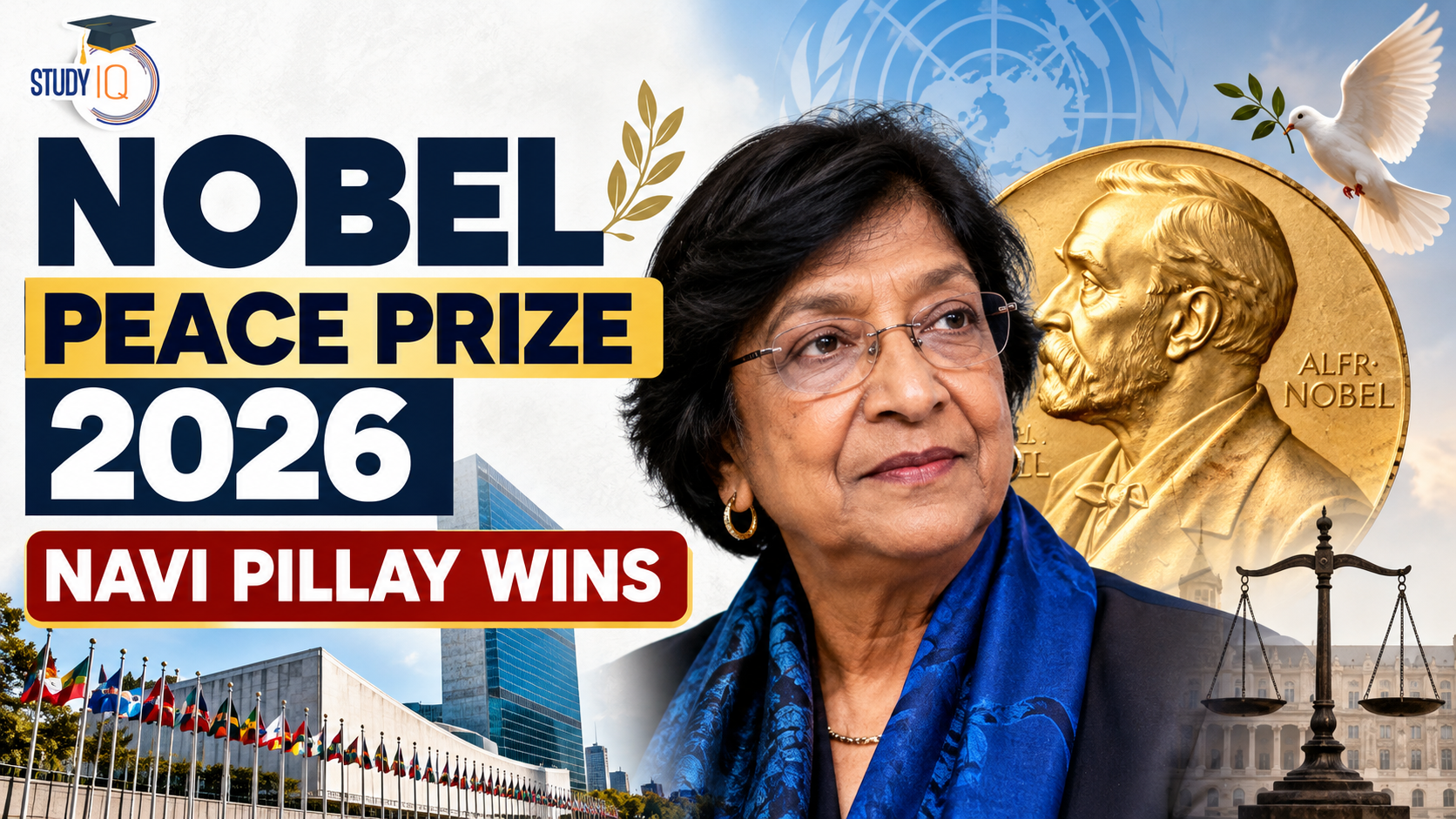
According to the news report shared by The Hindu, South African jurist Navanethem “Navi” Pillay has been awarded the Nobel Peace Prize 2026 for her contributions to peace, international law and the rule of law.
The reported recognition highlights the importance of justice, accountability and human rights in resolving conflicts peacefully.
Read Also: UPSC Daily Current Affairs 2026
Who Is Navi Pillay?
-
Full name: Navanethem Pillay
-
Popular name: Navi Pillay
-
Nationality: South African
-
Ancestry: Indian Tamil
-
Profession: Jurist and human rights advocate
-
Known for: International justice, human rights protection and combating discrimination.
Born in Durban, South Africa, Navi Pillay built her legal career during the apartheid era, when racial discrimination was institutionalised. Her work contributed to the advancement of equality, justice and human rights.
Major Contributions of Navi Pillay
-
South African judiciary: Served as a judge of the High Court of South Africa.
-
International Criminal Tribunal for Rwanda: Served as a judge at the tribunal established to prosecute crimes committed during the 1994 Rwandan genocide.
-
International Criminal Court: Served as a judge at the ICC.
-
UN High Commissioner for Human Rights: Led the United Nations human rights office from 2008 to 2014.
-
International investigations: Played a role in international human rights initiatives, including the inquiry into the situation in the Occupied Palestinian Territory, as reported in the supplied article.
-
Myanmar genocide case: The report identifies her as a judge involved in the International Court of Justice proceedings concerning allegations of genocide against Myanmar.
Why Is the Nobel Peace Prize Important?
The Nobel Peace Prize recognises contributions towards peace, international cooperation and conflict resolution. The reported selection of Navi Pillay underscores several important principles:
-
Rule of law: National and international laws provide mechanisms for resolving disputes peacefully.
-
Human rights: Protection of fundamental rights is essential for lasting peace.
-
Accountability: International legal institutions can help address serious violations of international law.
-
Non-discrimination: Equal treatment and protection from racial discrimination strengthen democratic societies.
Important International Institutions for UPSC
| Institution | Primary function |
|---|---|
| International Court of Justice (ICJ) | Resolves legal disputes between states and provides advisory opinions. |
| International Criminal Court (ICC) | Prosecutes individuals for specified international crimes under its jurisdiction. |
| International Criminal Tribunal for Rwanda (ICTR) | Prosecuted individuals responsible for genocide and other serious crimes in Rwanda. |
| UN Human Rights Office (OHCHR) | Promotes and protects human rights worldwide. |
Significance for India
Navi Pillay’s Indian Tamil heritage highlights the contributions of people of Indian origin to international institutions. Her reported recognition also connects with India’s constitutional emphasis on equality, dignity and international peace.
-
Article 14: Equality before the law and equal protection of the laws.
-
Article 21: Protection of life and personal liberty.
-
Article 51: Promotion of international peace and security and respect for international law.

 RBI Repo Rate Hike to 5.50%: Impact on L...
 Nobel Prize in Literature 2026: Anne Car...
 World Post Day 2026: Date, History, Sign...














 WhatsApp