Table of Contents
Context
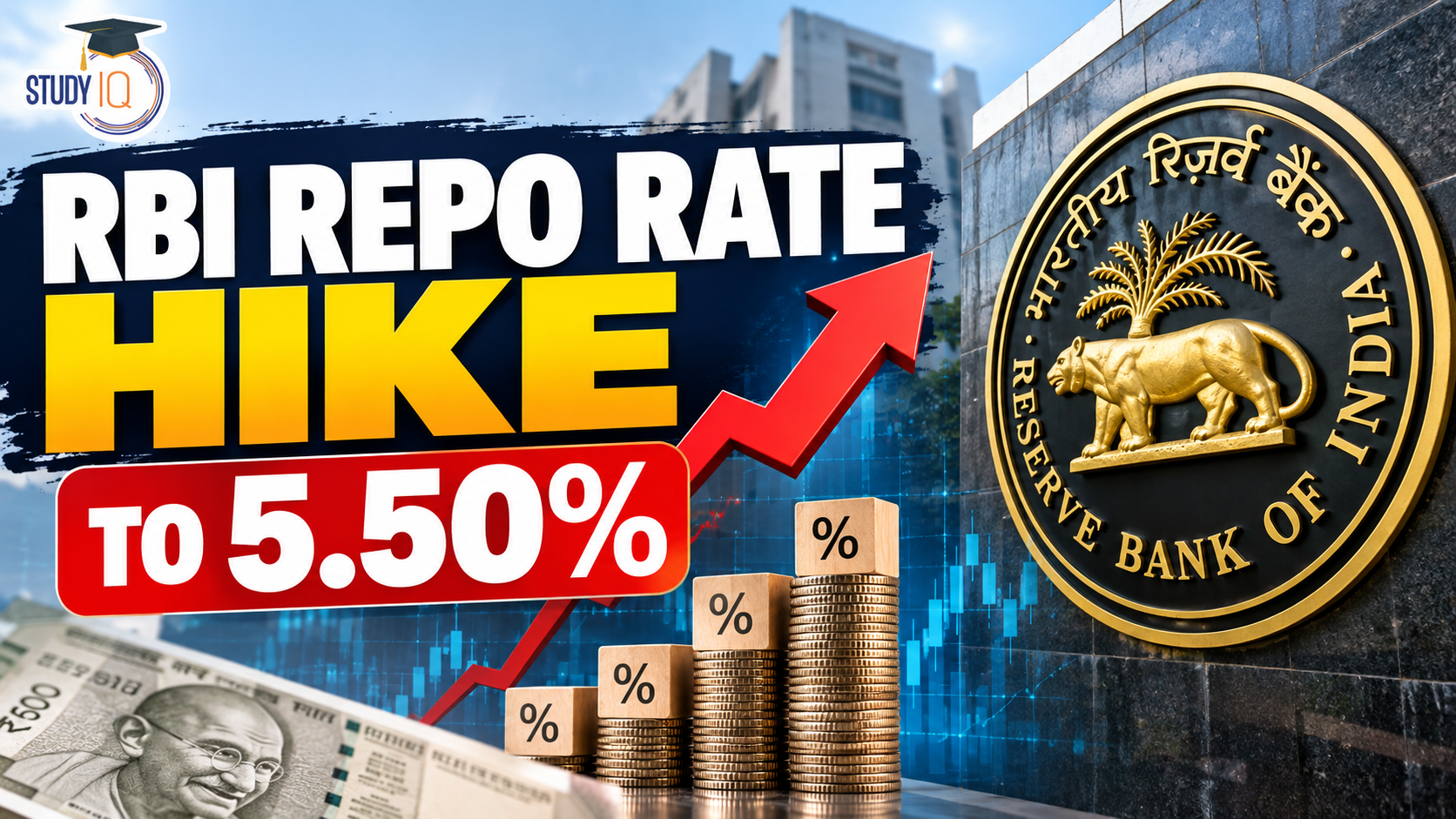
The Reserve Bank of India’s (RBI) Monetary Policy Committee (MPC) raised the policy repo rate by 25 basis points to 5.50% and changed its stance from ‘neutral’ to ‘calibrated tightening’.
About Repo Rate
- Definition: The interest rate at which the RBI lends commercial banks short-term funds against eligible government securities.
- Policy Framework: The repo rate is a key instrument of monetary policy under the Liquidity Adjustment Facility (LAF).
- Objective: Manage inflation, regulate liquidity and maintain macroeconomic stability.
Current Policy Rates
- Repo Rate: 5.50%
- Standing Deposit Facility (SDF): 5.25%
- Marginal Standing Facility (MSF): 5.75%
- Bank Rate: 5.75%.
How Does a Repo Rate Hike Work?
- Higher Borrowing Costs: Increases banks’ borrowing costs from the RBI.
- Credit Transmission: Banks may raise lending rates on loans linked to the policy repo rate.
- Lower Demand: Costlier loans can moderate consumption and investment, helping control inflation.
Key Implications
- Borrowers: Floating-rate home, vehicle and business loans may become more expensive, increasing EMIs or repayment periods.
- Savers: Banks may raise fixed deposit interest rates, improving returns for depositors.
- Inflation: Higher borrowing costs may moderate aggregate demand and price pressures.
- Currency & Capital Flows: Higher interest rates may support the rupee by improving the relative attractiveness of domestic financial assets, though the impact depends on global conditions.

 Nobel Peace Prize 2026: Navi Pillay Wins...
 Nobel Prize in Literature 2026: Anne Car...
 World Post Day 2026: Date, History, Sign...














 WhatsApp