
Table of Contents
Context: The Chief of the Naval Staff visited the National Maritime Heritage Complex (NMHC) at Lothal, Gujarat.
About National Maritime Heritage Complex (NMHC)
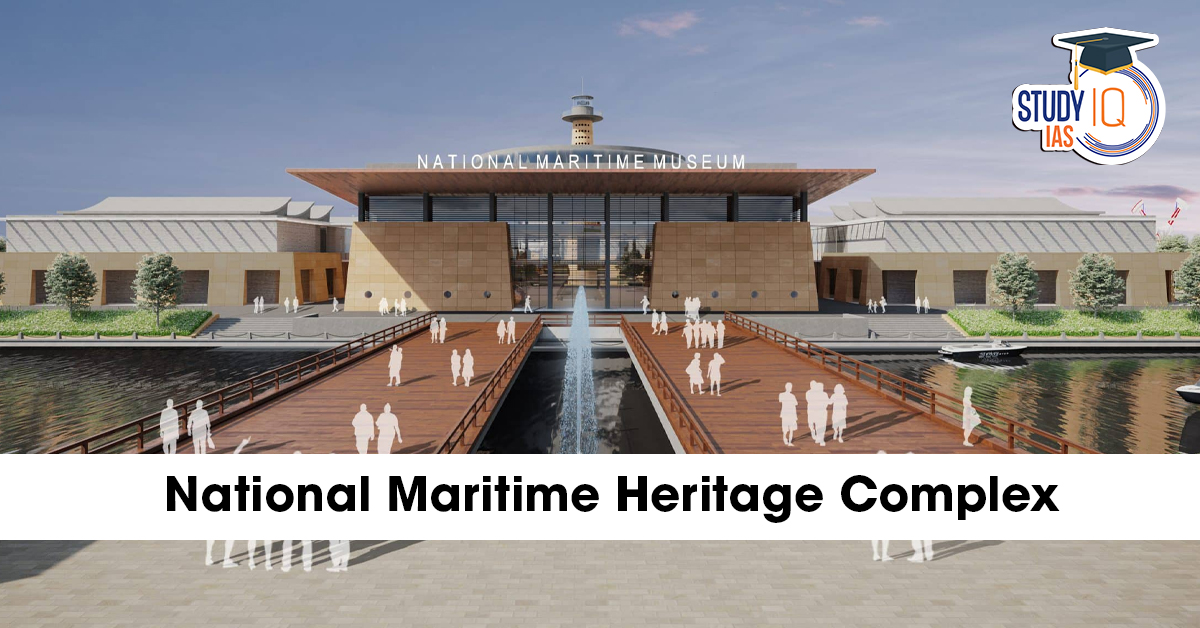
The National Maritime Heritage Complex (NMHC) is one of India’s most ambitious cultural infrastructure projects, aimed at showcasing the country’s 4,500-year-old maritime history. Located at Lothal in Gujarat, the NMHC seeks to emerge as a world-class maritime museum and heritage hub, highlighting India’s ancient seafaring traditions, shipbuilding expertise, naval power, and trade networks. The project aligns with India’s broader vision of heritage-led development, cultural diplomacy, and maritime awareness.
- Purpose: The project aims to showcase India’s 4,500-year-old maritime heritage and will become the world’s greatest maritime complex once completed.
- Components: The complex will include several features such as a Lighthouse Museum and a five-dimensional theatre offering interactive experiences.
- Development: By the Ministry of Ports, Shipping, and Waterways.
Key Objectives
- Preserve and promote India’s maritime heritage
- Create a global centre for maritime research and education
- Enhance tourism and cultural diplomacy
- Promote maritime consciousness among citizens
About Lothal
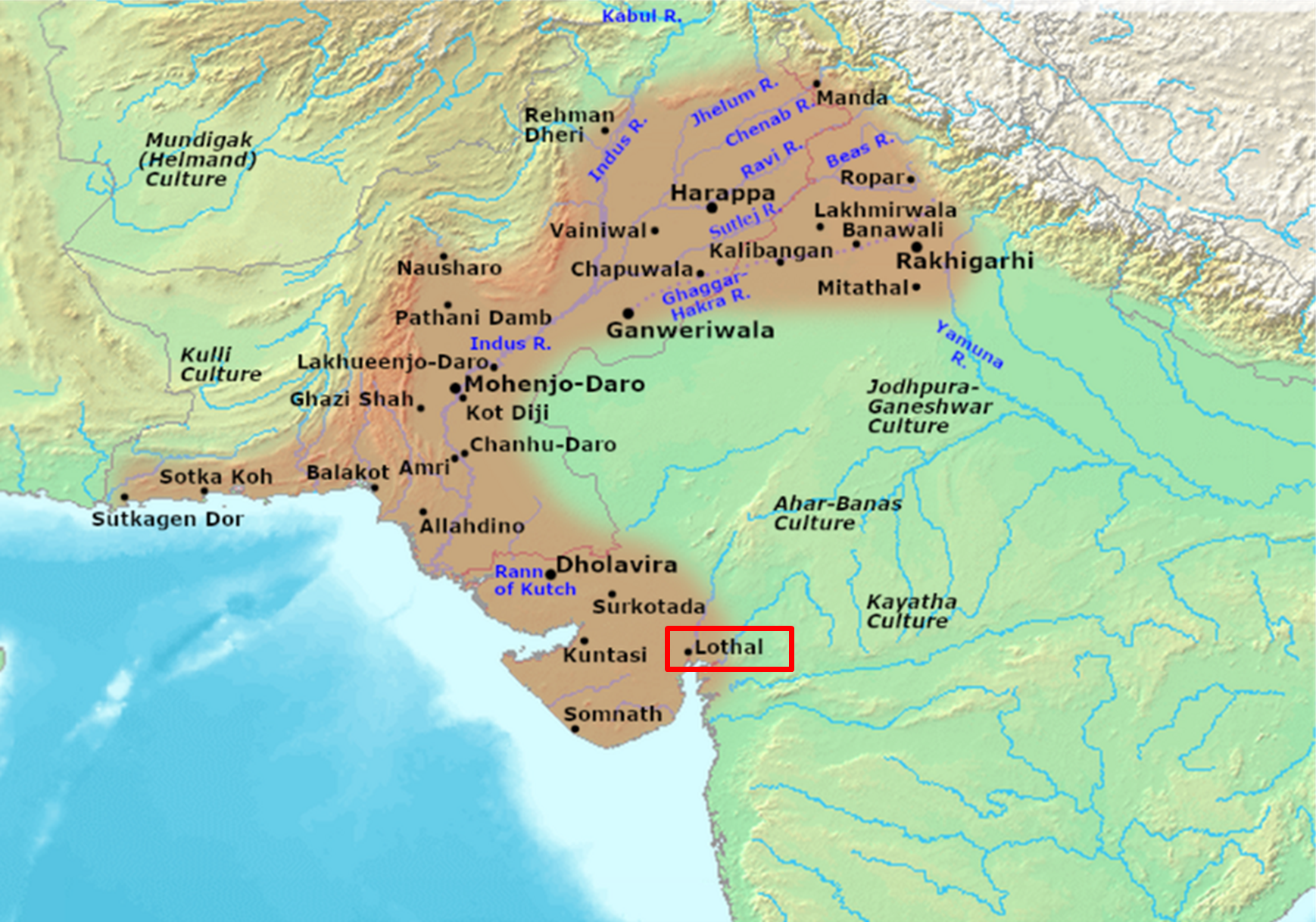
- Location: Lothal, a southernmost site of the Indus Valley Civilisation, is believed to have been built around 2200 BC.
- It is located along the Bhogava River, a tributary of the Sabarmati, in the Gulf of Khambhat (Gujarat).
- Meaning: The name Lothal means “mound of the dead” in Gujarati.
- Discovered by: SR Rao.
- Excavation took place from 1955 to 1960.
Features
- The only port town of the Indus Valley Civilisation.
- It was known for its harbour, cotton and rice-growing, and bead-making industry.
- It was part of a coastal trade route, linking sites such as Dholavira and Sutkagen Dor on the Makran coast.
- It was divided into a citadel (upper town) and a lower town.
- Buildings were made of fire-dried bricks, lime, and sand mortar.
- The city had a well-planned and sophisticated drainage system.
Key Archaeological Findings
- Dockyard
- Persian Gulf Seals
- Shops for shell ornaments and beads
- Metal worker’s shop
- Fire altars
- Terracotta house figurine
- Warehouse
- Merchant house
- Cloth impressions on some seals
- Twelve bathrooms in the citadel
- Well
- Ivory Scale: The smallest known decimal scale from the Indus civilisation.
UNESCO Nomination
- Lothal was nominated as a UNESCO World Heritage Site in April 2014.
- It has not yet been granted full World Heritage status.
Why Lothal Was Chosen
Historical Significance of Lothal
-
Lothal was a major port city of the Indus Valley Civilisation
-
Home to one of the world’s earliest known dockyards
-
Evidence of:
-
Advanced urban planning
-
Maritime trade with Mesopotamia and West Asia
-
Tidal regulation and navigation techniques
-
Choosing Lothal connects India’s ancient maritime achievements with its contemporary maritime aspirations.
Key Components of the NMHC
1. Maritime Museums
-
Central Maritime Museum
-
Regional maritime history galleries
-
Naval and coastal heritage exhibits
2. Outdoor and Experiential Zones
-
Life-size ship replicas
-
Coastal village recreations
-
Open-air heritage displays
3. Research and Knowledge Centres
-
Maritime archives and libraries
-
Archaeological and historical research facilities
-
Academic collaboration hubs
4. Education and Public Outreach
-
Student learning zones
-
Interactive digital exhibits
-
Workshops and training programmes
Global Collaboration and International Partnerships
India has signed international MoUs, including with the Netherlands, to bring global best practices in:
-
Museum design and curation
-
Conservation and restoration
-
Visitor experience and digital engagement
These collaborations aim to position NMHC among the top maritime museums in the world.
Significance of the National Maritime Heritage Complex
Cultural Significance
-
Preserves India’s maritime identity
-
Strengthens cultural diplomacy
-
Promotes awareness of India’s civilisational continuity
Economic and Tourism Impact
-
Boosts heritage and coastal tourism
-
Generates employment in culture and services sectors
-
Enhances Gujarat’s tourism profile
Strategic and Maritime Awareness
- Reinforces India’s maritime mindset
- Complements initiatives like:
- Sagarmala Programme
- Blue Economy policy
- Maritime India Vision
NMHC and India’s Blue Economy Vision
The NMHC plays a soft-power role in supporting India’s Blue Economy, which includes:
- Sustainable maritime trade
- Port-led development
- Marine resource conservation
- Maritime innovation and technology
By highlighting historical maritime strength, NMHC strengthens the narrative of India as a responsible maritime power.
Social and Educational Inclusivity
- Affordable access for:
- Students
- Local communities
- Underprivileged groups
- Multilingual content
- Digital learning platforms for wider outreach
This ensures the NMHC remains inclusive and accessible, not elitist.
Challenges in Implementation
- Large-scale project execution
- Conservation of archaeological integrity
- Ensuring long-term financial sustainability
- Balancing tourism with heritage protection
Addressing these challenges requires strong governance, professional management, and continuous international collaboration.
Conclusion
The National Maritime Heritage Complex at Lothal represents a bold attempt to reconnect modern India with its ancient maritime roots. By blending heritage, education, tourism, and global collaboration, the NMHC is set to become a landmark institution that celebrates India’s past while supporting its maritime future. As India strengthens its role in global trade and ocean governance, the NMHC will stand as a powerful symbol of the nation’s enduring maritime legacy.

 Buddha Purnima 2026: Date, Time, History...
 Oor Pare Prehistoric Site: Location, Roc...
 Assam Election 2026: Exit Poll, Result D...













 WhatsApp





