
Table of Contents
Context
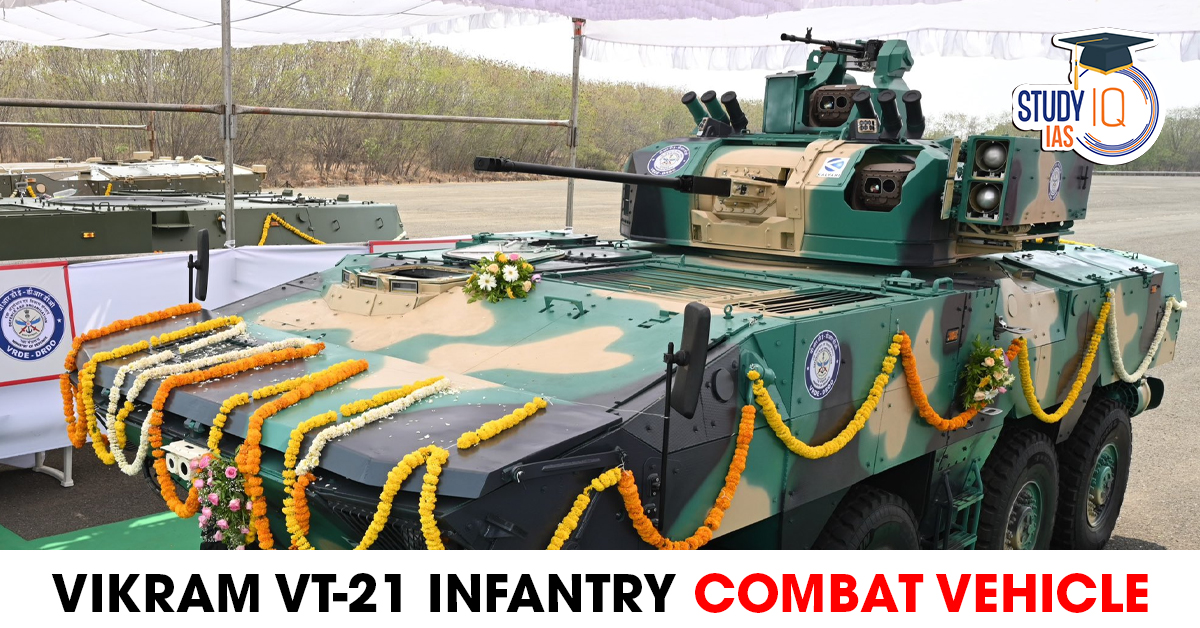
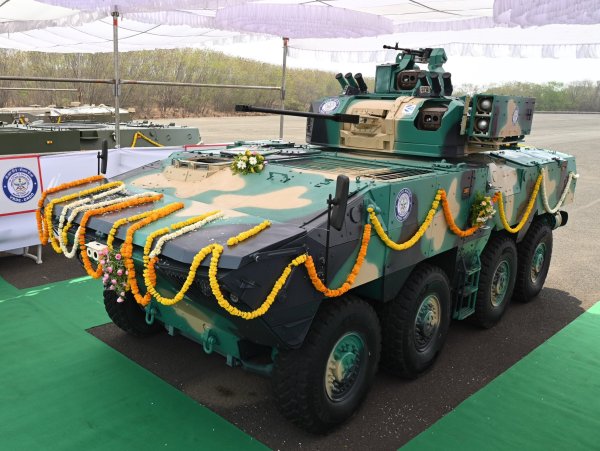
- India is developing the Vikram VT-21 under DRDO to replace ageing BMP-2 vehicles.
About Vikram VT-21
- Developed by DRDO as an Advanced Armoured Platform (AAP) for future infantry combat needs.
- Variants: Two versions—wheeled (faster, urban use) and tracked (better off-road, rough terrain), enabling flexibility across terrains.
- Firepower System: Equipped with 30 mm crewless turret (remote-operated) + 62 mm PKT machine gun + Nag ATGM (anti-tank missile) for precision strikes against armoured targets.
- Protection Level: Provides STANAG Level 4–5 armour protection(NATO defined standard), against heavy gunfire, blasts and shrapnel.
- Amphibious Capability: Can cross rivers and water bodies using hydro jets and water propulsion systems.
- Modular Design: Can be adapted for troop transport, reconnaissance, combat support and surveillance roles.
- Indigenisation: About 65% indigenous content (target ~90%), promoting self-reliance in defence manufacturing.
- Developed with partners like Bharat Forge and Tata Advanced Systems, along with MSMEs.
Need for Vikram VT-21
- Replacement of Ageing Fleet: Indian Army’s requirement for a Futuristic Infantry Combat Vehicle (FICV) stems from the need to replace the ageing BMP-2 fleet (in service since 1980s)
- Modern Warfare Requirements: Needed for network-centric warfare where real-time data sharing, sensors and communication are crucial for operations.
- Enhanced Combat Capability: Provides improved mobility, protection and firepower for infantry in high-threat environments (e.g. borders with China and Pakistan).
 Species in News: Cheetah | Project Cheet...
 Quantum Computing: RRI Scientists Demons...
 Artificial Intelligence in Warfare: How ...














 WhatsApp





