
Table of Contents
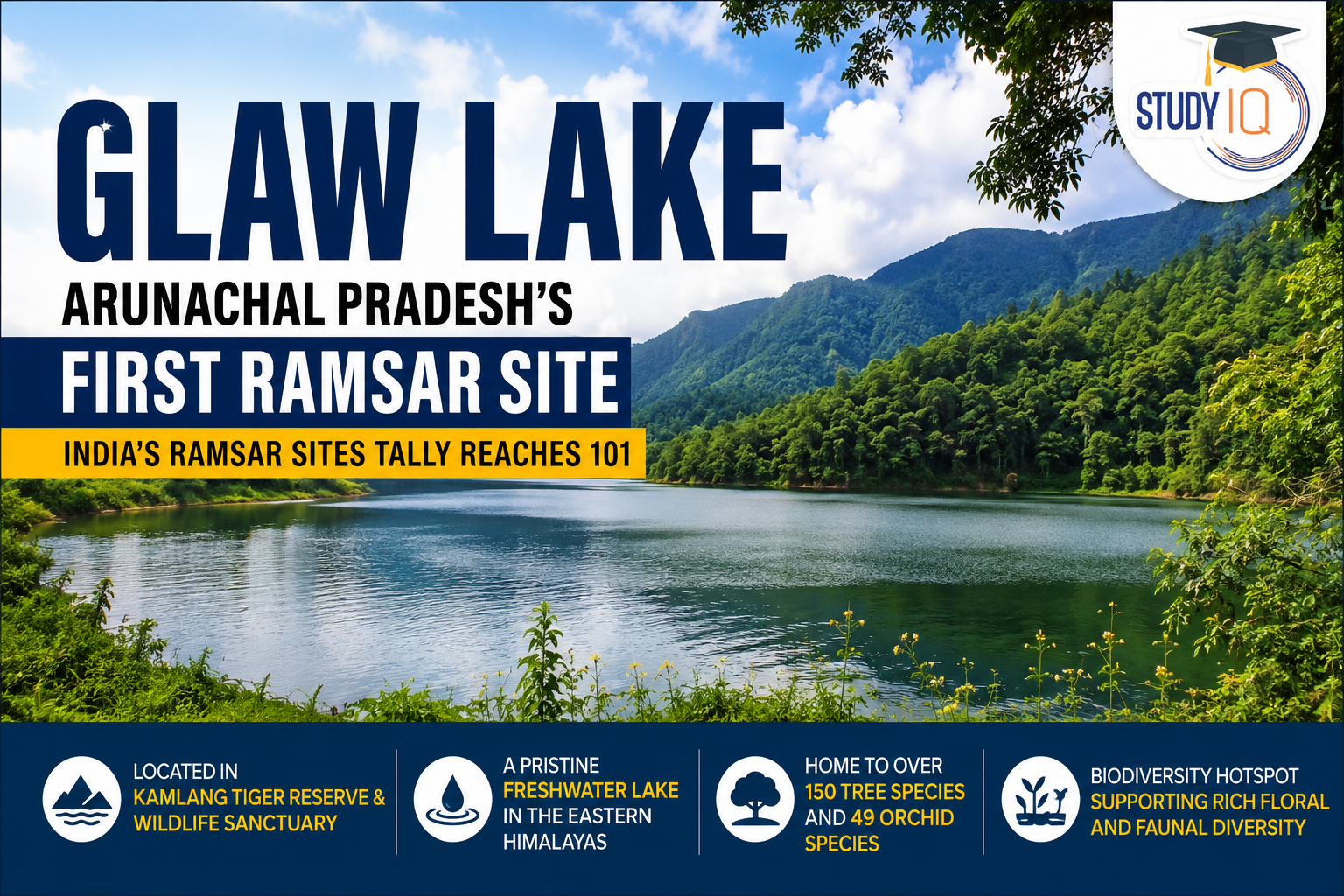
India has achieved another major milestone in wetland conservation with the designation of Glaw Lake in Arunachal Pradesh as the country’s 101st Ramsar Site. The announcement was made by Union Minister for Environment, Forest and Climate Change Bhupender Yadav on 3 August 2026, marking a historic achievement as Arunachal Pradesh receives its first Ramsar Site.
The inclusion of Glaw Lake in the prestigious Ramsar List of Wetlands of International Importance reflects India’s growing commitment to conserving wetlands, protecting biodiversity, enhancing climate resilience, and promoting sustainable livelihoods.
Glaw Lake Becomes Arunachal Pradesh’s First Ramsar Site
- Glaw Lake declared India’s 101st Ramsar Site
- First Ramsar Site in Arunachal Pradesh
- Located inside Kamlang Tiger Reserve and Wildlife Sanctuary
- A pristine freshwater lake in the Eastern Himalayas
- Home to rich biodiversity with over 150 tree species and 49 orchid species
- Strengthens India’s global leadership in wetland conservation
What is Glaw Lake?
Glaw Lake is a pristine freshwater wetland situated within the Kamlang Tiger Reserve and Wildlife Sanctuary in Lohit District, Arunachal Pradesh. Nestled in the ecologically rich Eastern Himalayan landscape, the lake is fed by perennial mountain streams and supports diverse ecosystems.
The surrounding forests and catchment areas host exceptional floral diversity, making the wetland an important habitat for numerous plant and animal species.
Key Facts about Glaw Lake
| Feature | Details |
|---|---|
| State | Arunachal Pradesh |
| District | Lohit |
| Protected Area | Kamlang Tiger Reserve & Wildlife Sanctuary |
| Wetland Type | Freshwater Lake |
| Region | Eastern Himalayas |
| Water Source | Perennial mountain streams |
| Tree Species | More than 150 |
| Orchid Species | 49 |
| Ramsar Status | India’s 101st Ramsar Site |
Why is Glaw Lake Ecologically Important?
Glaw Lake possesses exceptional ecological significance due to its location within one of the world’s richest biodiversity hotspots.
Biodiversity Conservation
The wetland supports:
- Rich Himalayan flora
- More than 150 tree species
- 49 recorded orchid species
- Diverse freshwater ecosystems
- Habitat for numerous wildlife species found within Kamlang Tiger Reserve
Water Security
The lake plays a crucial role in:
- Maintaining freshwater resources
- Regulating local hydrological cycles
- Recharging groundwater
- Supporting downstream ecosystems
Climate Change Mitigation
Wetlands act as natural carbon sinks by:
- Storing carbon in vegetation and soils
- Regulating regional climate
- Reducing flood risks
- Maintaining ecological balance
India’s Ramsar Network Reaches 101 Sites
With the inclusion of Glaw Lake, India now has 101 Ramsar Sites, reinforcing its position among countries with the largest number of internationally recognized wetlands.
This achievement demonstrates India’s sustained efforts to protect ecologically important wetlands under the Ramsar Convention on Wetlands.
According to the Environment Minister, India has expanded its Ramsar network significantly:
- 2014: 26 Ramsar Sites
- 2026: 101 Ramsar Sites
The rapid increase reflects greater emphasis on biodiversity conservation and sustainable wetland management.
What is a Ramsar Site?
A Ramsar Site is a wetland recognized as being of international importance under the Ramsar Convention, an international treaty dedicated to the conservation and wise use of wetlands.
The convention seeks to ensure that wetlands continue to provide ecological services while supporting sustainable development.
Ramsar Convention: Key Facts
| Particular | Details |
|---|---|
| Adopted | 1971 |
| Place | Ramsar, Iran |
| Came into Force | 1975 |
| India Became a Party | 1982 |
| Objective | Conservation and Wise Use of Wetlands |
Importance of Ramsar Sites
Ramsar Sites contribute significantly to environmental sustainability by:
- Conserving biodiversity
- Protecting migratory bird habitats
- Maintaining freshwater ecosystems
- Supporting fisheries and agriculture
- Enhancing groundwater recharge
- Reducing floods and drought impacts
- Improving climate resilience
- Supporting livelihoods of local communities
Why is the Recognition Important for Arunachal Pradesh?
The designation of Glaw Lake as Arunachal Pradesh’s first Ramsar Site brings several benefits.
International Recognition
The wetland receives global recognition for its ecological importance.
Improved Conservation
It strengthens conservation planning through better management and monitoring.
Sustainable Tourism
Responsible eco-tourism can generate income for local communities while preserving biodiversity.
Research Opportunities
The site offers significant potential for ecological, hydrological, and climate-related research.
Community Participation
The Ramsar framework promotes community-led conservation and sustainable resource use.
India’s Wetland Conservation Efforts
India has significantly expanded its wetland conservation initiatives in recent years through:
- Ramsar Site designation
- National Plan for Conservation of Aquatic Ecosystems (NPCA)
- Wetlands (Conservation and Management) Rules, 2017
- Amrit Dharohar Scheme
- Community-based wetland management
- Integrated biodiversity conservation programmes
These initiatives aim to balance ecological protection with sustainable development.
Read Also: UPSC Daily Current Affairs 2026
 World Pharmacists Day 2026: Date, Theme,...
 UPSC EPFO Exam Strategy 2026: Complete 3...
 Census Town in India: Criteria, Meaning ...














 WhatsApp





