Table of Contents
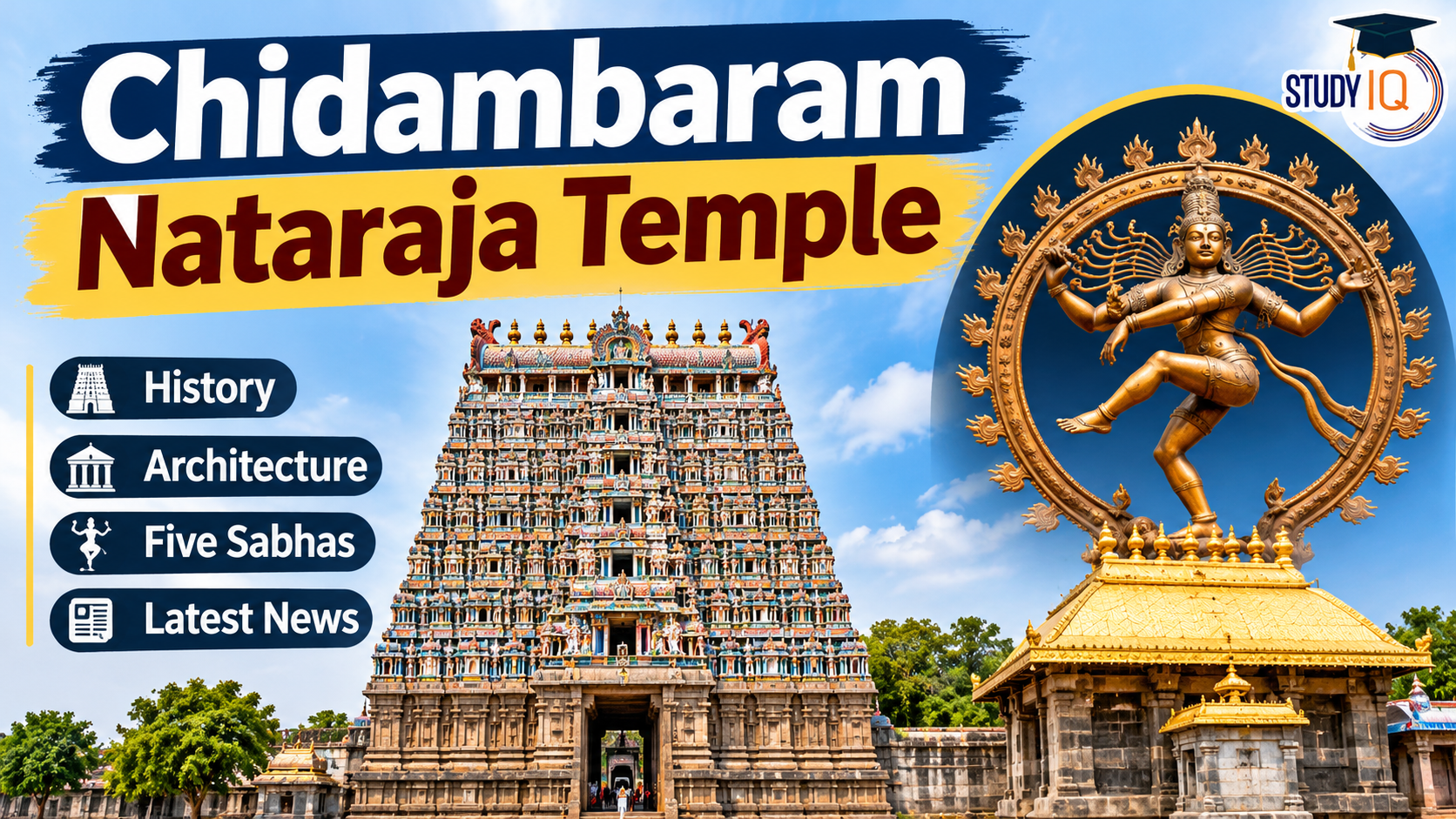
Chidambaram Nataraja Temple: The Madras High Court recently appointed a five-member Board of Management to oversee the administration of the Chidambaram Sabanayagar Temple in Tamil Nadu.
-
The decision came amid allegations of maladministration by the Podhu Dikshitars, a hereditary community of priests responsible for managing the temple.
-
The Supreme Court had entrusted the temple’s administration to the Podhu Dikshitars in 2014.
-
The High Court’s decision has brought the temple’s unique administrative structure and its historical significance into focus.
Read Also: UPSC Daily Current Affairs 2026
About Chidambaram Sabanayagar Temple
The Chidambaram Nataraja Temple, also known as the Great Chidambaram Temple, Thillai Nataraja Temple and Sri Sabanayagar Temple, is a famous Hindu temple located in Chidambaram town in the Cuddalore district of Tamil Nadu.
Key Facts:
-
Location: Chidambaram, Cuddalore district, Tamil Nadu.
-
Presiding Deity: Lord Shiva in the form of Nataraja, representing the cosmic dancer.
-
Religious Significance: It is one of the most important Shiva temples in India.
-
Architectural Style: Primarily Dravidian architecture with significant Chola contributions.
-
Administration: Traditionally managed by the hereditary Podhu Dikshitars.
-
Area: Approximately 40 acres.
Historical Background of Chidambaram Temple
-
Ancient Origins: Historical evidence suggests that a Shiva shrine existed at this location before the 7th century AD. The region was historically known as Thillai.
-
Chola Contributions: The Chola dynasty played a major role in developing the temple, considering Lord Nataraja their family deity.
-
Golden Roof: Chola king Parantaka I is traditionally credited with establishing the golden roof of the temple.
-
Other Chola Rulers: Rajaraja Chola I, Kulothunga Chola I and Vikrama Chola made significant contributions to the shrine.
-
Later Developments: The temple underwent several phases of renovation, expansion and reconstruction during the second millennium.
-
Other Patrons: Vijayanagara rulers, Madurai Nayakas, the Maharaja of Pudukkottai, Sethupathis and the British also contributed to the temple.
The majority of the temple’s present architectural layout and structural features date to the late 12th and early 13th centuries.
Architectural Features of Chidambaram Temple
An important example of South Indian temple architecture
The temple is an outstanding example of Dravidian architecture, reflecting the artistic and architectural achievements of the Chola period.
Important architectural features include:
-
Temple Complex: Spread over approximately 40 acres.
-
Prakarams: The complex consists of four principal concentric courtyards (prakarams), surrounded by walls.
-
Gopurams: Nine prominent gateway towers connect different parts of the temple complex.
-
Golden Roof: The roof of the sanctum sanctorum is decorated with gold plates.
-
Square Layout: The innermost structures, including the sanctum and shrines, follow predominantly square layouts.
-
108 Karanas: The temple’s stone carvings depict all 108 karanas described in Bharata Muni’s Natya Shastra. These are fundamental units of movement associated with Indian classical dance traditions, including Bharatanatyam.
Five Principal Sabhas of Chidambaram Temple
One of the most distinctive features of the temple is its five principal halls, known as Sabhas.
| Sabha | Significance |
|---|---|
| Kanaka Sabha | Golden Hall associated with worship of Nataraja. |
| Chit Sabha | The sanctum where Lord Nataraja is worshipped. |
| Nritta Sabha | Hall associated with the cosmic dance of Shiva. |
| Deva Sabha | Hall associated with the temple’s ceremonial and religious activities. |
| Raja Sabha | Royal Hall, traditionally associated with a thousand pillars. |
These five halls reflect the temple’s religious, cultural and architectural significance.
Religious and Cultural Significance
-
Nataraja Worship: The temple is dedicated to Shiva as Nataraja, symbolising the cosmic dance and the cycle of creation, preservation and destruction.
-
Chidambara Rahasyam: The temple is famous for the concept of Chidambara Rahasyam, symbolising the formless or infinite nature of the divine.
-
Pancha Bhoota Sthalam: Chidambaram is traditionally associated with the element of space (Akasha) and is one of the five Pancha Bhoota Shiva temples.
-
Classical Dance: The temple’s 108 karana sculptures establish an important connection between temple architecture, sculpture and Indian classical dance.
Important Facts to Remember
| Topic | Important Information |
|---|---|
| Temple | Chidambaram Nataraja Temple |
| State | Tamil Nadu |
| District | Cuddalore |
| Presiding Deity | Lord Shiva as Nataraja |
| Historical Name | Thillai |
| Dynasty | Chola |
| Golden Roof | Parantaka I |
| Architectural Style | Dravidian |
| Five Sabhas | Kanaka, Chit, Nritta, Deva and Raja |
| Sacred Element | Space (Akasha) |
| Classical Text | Natya Shastra |
| Important Sculptures | 108 Karanas |
| Traditional Administrators | Podhu Dikshitars |

 Cyclone Murasu: Formation, Naming, IMD W...
 Pranos Fusion: PRAGYA and PRANIK – Ind...
 Digi Yatra International Flights: 7 Airp...














 WhatsApp