Table of Contents
Organ donation and transplantation are among the most significant advancements in modern medicine. They offer a second chance at life to patients suffering from end-stage organ failure. However, the shortage of donated organs, lack of public awareness, ethical concerns and unequal access to healthcare continue to challenge India’s organ transplantation ecosystem.
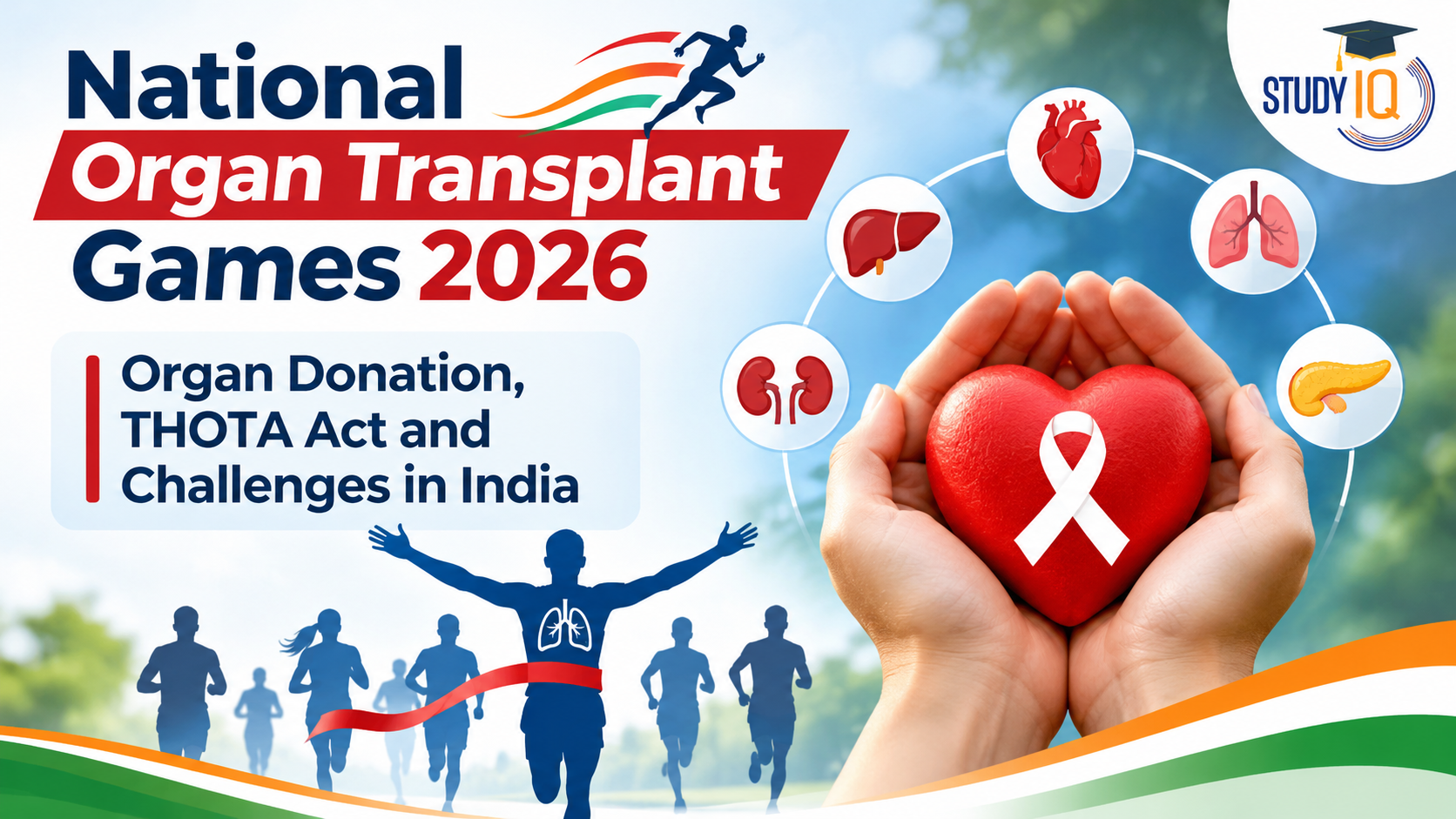
The National Organ Transplant Games 2026, inaugurated by the Vice-President on 1 November 2026 at Talkatora Stadium, New Delhi, brought national attention to the importance of organ donation and the achievements of transplant recipients.
According to PIB, the event also featured a world-record Tadasana congregation involving 570 transplant recipients and donors. It aimed to dispel misconceptions, promote awareness and recognise deceased organ donors and their families.
Read Also: UPSC Daily Current Affairs 2026
What Are the National Organ Transplant Games 2026?
The National Organ Transplant Games celebrate the resilience, recovery and sporting achievements of individuals who have undergone organ transplantation.
The key objectives include:
-
Public Awareness: Encouraging people to understand the importance of organ donation.
-
Myth-Busting: Addressing misconceptions and social stigma surrounding organ donation.
-
Recognition: Honouring deceased organ donors and their families.
-
Inspiration: Demonstrating that transplant recipients can lead active and productive lives.
-
Social Inclusion: Promoting dignity, participation and equal opportunities for transplant recipients.
The event highlights that organ transplantation is not merely a medical procedure but also an opportunity for individuals to regain their quality of life.
Organ Donation and Transplantation in India
Organ donation refers to the process of donating organs or tissues to help patients who require transplantation.
Organs commonly transplanted include:
-
Kidney
-
Liver
-
Heart
-
Lungs
-
Pancreas
-
Intestine
Organ donation can broadly be classified into two categories:
1. Living Organ Donation: A healthy person donates an organ or a part of an organ, such as one kidney or a portion of the liver, subject to medical and legal safeguards.
2. Deceased Organ Donation: Organs are donated after death, including after brain-stem death, following applicable medical and legal procedures and consent requirements.
Deceased organ donation is particularly important because it can help multiple patients through a single donor.
Legal Framework: Transplantation of Human Organs and Tissues Act, 1994
India’s organ donation and transplantation system is primarily governed by the Transplantation of Human Organs and Tissues Act (THOTA), 1994, which was amended in 2011.
The Act provides a legal framework for regulating organ removal, storage and transplantation while preventing commercial dealings in human organs.
Key Provisions of THOTA
-
Regulation of Transplantation: Establishes legal procedures for organ and tissue donation and transplantation.
-
Prevention of Organ Trade: Prohibits commercial dealings in human organs and tissues.
-
Living Donation: Regulates donations from living persons and provides safeguards against coercion and exploitation.
-
Deceased Donation: Recognises brain-stem death as a form of death for organ donation purposes.
-
Authorisation Committees: Scrutinise certain living-donor cases to prevent illegal organ transactions.
-
Medical Standards: Provides for the registration and regulation of hospitals involved in organ transplantation.
The law seeks to balance the growing demand for organs with ethical considerations, patient safety and human dignity.
Institutional Framework for Organ Donation in India
India has established institutional mechanisms to coordinate organ donation and transplantation.
| Institution | Major Function |
|---|---|
| NOTTO | National-level coordination |
| ROTTO | Regional coordination |
| SOTTO | State-level coordination |
The National Organ and Tissue Transplant Organisation (NOTTO) functions under the Ministry of Health and Family Welfare and supports coordination, awareness and the national transplant framework.
ROTTO and SOTTO facilitate coordination and implementation at regional and state levels.
Major Challenges in Organ Donation in India
Despite improvements in medical infrastructure, several challenges affect India’s organ transplantation ecosystem.
1. Shortage of Donated Organs: Demand for organs significantly exceeds the available supply, leaving many patients waiting for transplantation.
2. Lack of Awareness: Misconceptions, religious and cultural beliefs, and limited knowledge discourage people from pledging organ donations.
3. Unequal Healthcare Access: Advanced transplant facilities are concentrated in selected urban centres, creating geographical disparities.
4. High Treatment Costs: Surgery, post-transplant medicines and long-term follow-up can create financial difficulties for economically weaker patients.
5. Ethical Concerns: Organ trafficking, commercialisation, coercion and exploitation of vulnerable individuals threaten public trust.
6. Weak Hospital-Level Coordination: Limited infrastructure, trained personnel and timely identification of potential deceased donors affect donation opportunities.
Way Forward: Strengthening India’s Organ Donation Ecosystem
India needs a comprehensive approach that combines healthcare infrastructure, public awareness and ethical regulation.
-
Strengthen coordination among NOTTO, ROTTO and SOTTO.
-
Improve identification and referral of potential deceased donors in hospitals.
-
Develop trained transplant coordinators and specialised medical teams.
-
Expand affordable transplant facilities beyond major metropolitan cities.
-
Promote awareness campaigns through educational institutions, civil society and digital platforms.
-
Ensure transparent and equitable organ allocation.
-
Strengthen monitoring and enforcement against illegal organ trade.
-
Improve prevention and early treatment of chronic diseases that lead to organ failure.
Conclusion
The National Organ Transplant Games 2026 highlight the importance of organ donation as a life-saving public-health intervention. India must move beyond awareness campaigns towards building a transparent, accessible and ethically regulated transplantation system.
Strengthening institutional coordination, expanding medical infrastructure and encouraging voluntary organ donation can help India reduce the gap between organ demand and supply. Ultimately, organ donation is not just a medical responsibility but a collective social commitment to saving human lives.

 World Jellyfish Day 2026: Significance a...
 MP ADPO Prelims Exam Analysis 2026: SET ...
 NVS-03 Satellite: NavIC Revival, Feature...













 WhatsApp