
Table of Contents
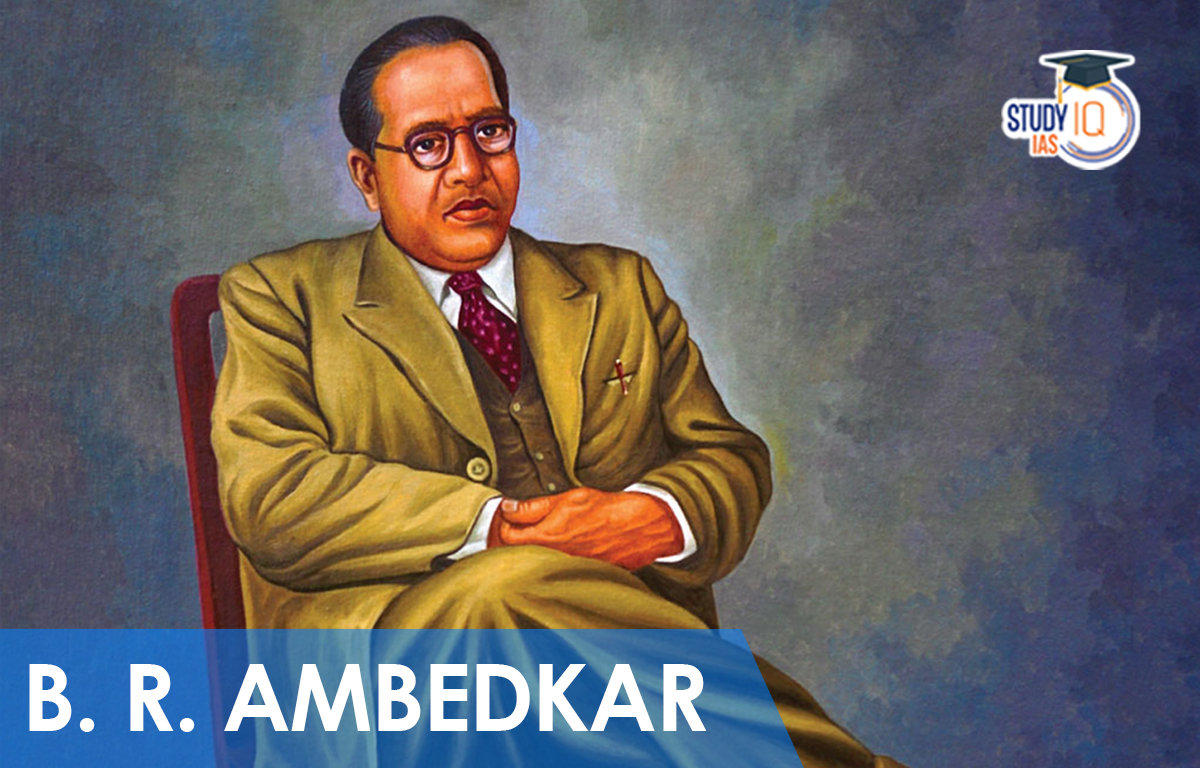
Bhimrao Ramji Ambedkar, popularly known as Babasaheb Ambedkar, was one of the most influential leaders in modern Indian history. Born on April 14, 1891, his birth anniversary is celebrated as Ambedkar Jayanti, which holds immense significance in 2026 as millions across India pay tribute to his legacy. Dr BR Ambedkar was a jurist, economist, social reformer, and the chief architect of the Indian Constitution, playing a crucial role in shaping modern India’s democratic and social framework.
BR Ambedkar Jayanti 2026
Dr. B. R. Ambedkar, often called Babasaheb Ambedkar, was born on April 14, 1891, in Mhow, a military cantonment in present-day Madhya Pradesh. Coming from a Dalit (Scheduled Caste) background, Ambedkar faced intense caste discrimination but broke all barriers to become an eminent jurist, economist, educationist, and social reformer.
| Key Facts About Dr. BR Ambedkar | |
|---|---|
| Born | April 14, 1891 (Mhow, Madhya Pradesh) |
| Full Name | Dr. Bhimrao Ramji Ambedkar |
| Popular Names | Dr. BR Ambedkar, Dr. Babasaheb Ambedkar, B.R. Ambedkar |
| Contribution | Chairman of the Constitution Drafting Committee |
| Titles | Father of Indian Constitution, Dalit Icon, Samvidhan Nirmata (संविधान निर्माता) |
| Religious Conversion | Embraced Buddhism on October 14, 1956 |
| Death | December 6, 1956 (Mahaparinirvan Diwas) |
| First Law Minister of India (1947–1951) |
|
| Awarded Bharat Ratna (1990, posthumously) |
|
Why Is 14th April Celebrated As A National Holiday?
- Recognised as Dr. Ambedkar Jayanti in the official gazette
- Declared a public holiday under the Negotiable Instruments Act by the Government of India
- Banks, Central and State Government Offices remain closed
Bhimrao Ramji Ambedkar Biography
Babasaheb Ambedkar, also known as Bhimrao Ramji Ambedkar, was a key figure in the creation of the Indian Constitution. He served as India’s first law minister and is regarded as the Father of the Indian Constitution. He served as the new Constitution’s drafting committee’s chairman. In March 1927, he led the Mahad Satyagraha against upper-caste Hindus who disagreed with the Municipal Board’s decision.
At all three Round Table Conferences, he took part. The Poona Pact, which Dr. Ambedkar and Mahatma Gandhi signed in 1932 (Communal Award), abandoned the notion of separate electorates for the oppressed classes. The Reserve Bank of India (RBI) was founded on his recommendations to the Hilton Young Commission.
BR Ambedkar’s Early Life
- BR Ambedkar refused to let the constraints of his upbringing stand in the way of obtaining a top-notch education and raising the standard for academic success.
- Babasaheb was born into the Hindu Mahar caste, which was derided as “untouchable” by the upper elite of the time.
- He received his doctorate from the London School of Economics and a law degree from Lincoln’s Inn, cementing his position as an outstanding scholar for his work in the fields of law, economics, and political science.
- He wore various hats in his early career, including those of economist, lecturer, and lawyer.
Ambedkar’s forefathers had long served in the British East India Company‘s armed forces, and his father was a British Indian Army soldier stationed at the Mhow cantonment. When he was younger, he experienced casteism at school because other children like him weren’t permitted to sit in the class.
BR Ambedkar Education
- Ambedkar was a gifted young man who did well in school.
- He completed his matriculation test in 1907, and the following year, he enrolled in Elphinstone College, a University of Bombay affiliate, becoming, in his estimation, the first member of his Mahar caste to do so.
- He graduated from Bombay University in 1912 with a degree in economics and political science and was then ready to start working for the Baroda state administration.
- Sayajirao Gaekwad III (Gaekwad of Baroda) launched a program in 1913, when Ambedkar was 22 years old, to give possibilities for postgraduate study at Columbia University in New York City.
- The Baroda State Scholarship was granted for three years. He earned his second M.A. in 1916, and in 1927, Columbia awarded him his Ph.D. in economics.
- The problem of untouchability still affects his life in India after returning, despite his high level of education. Due to people objecting to his lower caste, he was unsuccessful at many professions, including one as a professor.
Conversion to Buddhism
In 1956, Dr. Ambedkar embraced Buddhism, rejecting caste-based discrimination in Hindu society.
- Led to the Dalit Buddhist Movement
- Promoted equality and rational thinking
- Influenced millions of followers
BR Ambedkar’s Fight Against Untouchability
- In the following phase, he became a recognised national leader with a modern India-wide vision that was based on the principles of social justice and equality.
- He channelled his prodigious intellectual abilities to write an anthem for an inclusive India as the liberation movement in that country gained momentum and worked diligently to advance the political rights and social freedom of Dalits and other marginalised groups.
- He founded the “Bahishkrit Hitkarini Sabha (Outcastes Welfare Association)” in 1923 to bring culture and education to the underprivileged. Ambedkar made the decision to start aggressive campaigns against untouchability in 1927. To open up public drinking water resources, he started with rallies and marches. Additionally, he started to fight for the freedom to access Hindu temples.
- Ambedkar ceremonially burned copies of the ancient Hindu literature Manusmriti (Laws of Manu) in a conference in late 1927 after openly denouncing it for defending caste prejudice and “untouchability” on ideological grounds.
BR Ambedkar and Poona Pact 1932
- The creation of a distinct electorate for the “Depressed Classes” was declared by the British colonial authority in the Communal Award in 1932. Mahatma Gandhi was adamantly opposed to the untouchables having their own electorate because he believed it would cause the Hindu community to become more divided.
- Gandhi demonstrated by fasting when incarcerated in Poona’s Yerwada Central Jail. Politicians from Congress set up joint talks with Ambedkar and his followers at Yerwada after the fast. Ambedkar (on behalf of the oppressed classes among Hindus) and Madan Mohan Malaviya (on behalf of the other Hindus) signed the agreement known as the Poona Pact on September 25, 1932.
- The agreement provided reserved seats in the Provisional legislatures for the lower classes within the general electorate. The phrase “Depressed Classes” was used in the book to refer to Hindus who were considered Untouchables and later known as Scheduled Castes and Scheduled Tribes under the 1935 India Act and the 1950 Indian Constitution.
Role in the Indian Constitution
Dr. Ambedkar served as the Chairman of the Drafting Committee of the Constituent Assembly.
Key Contributions
- Ensured Fundamental Rights
- Advocated equality, liberty, and justice
- Abolished untouchability (Article 17)
- Strengthened social justice framework
He is rightly called the Father of the Indian Constitution.
Social Reforms and Movements
Dr. Ambedkar dedicated his life to eliminating caste discrimination and uplifting marginalised communities.
Major Initiatives
- Campaigns against untouchability
- Promotion of education among Dalits
- Formation of organizations for social justice
- Advocacy for women’s rights and labour reforms
He believed in the principle:“Educate, Agitate, Organize”
BR Ambedkar’s Political Journey
- Ambedkar established the Independent Labour Party in 1936, and it ran in the 1937 Bombay election for the 13 reserved and 4 general seats, winning 11 and 3 seats, respectively.
- On May 15, 1936, Ambedkar released his book Annihilation of Caste. It contained “a rebuke of Gandhi” on the matter and harshly criticised Hindu orthodox religious leaders and the caste structure in general.
- Ambedkar introduced a bill in the Bombay Legislative Assembly in 1937 that sought to end the khoti system by establishing a direct line of communication between the government and farmers.
- Ambedkar held the position of minister for labour and served on the Viceroy’s Executive Council and Defence Advisory Committee.
- Ambedkar wrote a 400-page essay titled “Thoughts on Pakistan” in response to the Muslim League’s Lahore resolution (1940), which demanded Pakistan and examined the idea of “Pakistan” from all angles.
Ambedkar argued that the Hindus should allow the Muslims to exercise authority over Pakistan. Ambedkar also disapproved of South Asian Muslims’ use of Islam. He denounced child marriage and the exploitation of women in Muslim society while defending the Partition of India.
BR Ambedkar Death Anniversary
The death anniversary of B.R. Ambedkar, a key architect of the Indian Constitution and a champion of social justice, is commemorated annually. This solemn occasion, observed on December 6th, marks the passing of Dr. B.R. Ambedkar in 1956.
Remembered for his tireless efforts in advocating for the rights of marginalized communities, Ambedkar’s legacy extends beyond legal frameworks to social reform. On this day, people reflect on his contributions to the upliftment of Dalits and the underprivileged, emphasizing the ongoing pursuit of equality and justice in society. It serves as a reminder to honour Ambedkar’s vision for an inclusive and just India.
Mahaparinirvana Diwas
- Mahaparinirvan Diwas is celebrated on December 6 every year to commemorate the death anniversary of Dr. B.R. Ambedkar.
- Ambedkar was born in Mhow, India, on April 14, 1891 and died in New Delhi on December 6, 1956.
- Parinirvana, a key concept in Buddhism, symbolises the attainment of nirvana during and after one’s lifetime.
- In Sanskrit, the release of the soul from the body after death is termed Parinirvana.
- Similarly, “Parinibbana” in Pali signifies the fulfilment of nirvana. B.R. Ambedkar, an advocate for the rights of the underprivileged, rose to prominence in Indian politics from a Dalit background.
- Since his 1956 passing, appreciation for his ideas has continued to grow, highlighting his enduring impact on social justice.
B.R. Ambedkar Legacy
- Architect of modern Indian democracy
- Champion of social justice and equality
- Inspiration for constitutional values
- His ideas continue to shape India’s policies and society
Recent discussions also highlight how his principles of justice and equality continue to influence India’s public life and policymaking.
Dr. B.R. Ambedkar’s life is a symbol of resilience, intellect, and social transformation. His contributions to the Constitution and his fight for equality continue to inspire generations. As India celebrates Ambedkar Jayanti 2026, his ideals remain more relevant than ever in building an inclusive and just society.

 Veer Savarkar Biography: Ideology, Legac...
 Jyotiba Phule Biography: Social Reforms,...
 Prithviraj Chauhan History: Biography, B...










 WhatsApp





