Table of Contents
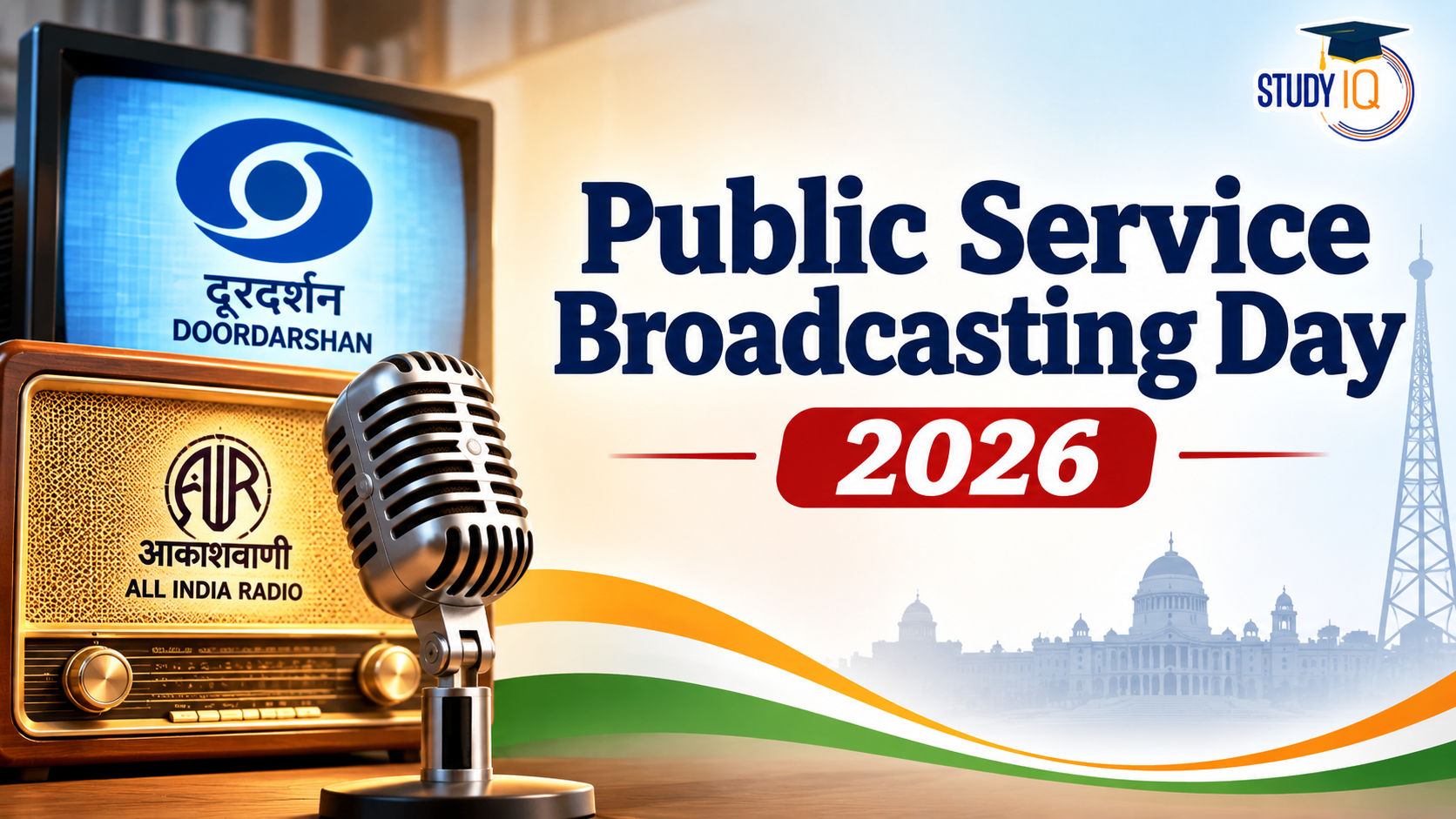
Public Service Broadcasting Day 2026 is observed on 12 November across India to highlight the importance of public broadcasting in promoting education, awareness, national integration and democratic values. Also known as Jan Prasaran Divas, the day commemorates Mahatma Gandhi’s historic radio address broadcast by All India Radio (AIR) on 12 November 1947.
On this occasion, Gandhi addressed refugees affected by the Partition of India who were staying in a refugee camp in Kurukshetra. His message demonstrated how radio could connect people, provide emotional support and communicate important messages during difficult times.
The day also recognises the contribution of public broadcasting institutions such as All India Radio and Doordarshan in informing and educating citizens.
History of Public Service Broadcasting Day
The history of Public Service Broadcasting Day is closely associated with Mahatma Gandhi’s first and only visit to the studio of All India Radio.
On 12 November 1947, Gandhi visited the Broadcasting House of All India Radio in New Delhi. He delivered a special radio address to refugees affected by the Partition of India who were staying in Kurukshetra, then in East Punjab.
Gandhi could not personally visit the refugee camp, so he chose radio as a medium to communicate with the displaced people. His address was broadcast on the occasion of Deepavali.
Rajkumari Amrit Kaur, a prominent freedom fighter and social reformer, accompanied him during the visit.
This historic broadcast demonstrated the potential of radio as a medium of public communication, social connection and national unity.
When Was Public Service Broadcasting Day Recognised?
The idea of observing 12 November as Public Service Broadcasting Day was announced in 2000 by Sushma Swaraj, the then Union Minister for Information and Broadcasting.
The day was officially recognised in 2001 to commemorate Gandhi’s historic visit to All India Radio and promote awareness about the role of public service broadcasting.
Public Service Broadcasting Day 2026 Theme
There is no officially announced specific national theme for Public Service Broadcasting Day 2026.
The 2026 observance highlights the broader responsibility of public broadcasting towards society, particularly its role in promoting accurate information, democratic participation and social inclusion.
Discussions and commemorative programmes associated with the occasion also focus on broadcasting as a social contract between institutions and citizens.
Objectives of Public Service Broadcasting
Public service broadcasting aims to provide reliable, accessible and educational information to citizens, with public interest taking priority over commercial considerations.
Its major objectives include:
- Dissemination of Information: Providing accurate information about government policies, public welfare programmes and important national developments.
- Education and Awareness: Promoting literacy and awareness about health, agriculture, education, sanitation and social issues.
- National Integration: Encouraging unity and harmony by representing India’s diverse languages, cultures and traditions.
- Social Inclusion: Reaching rural, remote and marginalised communities that may have limited access to private media.
- Democratic Participation: Encouraging informed public debate, accountability and awareness of citizens’ rights.
- Cultural Preservation: Promoting regional literature, folk music, traditional art and cultural heritage.
Role of All India Radio in Public Service Broadcasting
All India Radio (AIR), popularly known as Akashvani, is one of India’s most important public service broadcasting institutions.
It plays a significant role in providing information, education and entertainment to people across the country.
Major contributions of All India Radio include:
- News and Current Affairs: Broadcasting national, international and regional news.
- Agricultural Information: Providing farmers with information about weather, agricultural practices, government schemes and modern farming techniques.
- Educational Programmes: Supporting learning through educational broadcasts and awareness programmes.
- Cultural Promotion: Preserving India’s linguistic and cultural diversity through regional-language programmes, music and literature.
- Disaster Communication: Providing important public information and emergency updates during natural disasters and other crises.
- National Integration: Connecting citizens across different regions through multilingual broadcasting.
AIR operates under Prasar Bharati, India’s public service broadcasting corporation.
What Is Prasar Bharati?
Prasar Bharati is India’s statutory autonomous public service broadcaster. It was established under the Prasar Bharati (Broadcasting Corporation of India) Act, 1990, and came into existence on 23 November 1997.
It operates India’s two major public broadcasting networks:
- All India Radio (Akashvani): India’s public radio broadcasting service.
- Doordarshan (DD): India’s public television broadcasting service.
The organisation aims to provide balanced, objective and credible information while promoting education, culture and national integration.
What Is Bapu Studio?
The historic All India Radio studio from which Mahatma Gandhi delivered his 1947 address is known as Bapu Studio.
The studio was named in 2023 to commemorate Gandhi’s historic association with radio broadcasting.
It preserves memories of his visit through photographs, recordings of his address, audio clips from prayer meetings and other historical memorabilia.
Bapu Studio represents an important chapter in India’s broadcasting history and highlights the role of communication in nation-building.
Significance of Public Service Broadcasting Day
Public Service Broadcasting Day is significant because it reminds us that media is not merely a source of entertainment but also an important institution for strengthening democracy.
Its importance can be understood through the following points:
- Strengthening Democracy: Reliable information enables citizens to make informed decisions.
- Combating Misinformation: Public broadcasters can contribute to the dissemination of verified information.
- Promoting Inclusivity: Public broadcasting provides access to information for communities with limited media access.
- Preserving Cultural Identity: It provides a platform for regional languages, traditions and local art forms.
- Supporting National Development: Educational and awareness programmes contribute to social and economic development.
Public Service Broadcasting Day 2026: Important Facts
| Particular | Details |
|---|---|
| Observed on | 12 November |
| Also known as | Jan Prasaran Divas |
| Associated personality | Mahatma Gandhi |
| Historic address | 12 November 1947 |
| Broadcasting institution | All India Radio |
| Location of refugees | Kurukshetra |
| Occasion | Deepavali |
| Accompanying freedom fighter | Rajkumari Amrit Kaur |
| Day announced | 2000 |
| Official recognition | 2001 |
| Public broadcaster | Prasar Bharati |
| Historic studio | Bapu Studio |

 PLFS Quarterly Bulletin 2026: Key Findin...
 Access Equality Index 2026: Goa Ranks Fi...
 World Science Day 2026: Theme, History, ...











 WhatsApp