Table of Contents
Context
Heritage activists have opposed the proposed PVNR opencast coal mine in Telangana, warning of potential risks to the UNESCO-listed Ramappa Temple and nearby Ramappa Lake.
About Ramappa Temple
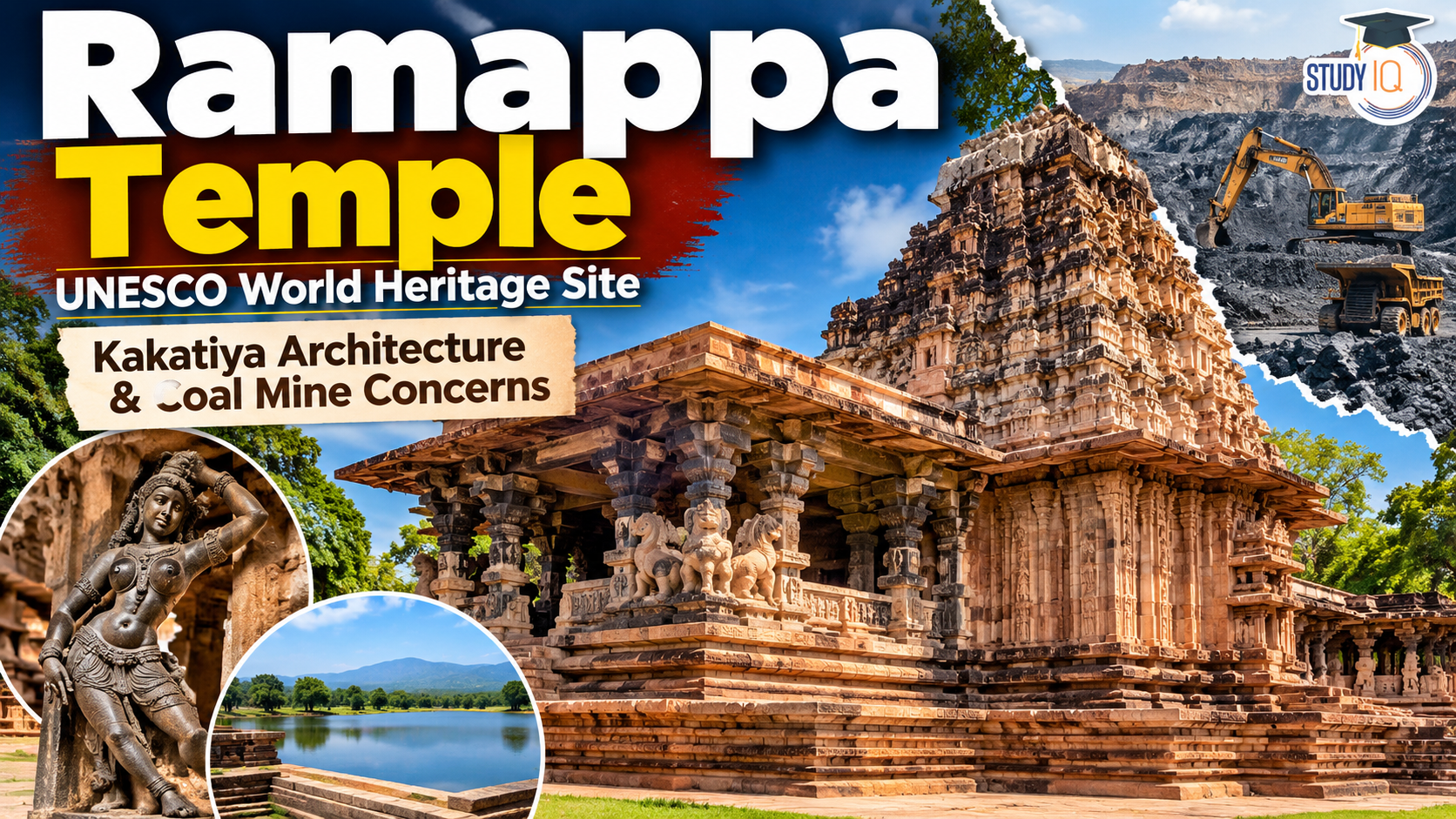
- Nature: A 13th-century Hindu temple dedicated to Lord Shiva, worshipped as Ramalingeswara/Rudreshwara, and a major example of Kakatiya architecture.
- UNESCO Status: Inscribed as a UNESCO World Heritage Site in 2021 under the name Kakatiya Rudreshwara (Ramappa) Temple, Telangana.
- Location: Palampet village, Venkatapur Mandal, Mulugu district, Telangana.
- Construction: Built in 1213 CE during the reign of Kakatiya ruler Ganapati Deva by his commander Recharla Rudra.
Key Architectural Features
- Sandbox Foundation: Built on a sand-filled foundation mixed with granite dust, jaggery and karakkaya, providing greater resistance to seismic vibrations.
- Lightweight Bricks: The vimana uses porous, low-density ‘floating bricks’ that reduce structural load.
- Stone Sculptures: Features intricate Madanikas and Yalis carved in dark stone, reflecting Kakatiya craftsmanship and dance traditions.
- Temple-Lake Linkage: The temple is located near Ramappa Lake, reflecting the integration of religious architecture, water systems and landscape planning.
- Musical Pillars: The rangamandapa contains intricately carved pillars associated with resonant sounds, along with elaborate mythological and celestial motifs.
Why the Coal Mine Raises Concern
- Groundwater Impact: Deep opencast mining could alter groundwater flows around Ramappa Lake and affect the temple’s foundation.
- Mining Vibrations: Blasting and repeated vibrations could damage masonry, sculptures and the lightweight superstructure.
- Heritage Landscape: Mining may affect the temple’s surroundings, lake ecology and nearby settlements, potentially weakening the wider heritage landscape.

 US Defence Policy Under Trump: China, Ru...
 Nobel Prize in Medicine 2026: Optogeneti...
 Daily Mains Articles 2026 – Updated Da...














 WhatsApp