Table of Contents
The UPSC Mains Essay Paper 2026 was held on 21 August 2026 (Friday) in the first sitting, thereby initiating the UPSC Civil Services (Main) Examination 2026. The Essay Paper was held from 9:00 AM to 12:00 Noon and had a total weightage of 250 marks.
Candidates can download the UPSC Mains 2026 Essay Paper PDF below to analyze the topics, philosophy, and current issues covered by UPSC.
UPSC Mains Essay Paper 2026 Overview
This Essay paper was the first written paper of UPSC CSE Mains 2026. No examination is conducted in the afternoon session of 21 August. GS Paper I and GS Paper II will be held on 22 August, and GS Paper III & GS Paper IV on 23 August.
| Particulars | Details |
|---|---|
| Exam | UPSC Civil Services Mains Examination 2026 |
| Paper | Essay – Paper I |
| Date | 21 August 2026 |
| Day | Friday |
| Session | First Half / Forenoon |
| Timing | 9:00 AM to 12:00 Noon |
| Duration | 3 Hours |
| Maximum Marks | 250 |
UPSC Mains Essay Paper 2026 PDF
Download the UPSC Essay Paper 2026 PDF held on August 21, 2026. Check essay topics, question paper, exam pattern, difficulty level and detailed analysis for UPSC aspirants.
| Paper | Download |
|---|---|
| UPSC Mains Essay Paper 2026 | Download PDF |
The UPSC Essay paper tests much more than a candidate’s ability to write lengthy answers. It evaluates the ability to understand a topic, develop a balanced argument, connect different dimensions, and present ideas in a coherent manner.
How to Download UPSC Mains Essay Paper 2026 PDF?
Candidates can download the UPSC CSE Mains Essay Paper 2026 PDF by following these simple steps:
- Click on the “Download PDF” button given on this page.
- The UPSC Mains Essay Paper 2026 PDF will open in a new tab.
- Click on the Download icon in the PDF viewer.
- Select the desired location on your device and save the PDF.
- Candidates can use the question paper for answer writing practice, essay analysis, and UPSC 2027 preparation
UPSC Mains Essay Paper 2026 Analysis
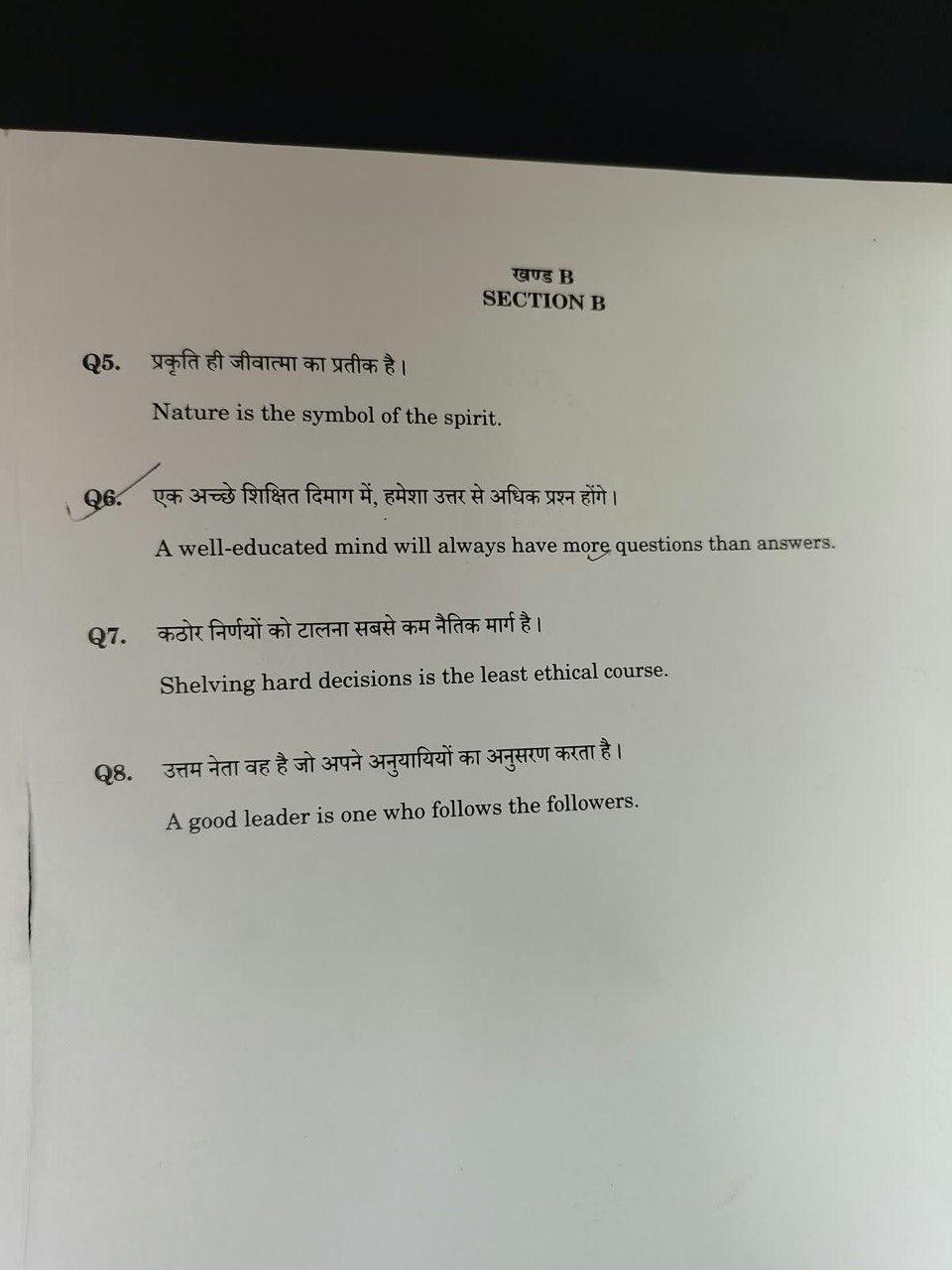
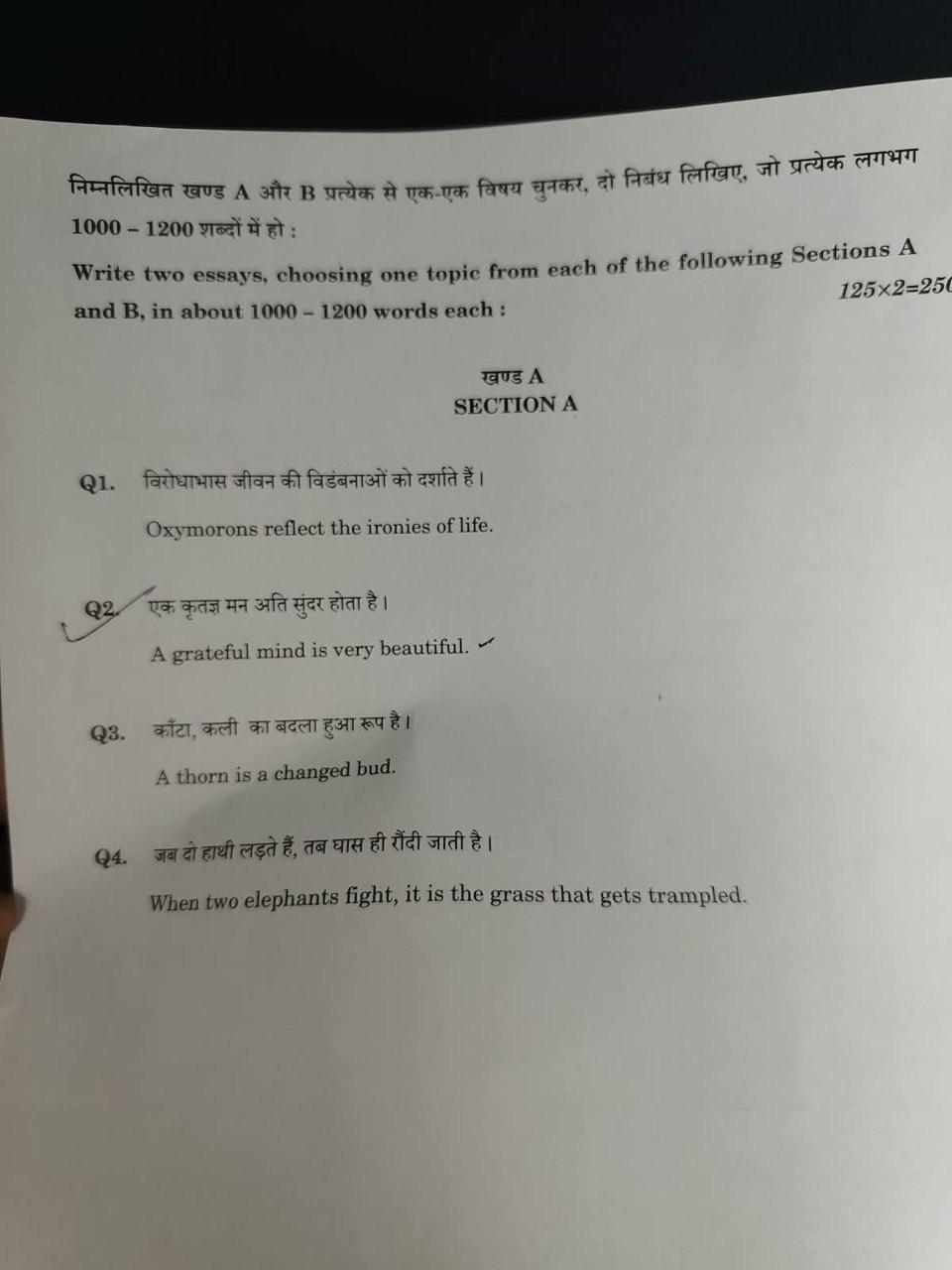
The UPSC CSE Mains Essay Paper 2026 presents a distinctly philosophical, abstract, and idea-driven paper. The paper contains eight topics divided equally between Section A and Section B, with candidates required to write two essays, one from each section, in about 1000–1200 words each. The paper carries 250 marks (125 marks × 2).
Section A Analysis
| Topic | Theme | Difficulty |
|---|---|---|
| Oxymorons reflect the ironies of life. | Philosophy, contradictions, human life | High |
| A grateful mind is very beautiful. | Gratitude, ethics, human values | Moderate |
| A thorn is a changed bud. | Transformation, adversity, human potential | High |
| When two elephants fight, it is the grass that gets trampled. | Power politics, inequality, conflict | Moderate |
Section A offers a mix of philosophical and relatively concrete themes. The “grateful mind” topic is comparatively accessible, while “Oxymorons reflect the ironies of life” and “A thorn is a changed bud” demand greater conceptual interpretation.
The African proverb on elephants and grass provides considerable scope for examples from geopolitics, internal conflicts, economic competition, corporate power and social inequality.
Section B Analysis
| Topic | Theme | Difficulty |
|---|---|---|
| Nature is the symbol of the spirit. | Nature, spirituality, ecology | High |
| A well-educated mind will always have more questions than answers. | Education, curiosity, critical thinking | Moderate |
| Shelving hard decisions is the least ethical course. | Ethics, leadership, governance | Moderate |
| A good leader is one who follows the followers. | Leadership, democracy, participation | High |
Section B is particularly focused on philosophy, ethics, leadership and intellectual development. The topic on education provides broad dimensions ranging from scientific temper and democracy to research and innovation.
The “hard decisions” topic has strong GS-IV and governance linkages, while “leader who follows the followers” requires candidates to explore participative leadership, empathy, public opinion and democratic accountability.
Overall Difficulty
Overall difficulty: Moderate to Difficult
The paper is not heavily dependent on current affairs. Instead, UPSC appears to have placed greater emphasis on:
- Conceptual clarity
- Philosophical interpretation
- Ability to generate multiple dimensions
- Abstract thinking
- Ethical reasoning
- Use of real-life examples
- Logical argumentation
- Connecting individual experiences with larger societal issues
Most Accessible Topics
For many candidates, relatively approachable topics would be:
- A grateful mind is very beautiful.
- When two elephants fight, it is the grass that gets trampled.
- A well-educated mind will always have more questions than answers.
- Shelving hard decisions is the least ethical course.
However, the best topic ultimately depends on the candidate’s ability to interpret the statement and sustain a coherent argument for 1000–1200 words.
Most Conceptually Challenging Topics
The topics likely to test philosophical depth most strongly are:
- Oxymorons reflect the ironies of life.
- A thorn is a changed bud.
- Nature is the symbol of the spirit.
- A good leader follows the followers.
These topics can become difficult if a candidate merely writes generic philosophical content without establishing the central proposition of the topic.
UPSC Mains Essay Strategy for Future Aspirants
The UPSC Mains Essay Paper 2026 PDF can be included in the normal practice essays for future aspirants.
A good strategy is to select each question and prepare:
- A brief interpretation of the topic
- A 3–4 line introduction
- A multidimensional framework
- Relevant examples and case studies
- Arguments and counterarguments
- A balanced conclusion
Comparisons between the 2026 paper and the previous year’s Essay paper can also be made to get a feel for the changing trends and expectations from UPSC.
 UPSC EPFO APFC Exam Date 2026 Out: Check...
 UPSC Forest Service Mains Exam Date 2026...
 UPSC EPFO APFC Notification 2026 OUT for...




 WhatsApp