Table of Contents
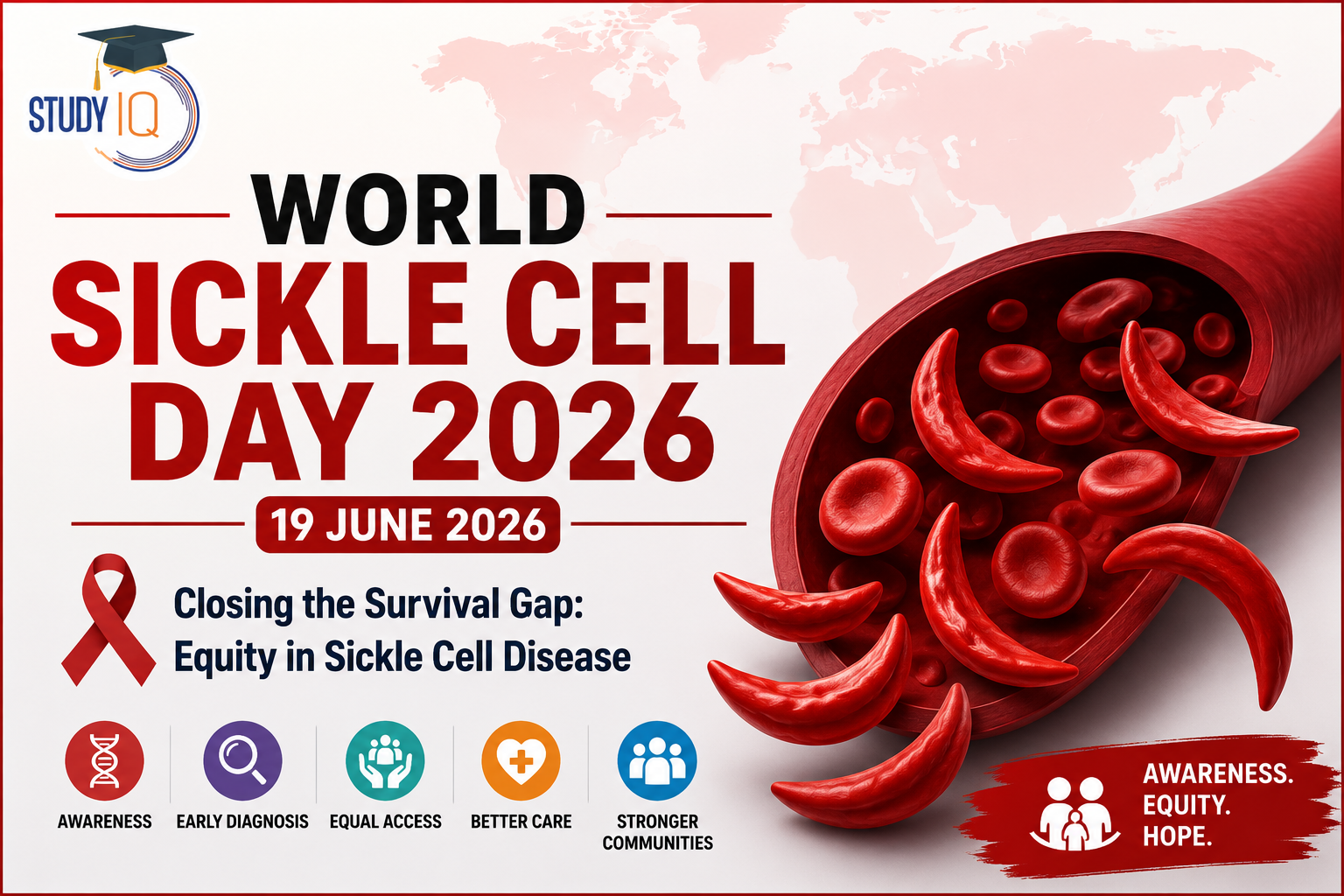
World Sickle Cell Day 2026 is observed on 19 June 2026 to raise awareness about Sickle Cell Disease (SCD), one of the world’s most common inherited blood disorders. The day serves as a global platform to educate people about the disease, its causes, symptoms, prevention strategies, and the challenges faced by millions of patients worldwide. In India, the observance also highlights the government’s efforts to eliminate Sickle Cell Disease as a public health challenge by 2047.
World Sickle Cell Day 2026 Theme
The official theme for World Sickle Cell Day 2026 is:
“Closing the Survival Gap: Equity in Sickle Cell Disease”
The theme emphasizes the urgent need to ensure equitable access to healthcare services, early diagnosis, treatment, and long-term support for individuals living with Sickle Cell Disease. It calls upon governments, healthcare institutions, researchers, and communities to address healthcare disparities and improve survival outcomes regardless of geographic location, socio-economic status, or background.
Why is World Sickle Cell Day Observed?
World Sickle Cell Day was established by the United Nations General Assembly (UNGA) in 2008, recognizing Sickle Cell Disease as a major global public health concern.
The annual observance aims to:
- Increase awareness about Sickle Cell Disease
- Promote early diagnosis and screening
- Encourage research and innovation
- Improve access to treatment and healthcare services
- Support patients and affected families
- Reduce stigma and misinformation associated with the disease
What is Sickle Cell Disease (SCD)?
Sickle Cell Disease is a hereditary blood disorder that affects red blood cells and their ability to transport oxygen throughout the body.
Normally, red blood cells are round, flexible, and move easily through blood vessels. In individuals with SCD, these cells become rigid and crescent-shaped, resembling a sickle. These abnormal cells can block blood flow, reduce oxygen supply to tissues, and lead to serious health complications.
SCD is a lifelong condition that requires continuous medical care and monitoring.
Key Features of Sickle Cell Disease
Abnormal Red Blood Cells
The disease causes red blood cells to become hard, sticky, and sickle-shaped.
Reduced Oxygen Transport
Sickle-shaped cells are less efficient at carrying oxygen, leading to fatigue and weakness.
Chronic Anemia
These abnormal cells break down faster than normal red blood cells, causing persistent anemia.
Pain Crises
Blocked blood vessels can trigger severe episodes of pain, one of the most common symptoms of SCD.
Increased Risk of Infection
Damage to the spleen weakens the immune system and increases susceptibility to infections.
Organ Damage
Long-term complications may affect the lungs, kidneys, liver, heart, and brain.
Causes of Sickle Cell Disease
Sickle Cell Disease is caused by a genetic mutation that affects hemoglobin, the oxygen-carrying protein in red blood cells.
Mutation in the HBB Gene
The disease results from a mutation in the beta-globin (HBB) gene responsible for hemoglobin production.
Formation of Hemoglobin S
This mutation produces an abnormal form of hemoglobin called Hemoglobin S (HbS), which causes red blood cells to deform.
Inherited Disorder
A child develops SCD only when both parents pass on the defective gene.
Autosomal Recessive Pattern
The disease follows an autosomal recessive inheritance pattern, requiring two copies of the mutated gene.
Sickle Cell Trait
Individuals carrying only one abnormal gene are known as carriers. They generally do not develop the disease but can pass the gene to their children.
Common Symptoms of Sickle Cell Disease
Symptoms may appear during infancy or early childhood and vary from person to person.
Common symptoms include:
- Persistent anemia
- Fatigue and weakness
- Severe pain episodes
- Swelling of hands and feet
- Frequent infections
- Delayed growth and puberty
- Vision problems
- Shortness of breath
- Jaundice (yellowing of the skin and eyes)
Early diagnosis plays a crucial role in managing these symptoms effectively.
Sickle Cell Disease in India
India carries one of the world’s largest burdens of Sickle Cell Disease. The condition is particularly prevalent among tribal and marginalized communities in states such as:
- Gujarat
- Maharashtra
- Madhya Pradesh
- Chhattisgarh
- Odisha
- Rajasthan
- Jharkhand
- Telangana
- Andhra Pradesh
Millions of people are estimated to carry the sickle cell trait, increasing the risk of transmission to future generations.
Government Initiatives to Eliminate Sickle Cell Disease
National Sickle Cell Anaemia Elimination Mission
Launched in 2023, the mission aims to eliminate Sickle Cell Disease as a public health problem by 2047.
Large-Scale Screening Programme
Mass screening is being conducted among individuals aged 0–40 years, particularly in tribal-dominated districts.
Sickle Cell Health Cards
Affected individuals and carriers are provided health cards to facilitate diagnosis, treatment, monitoring, and follow-up care.
Awareness Campaigns
Educational campaigns are conducted through schools, healthcare centres, and community organisations to spread awareness.
Genetic Counselling Services
The government is expanding counselling services to help families understand inheritance risks and make informed decisions.
Strengthening Healthcare Infrastructure
Diagnostic facilities, laboratories, and treatment centres are being upgraded across district hospitals and primary healthcare institutions.
How Can Sickle Cell Disease Be Prevented?
While Sickle Cell Disease cannot be prevented after birth, the risk of transmission can be reduced through informed healthcare decisions.
Key preventive measures include:
- Genetic screening before marriage
- Carrier testing
- Genetic counselling
- Newborn screening
- Early diagnosis and treatment
- Community awareness programmes
Latest UPSC Updates
| Resource | Link |
|---|---|
| UPSC Prelims Result 2026 | Check Here |
| UPSC Exam Calendar 2027 | View Calendar |
| UPSC Question Paper 2026 | Download PDF |
| UPSC Prelims Answer Key 2026 | Check Answer Key |
| UPSC Cut Off 2026 | View Cut Off |
| UPSC Syllabus 2026 | Read Syllabus |
| Daily Current Affairs 2026 | Read Updates |
| StudyIQ UPSC IAS Foundation 2027 (English) | Join Course |
| StudyIQ UPSC IAS Foundation 2027 (Hindi) | Join Course |
| StudyIQ UPSC IAS Foundation 2027 (Bilingual) | Join Course |
 Anti-Goonda Bill 2026 Explained: Why Pre...
 Cool Leaders Award 2026: Winners, Global...
 Black Carbon and Himalayan Glacier Melt:...













 WhatsApp