
Table of Contents
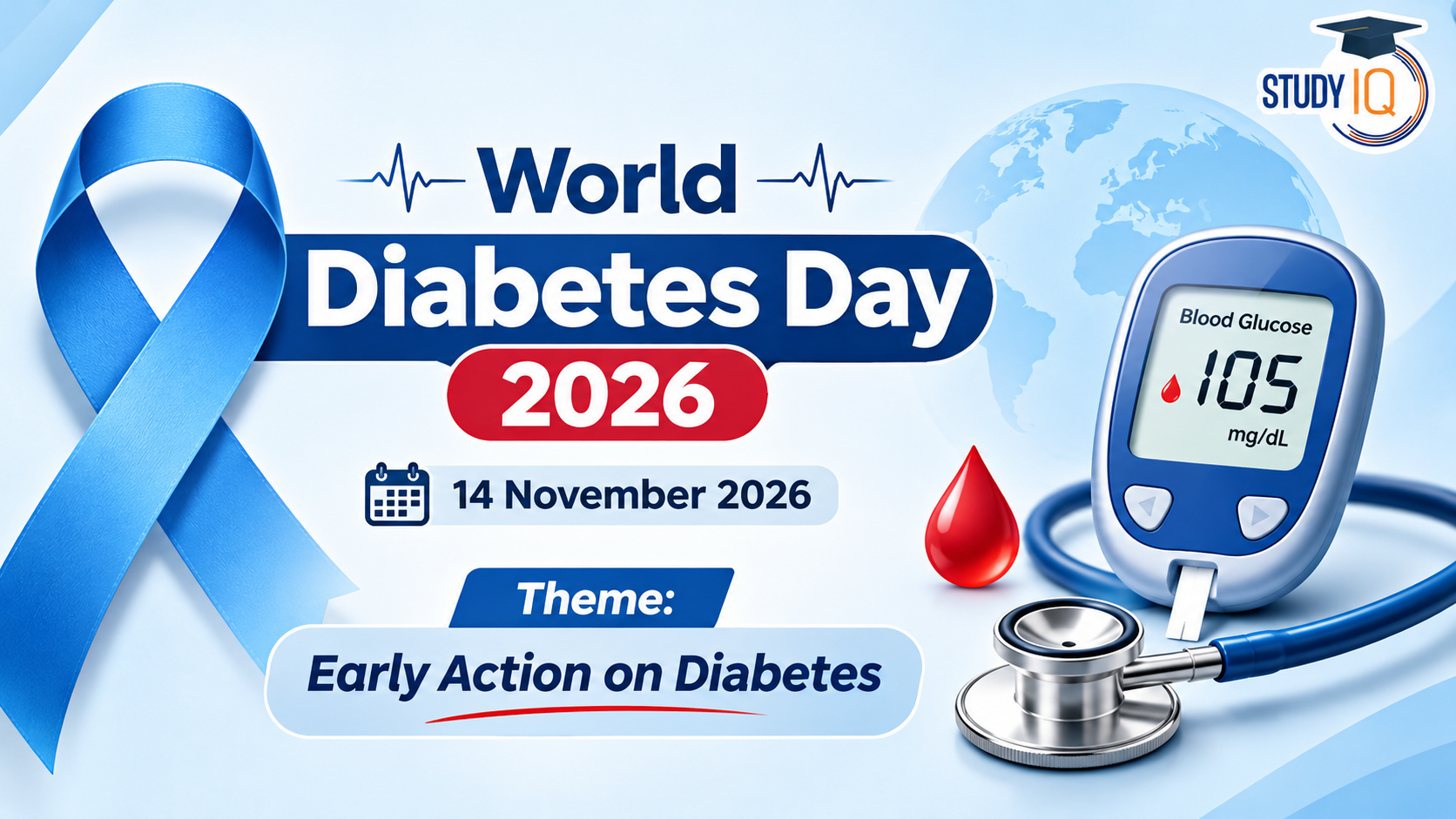
World Diabetes Day 2026 is observed on 14 November to raise awareness about diabetes, its prevention, early diagnosis and effective management. The campaign highlights the importance of identifying diabetes at an early stage and ensuring affordable access to quality healthcare.
The theme for the 2026–27 campaign is ‘Early Action on Diabetes’, focusing on early diagnosis, reducing the risk of Type 2 diabetes, improving treatment and eliminating stigma associated with the disease.
World Diabetes Day 2026: Overview
| Particulars | Details |
|---|---|
| Day | World Diabetes Day |
| Date | 14 November 2026 |
| Theme | Early Action on Diabetes |
| Campaign period | 2026–27 |
| Established by | International Diabetes Federation (IDF) and WHO |
| First observed | 1991 |
| United Nations recognition | 2006 |
| Key focus | Early diagnosis and quality care |
World Diabetes Day 2026 Theme
The theme of World Diabetes Day 2026–27 is ‘Early Action on Diabetes’.
The campaign focuses on six major priorities:
-
Know the signs: Recognise common symptoms and seek medical advice.
-
Recognise Type 1 diabetes: Understand that it can develop at any age.
-
Ensure early diagnosis: Improve access to timely and affordable diabetes testing.
-
Promote healthier environments: Encourage healthy diets and regular physical activity.
-
Ensure continuous care: Improve access to medicines, treatment and monitoring.
-
Reduce stigma: Promote understanding and support for people living with diabetes.
History of World Diabetes Day
- The International Diabetes Federation (IDF) and the World Health Organization (WHO) established World Diabetes Day in 1991.
-
It is observed on 14 November to commemorate Sir Frederick Banting’s birth anniversary.
-
Frederick Banting, along with Charles Best, played a key role in the discovery of insulin in 1921.
-
In December 2006, the United Nations General Assembly adopted Resolution A/RES/61/225, recognising World Diabetes Day as an official United Nations observance.
-
The first official UN-recognised World Diabetes Day was observed in 2007.
What is Diabetes?
Diabetes is a chronic metabolic disease characterised by elevated blood glucose (blood sugar) levels.
It occurs when the pancreas does not produce sufficient insulin or when the body cannot effectively use the insulin produced.
Role of insulin:
Insulin is a hormone produced by the beta cells of the pancreas. It helps glucose move from the bloodstream into body cells, where it is used for energy.
Mechanism:
Food intake and digestion
Glucose enters the bloodstream
Insulin helps glucose enter cells
Insufficient insulin action → High blood glucose
Types of Diabetes
There are three major types of diabetes:
| Type | Key characteristics |
|---|---|
| Type 1 diabetes | The immune system destroys insulin-producing beta cells. Requires insulin treatment. |
| Type 2 diabetes | The body develops insulin resistance or does not produce enough insulin. |
| Gestational diabetes | High blood glucose develops during pregnancy. |
Type 2 diabetes is associated with several risk factors, including obesity, physical inactivity, unhealthy diets, family history and increasing age.
Common Symptoms of Diabetes
Early identification of symptoms can help individuals seek timely medical attention.
Major symptoms include:
-
Excessive thirst (Polydipsia).
-
Frequent urination (Polyuria).
-
Unexplained weight loss.
-
Increased hunger (Polyphagia).
-
Persistent fatigue.
-
Blurred vision.
-
Slow wound healing.
-
Frequent infections.
Type 1 diabetes may develop rapidly, whereas Type 2 diabetes can progress gradually and remain undiagnosed for years.
Global Diabetes Statistics
According to the International Diabetes Federation’s 2025 estimates:
-
Approximately 589 million adults aged 20–79 years are living with diabetes worldwide.
-
Around four in ten people with diabetes remain undiagnosed.
-
Approximately 635 million adults are estimated to be at high risk of developing Type 2 diabetes.
Undiagnosed diabetes increases the risk of serious complications, including cardiovascular diseases, kidney damage, nerve damage and vision impairment.
WHO Global Diabetes Targets 2030
In May 2022, the 75th World Health Assembly adopted five global diabetes coverage targets to improve diabetes prevention, diagnosis and treatment by 2030.
| Target | Goal by 2030 |
|---|---|
| People with diabetes achieving good glycaemic control | 80% |
| People with diabetes achieving good blood pressure control | 80% |
| People aged 40 years and above with diabetes receiving statins | 60% |
| People with Type 1 diabetes having access to affordable insulin | 100% |
| People with Type 1 diabetes having access to blood glucose self-monitoring | 100% |
These targets are part of the WHO Global Diabetes Compact, launched in 2021 to strengthen diabetes prevention, diagnosis and treatment worldwide.
Significance of World Diabetes Day
World Diabetes Day plays an important role in addressing the growing global burden of diabetes.
Its major objectives include:
-
Public awareness: Educating people about diabetes, its symptoms and risk factors.
-
Early diagnosis: Encouraging timely screening and medical consultation.
-
Prevention: Promoting physical activity, balanced diets and healthy lifestyles.
-
Affordable healthcare: Improving access to insulin, medicines and diagnostic facilities.
-
Reducing complications: Encouraging regular monitoring and continuous treatment.
-
Combating stigma: Promoting social inclusion and support for people living with diabetes.
How Can Diabetes Be Prevented and Managed?
Although Type 1 diabetes cannot currently be prevented, the risk of Type 2 diabetes can be reduced through healthy lifestyle choices.
Important preventive measures include:
-
Maintaining a healthy body weight.
-
Engaging in regular physical activity.
-
Following a balanced and nutritious diet.
-
Limiting the consumption of sugary drinks and highly processed foods.
-
Avoiding tobacco consumption.
-
Undergoing regular health check-ups, particularly for individuals at higher risk.
-
Following prescribed medication and treatment plans.
International Diabetes Federation (IDF)
The International Diabetes Federation is an international umbrella organisation representing the global diabetes community.
Its major functions include:
-
Promoting diabetes awareness and education.
-
Supporting national diabetes associations.
-
Advocating improved access to diagnosis and treatment.
-
Publishing the IDF Diabetes Atlas, which provides global and regional diabetes statistics.
-
Supporting research and international cooperation on diabetes prevention and care.
Important Facts to Remember
-
World Diabetes Day is observed on 14 November.
-
It was established in 1991 by IDF and WHO.
-
The date commemorates Sir Frederick Banting’s birth anniversary.
-
Frederick Banting and Charles Best played a key role in insulin discovery in 1921.
-
The United Nations recognised World Diabetes Day through Resolution A/RES/61/225 in 2006.
-
The 2026–27 campaign theme is ‘Early Action on Diabetes’.
-
WHO launched the Global Diabetes Compact in 2021.
-
The World Health Assembly adopted five global diabetes coverage targets in 2022.
-
The IDF publishes the Diabetes Atlas.

 Children’s Day 2026: Date, History, Si...
 Climate Change Performance Index 2027: I...
 List of Military Exercises of India 2026...














 WhatsApp






