Table of Contents
World Breastfeeding Week 2026 is observed from August 1 to August 7 to promote breastfeeding and improve support for mothers and infants. Learn about World Breastfeeding Week 2026 theme, significance, objectives, Golden Hour, colostrum, exclusive breastfeeding and complementary feeding guidelines.
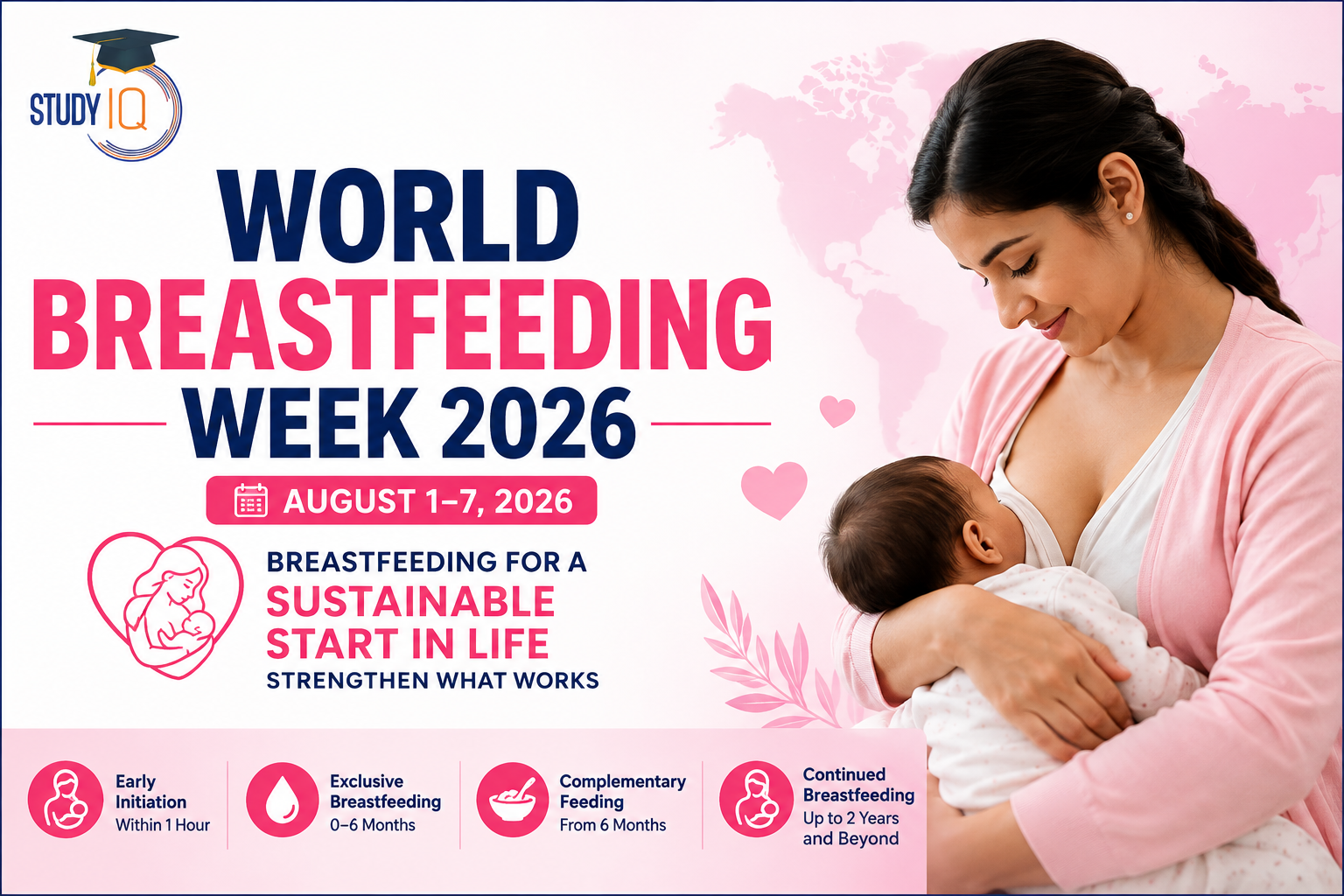
World Breastfeeding Week 2026
World Breastfeeding Week 2026 is being observed from August 1 to August 7, 2026, highlighting the importance of breastfeeding for infant nutrition, immunity, growth and development.
The annual observance also draws attention to the support mothers need from families, healthcare systems, workplaces and communities to initiate and continue breastfeeding successfully.
In India, breastfeeding awareness is promoted through government nutrition and maternal-child health initiatives, including POSHAN Abhiyaan, Anganwadi services and community-level health programmes.
The campaign particularly emphasizes early initiation of breastfeeding, exclusive breastfeeding during the first six months, appropriate complementary feeding after six months and continued breastfeeding thereafter.
World Breastfeeding Week 2026 Overview
| Particular | Details |
|---|---|
| Event | World Breastfeeding Week 2026 |
| Dates | August 1–7, 2026 |
| Frequency | Annual |
| Focus | Breastfeeding, infant nutrition and maternal support |
| Key Recommendation | Initiate breastfeeding within one hour of birth |
| Exclusive Breastfeeding | First six months |
| Complementary Feeding | From six months |
| Continued Breastfeeding | Up to two years and beyond |
| Major Stakeholders in India | Anganwadi workers, ASHAs, healthcare institutions, families and government agencies |
World Breastfeeding Week 2026 Theme
The World Breastfeeding Week 2026 theme focuses on strengthening breastfeeding support and ensuring a healthy and sustainable start to life.
The campaign emphasizes that successful breastfeeding is not solely the responsibility of mothers. Families, healthcare providers, communities, employers and governments all have an important role in creating an environment in which mothers can breastfeed safely and comfortably.
The broader message is to strengthen systems and practices that already work while addressing social, healthcare and workplace barriers to breastfeeding.
Why is Breastfeeding Important?
Breast milk provides infants with essential nutrients required during the crucial early stages of growth and development.
Breastfeeding can contribute to:
- Providing appropriate nutrition to infants.
- Supporting the development of the immune system.
- Protecting infants against several infections.
- Supporting healthy physical growth.
- Contributing to brain and cognitive development.
- Reducing the risk of malnutrition.
- Strengthening bonding between the mother and child.
- Supporting overall infant health and survival.
Breast milk is particularly important during the first six months, when exclusive breastfeeding is generally recommended.
Importance of the First 1,000 Days
World Breastfeeding Week also draws attention to the first 1,000 days of life, beginning from conception and continuing until approximately the child’s second birthday.
This period is considered critical because nutrition and healthcare during these years can have lasting effects on:
- Brain development
- Physical growth
- Immune function
- Cognitive development
- Nutritional status
- Long-term health
Adequate maternal nutrition, breastfeeding and appropriate complementary feeding therefore form an important part of early childhood development.
Golden Hour: Breastfeeding Within One Hour of Birth
One of the most important breastfeeding practices is the early initiation of breastfeeding, preferably within the first hour after birth.
This first hour after delivery is often referred to as the Golden Hour.
Early initiation of breastfeeding helps establish breastfeeding and allows the newborn to receive colostrum.
It also facilitates skin-to-skin contact between the mother and newborn, which can support bonding and the initiation of feeding.
What is Colostrum?
Colostrum is the thick, yellowish first milk produced by the mother immediately after childbirth.
It is highly nutritious and contains important protective components, including antibodies and proteins.
Colostrum helps support the newborn’s developing immune system and provides essential nourishment during the first days of life.
Families should therefore be encouraged to feed colostrum to newborns rather than discard it because of traditional misconceptions.
Exclusive Breastfeeding for First Six Months
Exclusive breastfeeding is recommended during the first six months of an infant’s life, unless a healthcare professional advises otherwise because of a particular medical situation.
Exclusive breastfeeding generally means providing the baby with breast milk without other foods or drinks, including water.
Traditional feeds such as honey, ghutti or glucose water should not replace breast milk during this period.
Breast milk normally provides the nutrition and hydration required by healthy infants during their first six months.
Complementary Feeding After Six Months
After completing six months, infants require appropriate complementary foods in addition to breast milk to meet their increasing nutritional requirements.
Complementary feeding should therefore begin at around six months while breastfeeding continues.
The recommended approach includes:
- Introducing age-appropriate and nutritious complementary foods.
- Maintaining proper hygiene while preparing and feeding food.
- Gradually increasing the quantity and variety of foods.
- Continuing breastfeeding along with complementary foods.
- Continuing breastfeeding up to two years of age or beyond, where possible.
This combination supports healthy growth during a period when children’s nutritional requirements increase rapidly.
Support for Breastfeeding Mothers
Breastfeeding can sometimes be challenging, particularly for first-time mothers. Proper counselling and family support can make breastfeeding easier and more sustainable.
Healthcare workers can help mothers understand:
- Correct breastfeeding positions.
- Proper attachment and latching.
- Feeding according to the baby’s needs.
- Common breastfeeding difficulties.
- Expression of breast milk.
- Safe handling and storage of expressed breast milk.
Support is particularly important for working mothers, who may need access to maternity protection, breastfeeding breaks, suitable facilities and guidance on expressing and storing breast milk.
Role of Anganwadi and ASHA Workers
In India, frontline workers have an important role in spreading awareness regarding breastfeeding and infant nutrition.
Anganwadi workers and ASHA workers can help families understand the importance of early breastfeeding, exclusive breastfeeding and appropriate complementary feeding.
Awareness activities may involve:
- Pregnant women and lactating mothers.
- Fathers and other family members.
- Community groups.
- Healthcare institutions.
- Local authorities.
Community participation is important because decisions regarding infant feeding are often influenced by family practices and traditional beliefs.
Objectives of World Breastfeeding Week 2026
The major objectives of World Breastfeeding Week include:
- Promoting awareness about the nutritional and health benefits of breastfeeding.
- Encouraging early initiation of breastfeeding within one hour after birth.
- Promoting exclusive breastfeeding during the first six months.
- Encouraging appropriate complementary feeding after six months.
- Supporting continued breastfeeding alongside complementary foods.
- Educating families about colostrum and discouraging harmful feeding practices.
- Strengthening support systems for breastfeeding mothers.
- Creating breastfeeding-friendly workplaces and communities.
- Improving maternal and child nutrition through awareness and counselling.
Significance of World Breastfeeding Week
World Breastfeeding Week is significant because breastfeeding is closely connected with child nutrition, maternal health, public health and sustainable development.
The observance helps governments and health organisations communicate scientifically recommended infant-feeding practices while addressing misconceptions surrounding breastfeeding.
It also shifts attention from viewing breastfeeding solely as an individual responsibility to recognising the importance of supportive healthcare systems, families, communities and workplaces.
World Breastfeeding Week and Sustainable Development
Breastfeeding contributes to several broader development objectives.
It supports better nutrition and child health while reducing dependence on commercially produced substitutes in situations where breastfeeding is possible and appropriate.
Breastfeeding promotion is therefore linked with objectives relating to:
- Good health and well-being
- Improved nutrition
- Child development
- Gender-responsive workplaces
- Reduction of inequalities
- Sustainable consumption
Creating supportive conditions for breastfeeding can consequently contribute to both public health and sustainable development.
World Breastfeeding Week 2026: Key Takeaways
World Breastfeeding Week 2026 is observed from August 1 to August 7 and highlights the importance of creating strong support systems for breastfeeding mothers.
The most important practices highlighted during breastfeeding awareness programmes include initiating breastfeeding within the first hour of birth, feeding colostrum, exclusively breastfeeding for the first six months, introducing complementary foods after six months and continuing breastfeeding alongside complementary feeding.
The larger objective is to ensure that mothers receive adequate support from healthcare providers, families, communities and workplaces so that every child can receive a healthy start to life.
Read Also: UPSC Daily Current Affairs 2026
 World Pharmacists Day 2026: Date, Theme,...
 UPSC EPFO Exam Strategy 2026: Complete 3...
 Census Town in India: Criteria, Meaning ...













 WhatsApp