Table of Contents
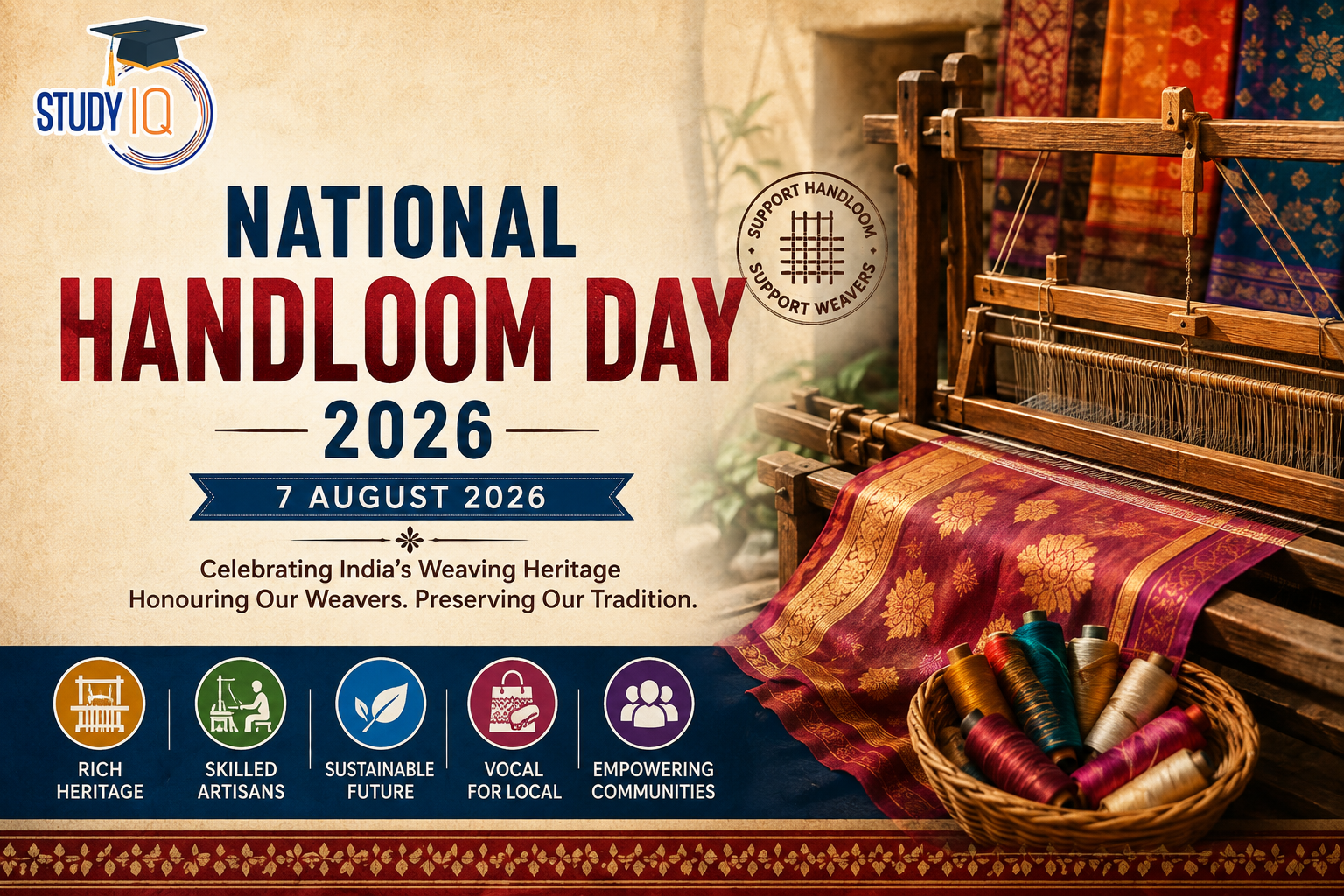
National Handloom Day 2026 is being observed across India on 7 August 2026 to recognize the country’s centuries-old handloom tradition and honor the invaluable contribution of millions of handloom weavers and artisans. The day commemorates the Swadeshi Movement launched on 7 August 1905, which encouraged Indians to boycott foreign goods and promote indigenous products, especially handwoven textiles.
India’s handloom industry is not merely an economic sector but also a living repository of the country’s cultural diversity, craftsmanship, and sustainable traditions. From the luxurious Banarasi Silk of Uttar Pradesh to the intricate Jamdani of West Bengal and the elegant Kanchipuram Silk of Tamil Nadu, every region showcases a unique weaving legacy that has been preserved for generations.
National Handloom Day aims to preserve these traditional crafts, improve the livelihood of weavers, promote sustainable fashion, and encourage citizens to purchase authentic Indian handloom products.
National Handloom Day 2026 Highlights
| Particular | Details |
|---|---|
| Event | National Handloom Day 2026 |
| Date | 7 August 2026 |
| Day | Friday |
| First Observed | 7 August 2015 |
| Organized By | Ministry of Textiles, Government of India |
| Theme 2026 | Yet to be officially announced |
| Commemorates | Swadeshi Movement (7 August 1905) |
| Objective | Promote India’s handloom heritage and support weavers |
National Handloom Day 2026 Theme
As of 7 August 2026, the Ministry of Textiles has not officially announced the theme for National Handloom Day 2026.
However, the celebrations are expected to focus on:
- Preserving India’s traditional weaving heritage
- Supporting artisan livelihoods
- Promoting sustainable and eco-friendly textiles
- Encouraging consumers to purchase authentic handloom products
- Strengthening the “Vocal for Local” campaign
- Enhancing global recognition of Indian handloom products
Once officially announced, the theme will guide exhibitions, awareness campaigns, workshops, and promotional events organized across the country.
History of National Handloom Day
National Handloom Day was instituted by the Government of India in 2015 to recognize the contribution of India’s handloom industry and the millions of weavers who have preserved traditional textile crafts for centuries.
The date 7 August was chosen because it marks the beginning of the Swadeshi Movement in 1905.
The Swadeshi Movement emerged during the freedom struggle against the Partition of Bengal announced by the British government. During a public meeting held at the Town Hall in Calcutta on 7 August 1905, Indians pledged to boycott foreign goods and promote indigenous industries.
Handloom products became one of the strongest symbols of self-reliance and economic nationalism. Mahatma Gandhi later made hand-spun and handwoven Khadi an integral part of India’s freedom movement, encouraging people to wear Indian-made clothing.
Recognizing this historical importance, the Government declared 7 August as National Handloom Day, with the first celebration held in 2015.
Why is National Handloom Day Celebrated?
National Handloom Day is celebrated to:
- Pay tribute to India’s traditional handloom weavers.
- Recognize the historical significance of the Swadeshi Movement.
- Preserve India’s rich textile heritage.
- Generate awareness about authentic handloom products.
- Promote sustainable and eco-friendly fashion.
- Encourage employment generation in rural India.
- Increase domestic and international demand for Indian handloom products.
The observance also highlights the role of handloom weaving in empowering women, preserving indigenous knowledge, and strengthening rural economies.
Significance of National Handloom Day
Preserving India’s Cultural Heritage
India possesses one of the world’s richest textile traditions. Every state has developed distinctive weaving styles reflecting local history, climate, religion, and artistic expression.
Handloom weaving preserves traditional skills passed down through generations and protects India’s intangible cultural heritage.
Supporting Rural Livelihoods
The handloom sector is one of India’s largest rural employment generators after agriculture.
It provides direct and indirect employment to millions of people, including:
- Weavers
- Dyers
- Designers
- Yarn suppliers
- Artisans
- Traders
Women constitute a significant share of the workforce, making the sector crucial for women’s economic empowerment.
Promoting Sustainable Fashion
Unlike machine-based textile production, handloom weaving consumes very little electricity and generates minimal carbon emissions.
Handloom fabrics are:
- Environment-friendly
- Biodegradable
- Energy-efficient
- Sustainable
- Durable
With growing global demand for sustainable fashion, Indian handloom products have gained increasing international recognition.
Strengthening Local Economies
Handloom production supports:
- Cottage industries
- MSMEs
- Self-help groups
- Cooperative societies
- Rural entrepreneurship
By purchasing handloom products, consumers directly contribute to artisan livelihoods and rural economic development.
Major Objectives of National Handloom Day
The celebration seeks to:
- Recognize India’s weaving communities.
- Preserve traditional weaving techniques.
- Promote indigenous textile products.
- Enhance awareness about sustainable fashion.
- Encourage young artisans to continue traditional crafts.
- Increase exports of Indian handloom products.
- Strengthen rural employment.
- Promote women-led weaving enterprises.
Famous Handloom Traditions of India
India is home to hundreds of unique weaving traditions. Some of the most famous include:
| Handloom | State | Specialty |
|---|---|---|
| Banarasi Silk | Uttar Pradesh | Rich zari work and wedding sarees |
| Kanchipuram Silk | Tamil Nadu | Heavy silk with gold borders |
| Jamdani | West Bengal | Fine muslin with floral motifs |
| Sambalpuri Ikat | Odisha | Tie-and-dye weaving technique |
| Pochampally Ikat | Telangana | Geometric Ikat designs |
| Paithani | Maharashtra | Peacock and lotus motifs |
| Chanderi | Madhya Pradesh | Lightweight silk-cotton fabric |
| Maheshwari | Madhya Pradesh | Reversible border sarees |
| Muga Silk | Assam | Naturally golden silk |
| Bhagalpuri Silk | Bihar | Tussar silk weaving |
| Kota Doria | Rajasthan | Fine square-check fabric |
| Kasavu | Kerala | White sarees with golden borders |
| Bandhani | Gujarat & Rajasthan | Traditional tie-and-dye textile |
Government Initiatives for the Handloom Sector
The Government of India has introduced several schemes to strengthen the handloom ecosystem.
National Handloom Development Programme (NHDP)
The flagship programme focuses on:
- Infrastructure development
- Skill upgradation
- Design innovation
- Marketing support
- Institutional strengthening
India Handloom Brand (IHB)
Launched to:
- Certify authentic handloom products
- Ensure quality standards
- Build consumer confidence
- Promote premium Indian handlooms globally
Yarn Supply Scheme (YSS)
Provides:
- Subsidized yarn
- Timely supply of raw materials
- Reduced production costs
Raw Material Supply Scheme (RMSS)
Ensures affordable and quality raw materials for weavers.
Comprehensive Handloom Cluster Development Scheme (CHCDS)
Supports:
- Cluster-based development
- Common facilities
- Modern equipment
- Market linkages
Handloom Marketing Assistance (HMA)
Provides:
- National handloom expos
- Domestic exhibitions
- Buyer-seller meets
- Digital marketing support
Weaver MUDRA Scheme
Facilitates:
- Institutional credit
- Working capital
- Financial inclusion
National Handloom Expos
These exhibitions:
- Promote artisan-to-customer interaction.
- Improve market access.
- Increase sales opportunities.
Export Promotion Initiatives
The Government supports exports through:
- International trade fairs
- Brand promotion
- Product diversification
- Market development assistance
Challenges Faced by India’s Handloom Sector
Despite its rich legacy, the sector faces several structural challenges.
Competition from Powerloom Products
Machine-made textiles are cheaper and produced on a large scale.
Declining Interest Among Youth
Many young people prefer alternative occupations due to uncertain incomes.
Low Income
Handloom weaving often provides irregular and limited earnings.
Rising Cost of Raw Materials
Increasing yarn and dye prices reduce profitability.
Limited Market Access
Small artisans struggle to reach national and international consumers.
Counterfeit Products
Powerloom products are often sold as handloom, affecting genuine artisans.
Digital Divide
Many traditional weavers lack access to online marketplaces.
Importance of Buying Authentic Handloom Products
Consumers play a major role in preserving India’s weaving heritage.
Buying authentic handloom products:
- Supports artisan livelihoods.
- Encourages sustainable production.
- Preserves traditional craftsmanship.
- Promotes local economies.
- Protects India’s cultural heritage.
Consumers should look for:
- India Handloom Brand certification
- Handloom Mark
- GI-tagged products
National Handloom Day 2026 Celebrations
Various activities are organized nationwide, including:
- Handloom exhibitions
- Artisan fairs
- Fashion shows
- Workshops
- Live weaving demonstrations
- School awareness programmes
- Award ceremonies for outstanding weavers
- Social media campaigns promoting Indian textiles
National Handloom Day 2026 Quotes
“Every handwoven fabric carries the story of an artisan, a tradition, and a civilization.”
“Supporting handloom means preserving India’s cultural identity.”
“Choose handloom today for a sustainable tomorrow.”
National Handloom Day 2026: UPSC Relevance
Prelims Facts
- Observed on 7 August
- First celebrated in 2015
- Commemorates Swadeshi Movement (1905)
- Ministry: Ministry of Textiles
- Focuses on preservation of India’s handloom heritage
Mains Relevance
GS Paper I
- Indian Heritage and Culture
- Traditional crafts and textiles
GS Paper II
- Government welfare schemes
- Rural development
- Cooperative institutions
GS Paper III
- MSMEs
- Inclusive growth
- Sustainable development
- Rural economy
- Women empowerment
- Export promotion
Essay
Possible themes:
- Sustainable Development
- Vocal for Local
- Atmanirbhar Bharat
- Cultural Heritage and Economic Growth
Way Forward
The future of India’s handloom industry depends on balancing tradition with innovation. Expanding digital marketplaces, promoting GI-tagged textiles, strengthening branding, ensuring fair remuneration for artisans, encouraging design innovation, and increasing global exports can transform the sector into a major contributor to India’s cultural economy.
Consumers also have an important role. Every purchase of an authentic handloom product helps preserve centuries-old craftsmanship, supports rural livelihoods, and promotes sustainable fashion. National Handloom Day serves as a reminder that India’s weaving traditions are not just a legacy of the past but a valuable asset for the future.
Read Also: UPSC Daily Current Affairs 2026
 WMO State of Global Water Resources 2025...
 FCRA Amendment Bill 2026: Key Provisions...
 World Rhino Day 2026: 22 September, Them...














 WhatsApp