Table of Contents
Context
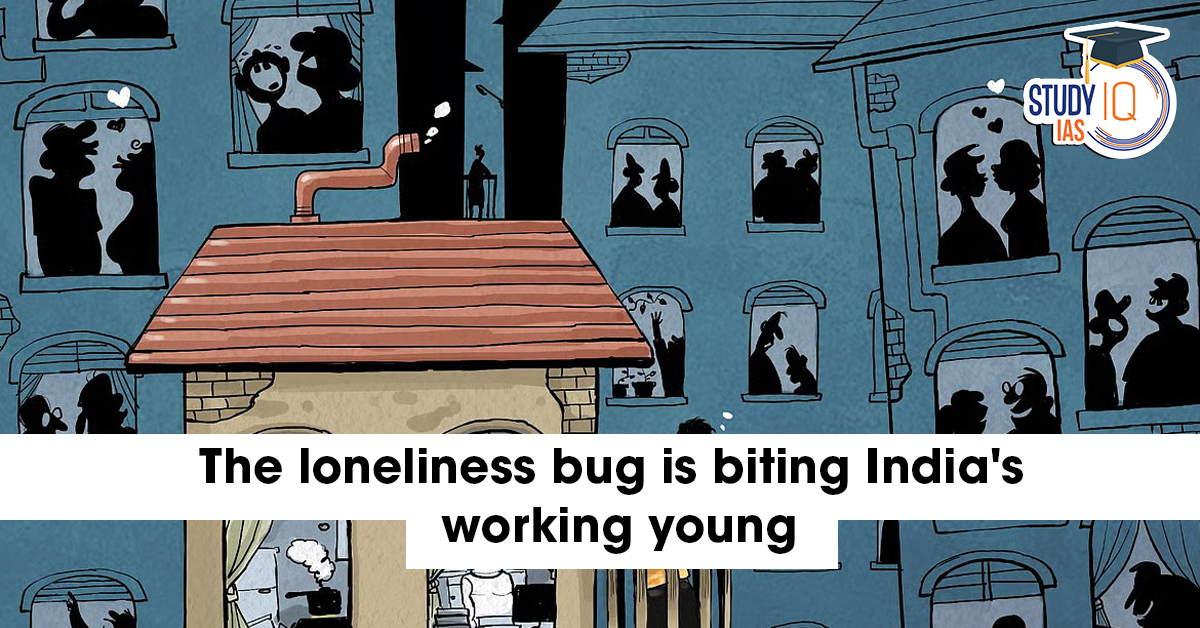
India, with a rapidly urbanising and migrating workforce, is now experiencing a “loneliness epidemic” in cities like Bengaluru, Gurugram, Pune, and Hyderabad.
| Loneliness Among India’s Working Young |
|
Causes of Loneliness Among Working Youth
- Urban Migration and Dislocation: Young workers leave their primary social groups (family, community, hometown networks) and struggle to build new, meaningful connections.
- Work-Centric Lifestyle: Long working hours, gig-based employment, and competitive corporate culture reduce opportunities for nurturing personal relationships.
- Changing Social Norms: Increasing individualism and prioritisation of career over relationships.
- Superficial Socialisation: Friendships often limited to colleagues and party circles, lacking emotional depth.
- Technology and Virtual Relationships: Reliance on dating apps, social media, and casual encounters over long-term companionship creates instant gratification but shallow bonding.
- Postponement of Marriage and Family: With delayed marriage and relationships, many remain emotionally unsupported during their prime working years.
Impacts of Loneliness
On the Individual
- Mental Health: Anxiety, depression, stress, and “burnout syndrome”.
- Physical Health: Studies show loneliness raises risks of heart disease, insomnia, and weakened immunity.
- Identity Crisis: Loss of sense of belonging and increased alienation.
On the Family
- Weakening of joint family ties due to migration.
- Reduced intergenerational bonding as young professionals live away from parents.
- Emotional distance in marriages or partnerships due to overwork and digital distractions.
On Relationships
- Rise of transactional and short-term connections (hookup culture, casual dating).
- Decline in trust and reciprocity in human relations.
- Fragmentation of traditional community networks.
On Society
- Increasing social atomisation – individuals living in silos despite physical proximity.
- Risk of declining civic engagement and community participation.
- Rise of mental health crises in urban areas, impacting productivity and social stability.
- Potential backlash in the form of resurgence of arranged marriages and parental involvement in partner selection, as observed in corporate India.
Way Forward
- Work-Life Balance Policies
- Corporate HR must integrate mental health support, flexible work hours, and stress-reduction measures.
- Strengthening Social Capital
- Encouraging peer networks, cultural clubs, and community-based activities within workplaces and urban neighborhoods.
- Technology with Responsibility
- Dating apps and social platforms must promote meaningful interactions, not just instant gratification.
- Mental Health Infrastructure
- Public health systems should integrate loneliness and social isolation as key mental health issues.
- Cultural Anchoring
- Promote intergenerational living spaces, urban community centers, and reconnecting youth with cultural and familial roots.
- Sociological Intervention
Drawing from Durkheim’s idea of social solidarity, policies must build collective belongingness to prevent anomie.
 France Protests 2026: Cost of Living, Sc...
 PUFFINS Telescope Mission: NASA’s $20 ...
 World Food Day 2026: Strengthening Nutri...














 WhatsApp