
Table of Contents
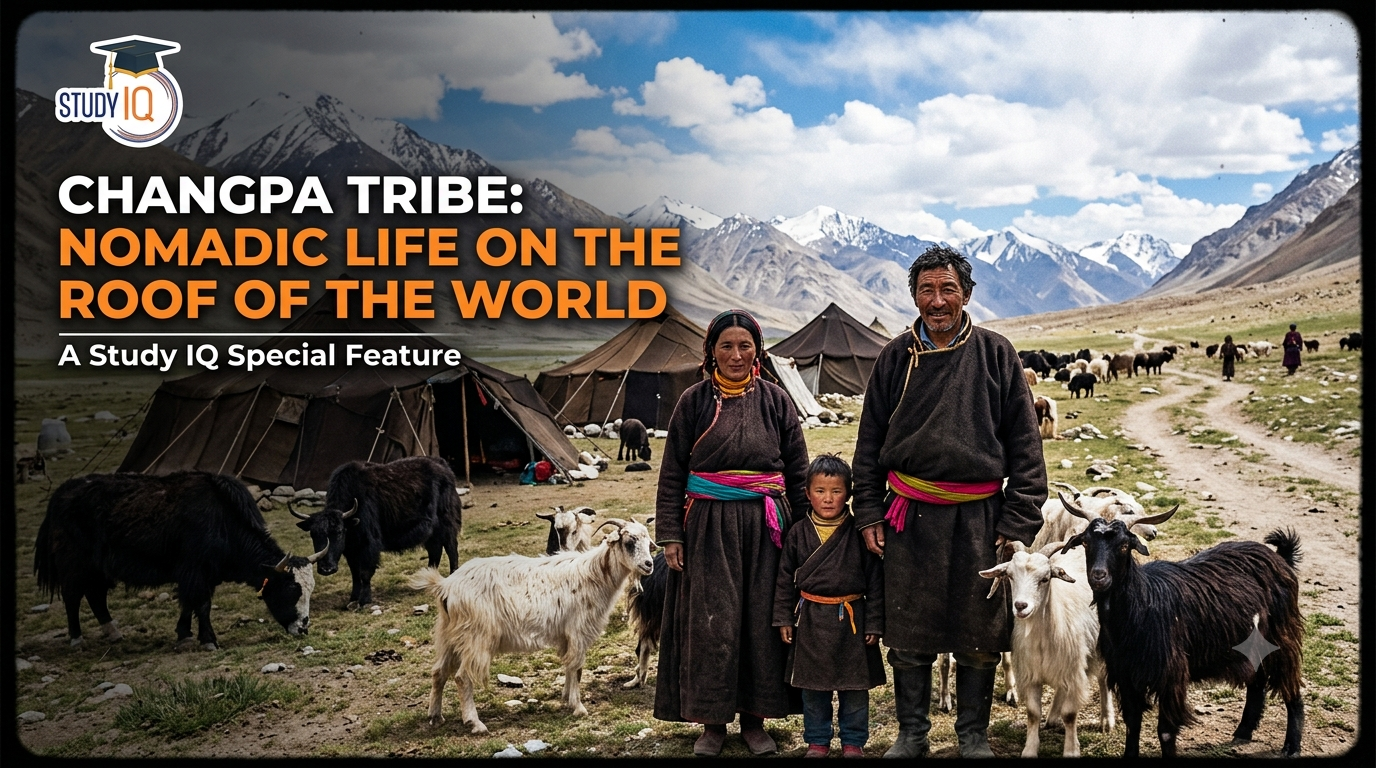
The Changpa Tribe is one of the most unique pastoral communities inhabiting the cold desert of the Changthang Plateau in eastern Ladakh. Known for rearing the famous Pashmina (Cashmere) goats, the Changpas have preserved a centuries-old nomadic lifestyle despite the harsh climatic conditions of the Trans-Himalayas.
Recently, the Ladakh administration launched initiatives to strengthen the Pashmina value chain, improve wool processing, and enhance the livelihoods of the Changpa pastoral community. These measures aim to increase income, preserve traditional livelihoods, and promote the globally renowned Ladakhi Pashmina industry.
Who are the Changpa Tribe?
The Changpas are a semi-nomadic pastoral community primarily residing in the Changthang region of Ladakh, located in the Trans-Himalayan belt of India.
For centuries, they have depended on livestock-based pastoralism, moving seasonally across the high-altitude grasslands in search of grazing grounds.
Key Facts
- Semi-nomadic pastoral community of eastern Ladakh
- Inhabit the high-altitude Changthang Plateau
- Recognized as a Scheduled Tribe (ST) in India
- Primarily followers of Tibetan Buddhism
- Famous worldwide for producing premium-quality Pashmina wool
Geographical Distribution
The Changpas inhabit the Changthang Plateau, one of the world’s highest inhabited plateaus.
Features of Changthang
- Elevation ranges between 4,200–5,500 metres
- Characterized by cold desert conditions
- Extremely low rainfall
- Long and severe winters
- Rich alpine pastures suitable for grazing
The region also supports unique wildlife such as:
- Tibetan Wild Ass (Kiang)
- Snow Leopard
- Black-necked Crane
- Tibetan Gazelle
- Himalayan Wolf
Pashmina: The Lifeline of the Changpas
The Changpas are internationally recognized for rearing Changthangi goats, popularly known as Pashmina goats.
These goats produce an exceptionally fine undercoat of wool that is collected during spring by combing rather than shearing.
Why is Ladakh Pashmina Special?
- Extremely fine fibre (around 12–16 microns)
- Soft, lightweight and warm
- Used to manufacture luxury Pashmina shawls
- High export value
- Supports thousands of artisans in Kashmir and Ladakh
The Pashmina value chain connects Changpa herders with traders, processors, weavers, and exporters, making it one of the most significant livelihood sectors in Ladakh.
Lifestyle of the Changpa Tribe
The Changpas continue to practice seasonal migration with their livestock.
Their economy revolves around rearing:
- Pashmina goats
- Yak
- Sheep
- Horses
The migration pattern helps ensure sustainable grazing while adapting to seasonal climatic variations.
Reboo: Traditional Changpa Tent
One of the most distinctive aspects of Changpa culture is the Reboo.
The Reboo is a traditional conical tent made from yak hair or yak skin, specially designed to withstand the freezing temperatures and strong winds of the Himalayan plateau.
Each Reboo contains:
- The family’s sacred deity
- An image of the Dalai Lama
- Cooking space
- Sleeping area
- Storage for household essentials
The portable structure perfectly suits their nomadic lifestyle.
Religion and Cultural Beliefs
The Changpas primarily follow Tibetan Buddhism, which deeply influences their social life, rituals, and festivals.
Their culture emphasizes:
- Compassion
- Harmony with nature
- Respect for animals
- Community cooperation
- Spiritual devotion
Monasteries play an important role in preserving their religious and cultural traditions.
Categories of Changpas
Based on their lifestyle, the Changpas are classified into two groups.
1. Phalpa
- Traditional nomadic Changpas
- Practice seasonal migration
- Move with livestock across grazing lands
- Continue pastoral traditions
2. Fangpa
- Settled Changpas
- Permanent villages
- Diversified occupations
- Reduced dependence on migration
Major Festivals of the Changpa Tribe
Jyabten
Jyabten is one of the most important religious ceremonies among the Changpas.
Significance
- Purification ritual
- Offerings of food to Guru Padmasambhava
- Community prayers
- Spiritual blessings for prosperity and protection
Tangpe Chona
Tangpe Chona is celebrated on the 15th day of the first month of the lunar calendar.
Highlights
- Symbolizes the triumph of good over evil
- Traditional Buddhist rituals
- Community gatherings
- Cultural performances
- Religious prayers
Government Initiatives for the Changpa Community
Recognizing the economic significance of the Changpas, the Ladakh administration has introduced several initiatives.
Major Objectives
- Strengthen the Pashmina value chain
- Improve wool collection and grading
- Modernize processing facilities
- Increase income for pastoral families
- Promote sustainable livestock management
- Expand market access for Pashmina products
These efforts aim to preserve both the traditional livelihood and the unique cultural heritage of the Changpa community.
Challenges Faced by the Changpas
Despite their rich heritage, the Changpa community faces multiple challenges.
- Climate change affecting pasture availability
- Extreme weather conditions
- Declining grazing lands
- Predation by wild animals
- Youth migration to urban areas
- Fluctuating Pashmina prices
- Infrastructure and healthcare limitations
- Border-related movement restrictions
Addressing these challenges requires a balance between economic development, ecological conservation, and cultural preservation.
Latest UPSC Updates
| Resource | Link |
|---|---|
| UPSC Prelims Result 2026 | Check Here |
| UPSC Exam Calendar 2027 | View Calendar |
| UPSC Question Paper 2026 | Download PDF |
| UPSC Prelims Answer Key 2026 | Check Answer Key |
| UPSC Cut Off 2026 | View Cut Off |
| UPSC Syllabus 2026 | Read Syllabus |
| Daily Current Affairs 2026 | Read Updates |
| StudyIQ UPSC IAS Foundation 2027 (English) | Join Course |
| StudyIQ UPSC IAS Foundation 2027 (Hindi) | Join Course |
| StudyIQ UPSC IAS Foundation 2027 (Bilingual) | Join Course |
 Circular Economy in India: Benefits, Cha...
 EPFO Wage Ceiling Hike 2026: Social Secu...
 Daily Mains Articles 2026 – Updated Da...














 WhatsApp





