
Table of Contents
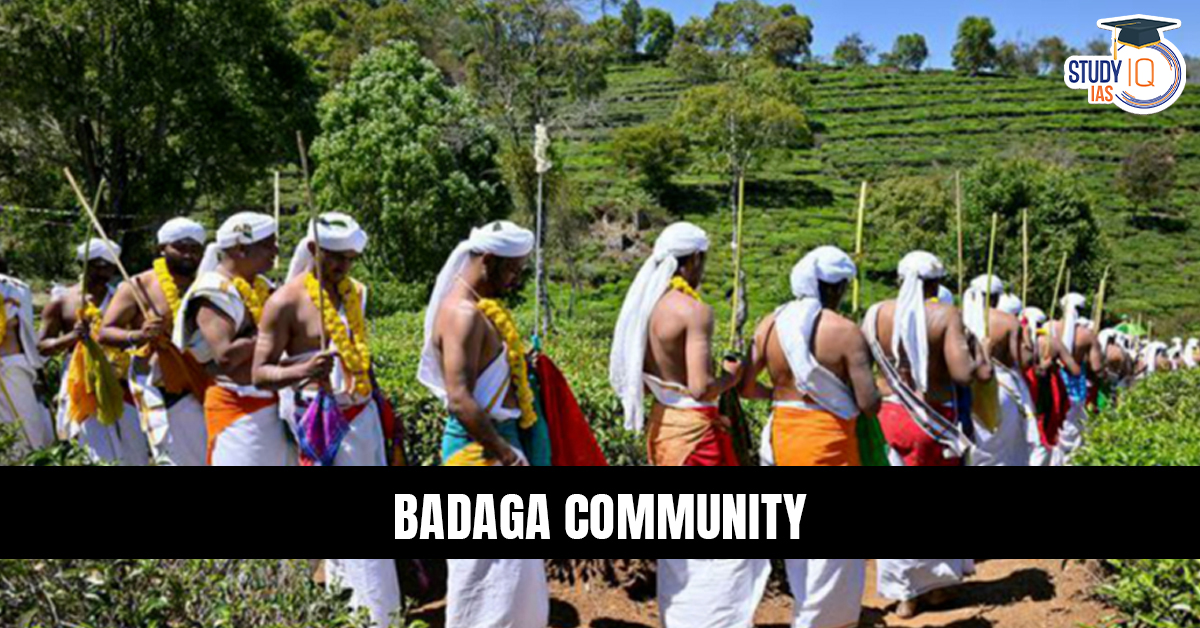
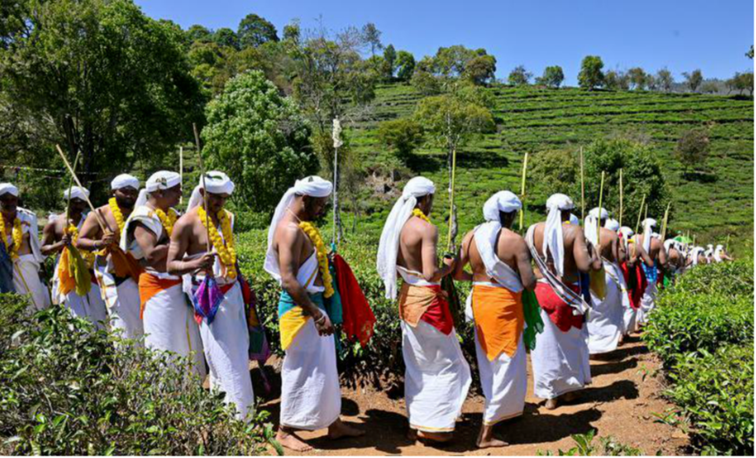
Context: The Badaga community celebrated the Devahabba harvest festival near Udhagamandalam, Tamil Nadu, honouring their traditional agricultural practices.
Badaga Community of Nilgiris
- The Badagas are a native tribal community living in the Nilgiri Hills of Tamil Nadu.
- Badaga Community is known for their unique language, customs, and agricultural traditions.
- They have maintained a semi-isolated lifestyle, allowing them to preserve their rich cultural identity.
- The Badaga language is a dialect of Kannada, typically written in either Tamil or Kannada script.
- Historically, Badagas were farmers cultivating millets, vegetables, tea, and coffee. (Today, many have diversified into modern professions while retaining a strong agricultural base).
- The Badagas primarily worship Hethai Amma (a revered goddess), along with local deities such as Jadayaswamy.
Major Festivals
- Hethai Habba – Celebrates their clan goddess Hethai Amma.
- Jadayaswamy Festival – Honours a local deity.
- Devahabba and other seasonal harvest festivals are also significant.
- Social Structure: Follows a clan-based system with strong village-level governance.
Marriages are endogamous, and weddings involve traditional songs, dances, and rituals. - Traditional Architecture: Live in houses called “hatti“, built using stone and wood, with tiled or thatched roofs.
Their villages are compactly clustered in the hill regions.
About Devva Habba Festival
- A harvest festival celebrated by the Badaga community.
- Also called “Devahabba”, meaning “Festival of the Gods.”
- Held annually to thank the deities for a bountiful harvest and seek blessings for the next season.
- Involves traditional rituals, community prayers, and white-clad processions through the terraced fields.
- Reinforces social bonds and transmits cultural values across generations.
Other Major Harvest Festivals by Tribal Communities in India
Karam Festival – Oraon, Munda, and Ho Tribes (Jharkhand, Chhattisgarh, Odisha)
- Celebrates nature, especially the Karam tree, symbolising fertility and prosperity.
- Involves songs, dances, and worship by young girls and women.
Sohrai – Santhal Tribe (Jharkhand, Bihar, Odisha, West Bengal)
- A cattle and harvest festival celebrated post-harvest.
- Includes mural painting, animal worship, and community feasts.
Garia Puja – Tripuri Tribe (Tripura)
- Held in April to worship the deity Garia for prosperity and good crops.
- Includes dancing, singing, and the use of traditional instruments like drums and bamboo flutes.
Nuakhai – Tribes of Western Odisha (especially Sambalpuri, Gond, and Kondh)
- Celebrated to welcome the new rice crop.
- Families offer the first produce to the deities before consumption.
Chapar Bihu – Bodo Tribe (Assam)
- A version of the Bihu festival is celebrated with dance, music, and buffalo fights.
- Marks the end of sowing and the beginning of the harvest cycle.

 Right to Education (RTE) Act 2009 and So...
 Women’s Representation on Corporate Bo...
 Why Women’s Reservation Alone Is Not E...













 WhatsApp





