Table of Contents
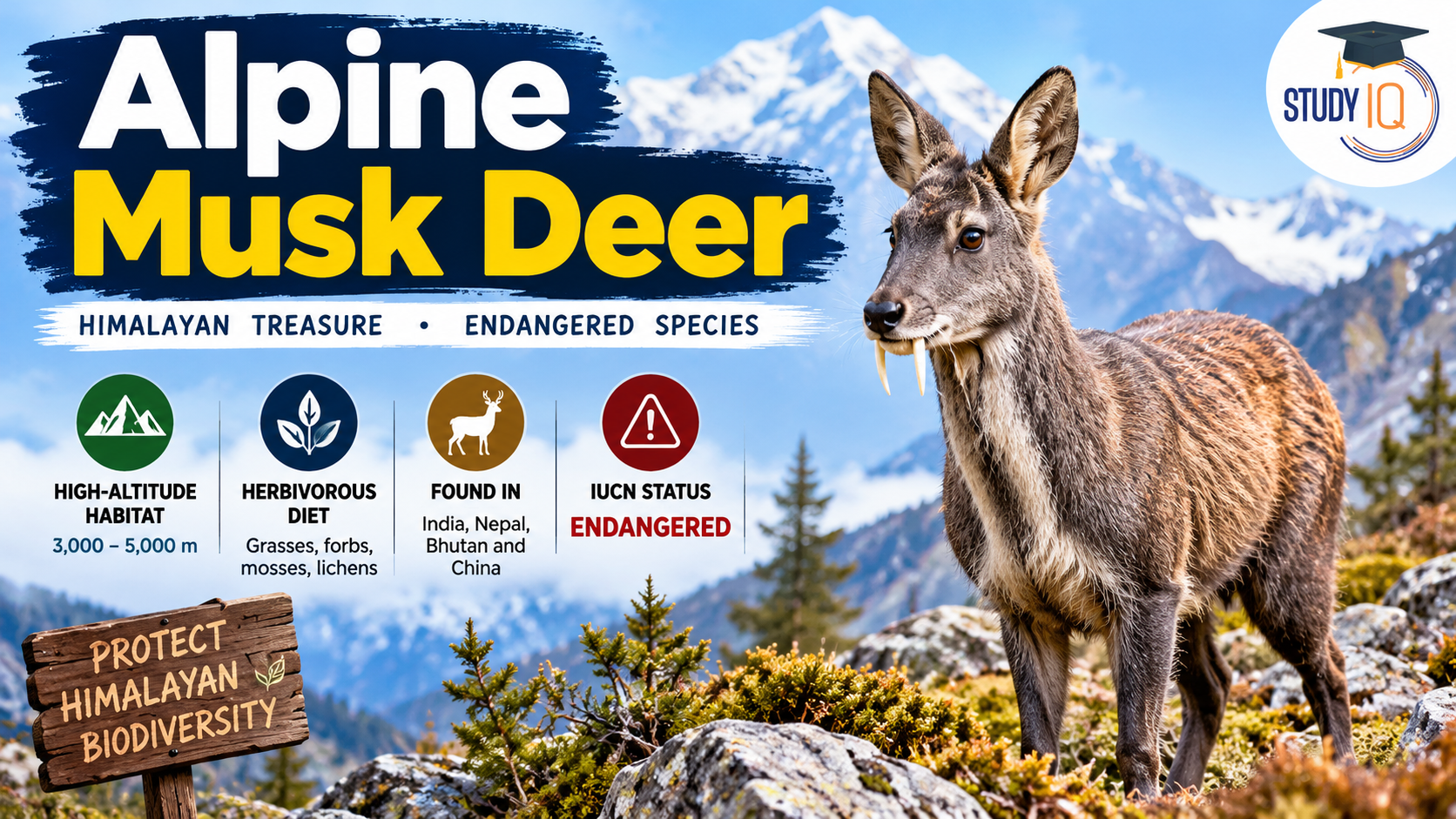
The Alpine Musk Deer (Moschus chrysogaster) is an endangered mammal native to the mountainous regions of Asia. It inhabits high-altitude Himalayan forests and is threatened by poaching for its valuable musk, habitat degradation and other human activities.
According to a report published on October 14, 2026, India’s recognised zoos reportedly have only two living captive Himalayan musk deer, both males, with no females. This raises concerns about captive breeding and the long-term conservation of the species.
Read Also: UPSC Daily Current Affairs 2026
About Alpine Musk Deer
-
Scientific name: Moschus chrysogaster
-
Common name: Alpine Musk Deer
-
Geographical range: India, Nepal, Bhutan and China.
-
Habitat: Mountain forests, including coniferous and deciduous forests.
-
Elevation: Generally found at altitudes of approximately 3,000–5,000 metres.
-
Diet: Herbivorous; feeds on forbs, grasses, mosses, lichens, leaves, shoots and twigs.
-
Behaviour: Generally solitary and crepuscular, meaning it is most active during dawn and dusk.
Key Characteristics
-
Not a true deer: Musk deer belong to the family Moschidae, distinct from the true deer family Cervidae.
-
Musk gland: Adult males possess a musk gland or musk sac that produces a valuable aromatic substance.
-
Elongated canine teeth: Males have prominent, tusk-like upper canine teeth, which are used in competition with other males.
-
Mountain adaptation: Their specialised adaptations enable them to survive in cold, rugged mountainous environments.
Habitat and Distribution
The Alpine Musk Deer inhabits the Himalayan and adjoining mountain ecosystems of South Asia and China. It prefers forested habitats that provide food, shelter and protection from predators.
In India, musk deer are associated with high-altitude Himalayan landscapes, particularly parts of Uttarakhand and other Himalayan states.
These habitats are ecologically important because they support specialised mountain biodiversity and help maintain the balance of fragile Himalayan ecosystems.
Why Is the Alpine Musk Deer Endangered?
1. Poaching for Musk
The primary threat is illegal hunting for musk, a substance used traditionally in perfumery and in some traditional medicinal preparations. High commercial demand has increased pressure on wild populations.
2. Habitat Loss and Fragmentation
Infrastructure development, deforestation, grazing pressure and human encroachment can degrade mountain forests and fragment habitats.
3. Low Reproductive Potential
Musk deer populations may be vulnerable to sustained hunting pressure because the loss of breeding adults can slow population recovery.
4. Climate Change
Changes in temperature, snowfall and vegetation patterns may alter the availability and suitability of high-altitude habitats.
5. Captive Breeding Challenges
The reported absence of females among the two living captive animals in India’s recognised zoos raises concerns about maintaining a viable captive population. However, the captive situation should not be confused with the status of wild populations.
Conservation Status of Alpine Musk Deer
| Conservation framework | Status |
|---|---|
| IUCN Red List | Endangered, as stated in the supplied source |
| CITES | Appendix I |
| Wildlife (Protection) Act, 1972 | Schedule I, as stated in the supplied source |
Significance of these protections:
-
IUCN: Assesses the species’ extinction risk.
-
CITES Appendix I: Generally prohibits international commercial trade in specimens of the species, subject to limited exceptions.
-
Wildlife (Protection) Act, 1972: Schedule I provides the highest level of protection under India’s wildlife protection framework.
Exam note: Musk deer taxonomy and conservation assessments can differ among species and subspecies. Verify the exact taxon and latest official listings before using these classifications in an examination answer.
Conservation Measures and Way Forward
1. Strengthen Anti-Poaching Measures
Improve patrolling, wildlife crime intelligence and enforcement in vulnerable Himalayan habitats.
2. Curb Illegal Musk Trade
Strengthen monitoring of illegal trade networks and promote alternatives to animal-derived musk in the fragrance industry.
3. Protect Himalayan Habitats
Conserve high-altitude forests and wildlife corridors while minimising the ecological impact of infrastructure projects.
4. Improve Scientific Monitoring
Use camera traps, field surveys and population assessments to identify important habitats and track population trends.
5. Develop Captive-Breeding Capacity
Conduct scientific assessments of captive animals, explore appropriate breeding and conservation partnerships, and maintain genetic diversity where feasible.
6. Promote Community Participation
Engage local communities in conservation awareness, sustainable livelihoods and wildlife protection programmes.

 International Day of Rural Women 2026: D...
 Short-Lived Climate Pollutants (SLCPs): ...
 Daily Mains Articles 2026 – Updated Da...














 WhatsApp