Table of Contents
World Science Day for Peace and Development is observed annually on 10 November to highlight the importance of science in building peaceful, inclusive and sustainable societies. Organised under the leadership of the United Nations Educational, Scientific and Cultural Organization (UNESCO), the day promotes public engagement with science and strengthens cooperation between scientific communities, governments and citizens.
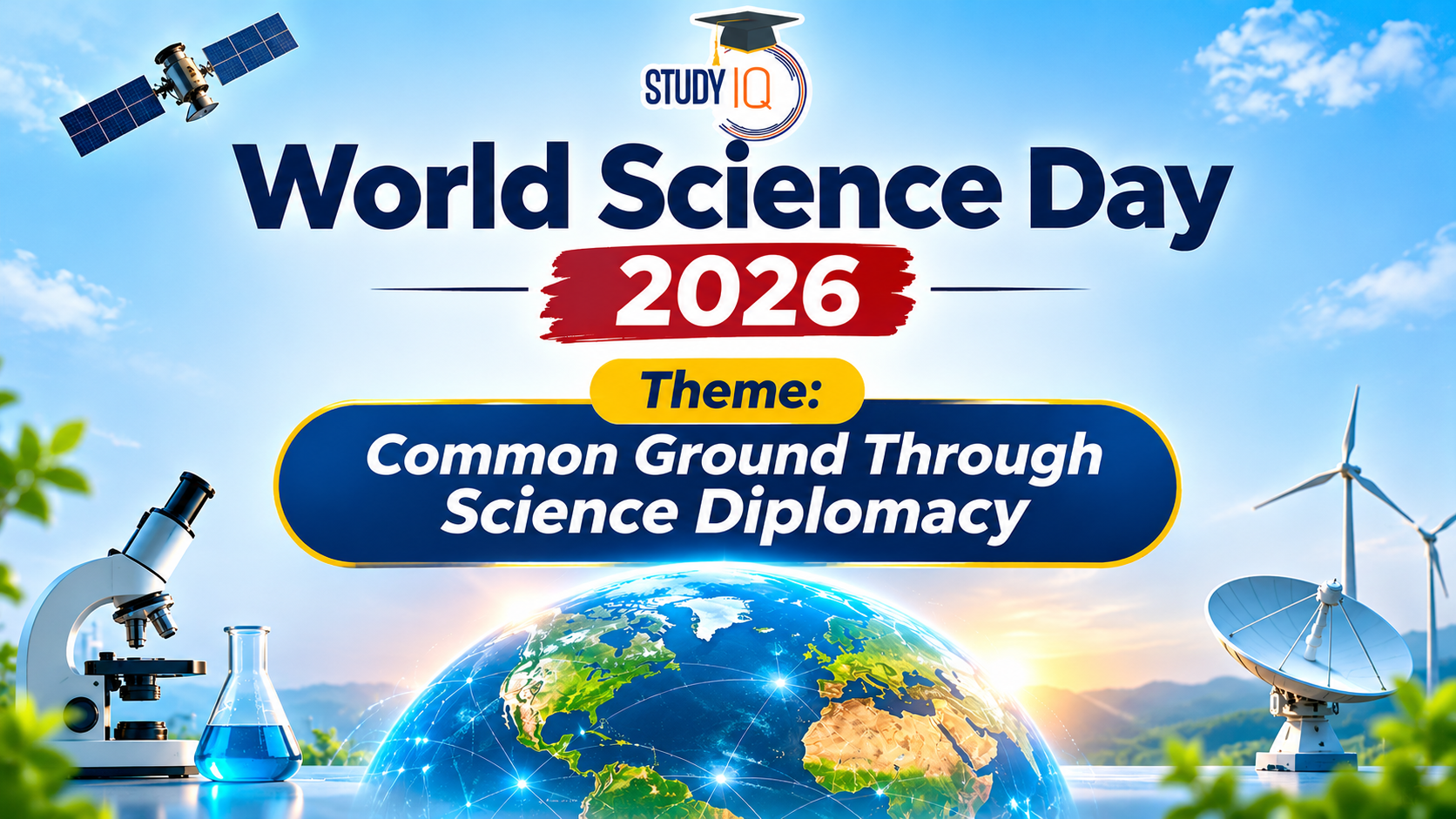
The theme for World Science Day 2026 is ‘Common Ground Through Science Diplomacy’, emphasising how scientific collaboration can build trust, encourage international dialogue and address shared global challenges.
World Science Day 2026: Key Highlights
-
Date: 10 November 2026
-
Official Name: World Science Day for Peace and Development
-
Organising Institution: UNESCO
-
2026 Theme: Common Ground Through Science Diplomacy
-
First Celebrated: 2002
-
Primary Focus: Science, peace, international cooperation and sustainable development.
History and Background of World Science Day
The origins of World Science Day can be traced to the World Conference on Science held in Budapest, Hungary, in 1999. The conference highlighted the need to strengthen relationships between science and society and promote the responsible application of scientific knowledge.
In 2001, UNESCO officially proclaimed 10 November as World Science Day for Peace and Development. The first celebration took place in 2002.
Since then, the observance has provided an international platform to promote scientific literacy, encourage responsible research and strengthen public participation in scientific decision-making.
World Science Day 2026 Theme: Common Ground Through Science Diplomacy
The 2026 theme highlights the role of science diplomacy in bringing countries together despite political, economic and geographical differences.
Science diplomacy refers to the use of scientific cooperation, research partnerships and technological exchange to improve international relations and address common challenges.
It operates through three important dimensions:
-
Science in Diplomacy: Scientific evidence informs foreign policy and international negotiations.
-
Diplomacy for Science: Diplomatic relations facilitate international research collaboration and knowledge exchange.
-
Science for Diplomacy: Scientific partnerships build trust and cooperation between countries.
The theme is particularly relevant in the context of climate change, pandemics, biodiversity loss, food security and emerging technologies.
Objectives of World Science Day 2026
UNESCO promotes the following objectives through this annual observance:
-
Promote scientific awareness: Improve public understanding of scientific developments and their impact on everyday life.
-
Strengthen international cooperation: Encourage countries to share scientific knowledge, technology and research capabilities.
-
Promote science for peace: Use scientific collaboration to build mutual trust and reduce international tensions.
-
Encourage responsible research: Highlight the ethical, social and environmental responsibilities associated with scientific advancements.
-
Bridge the science-society gap: Make scientific knowledge accessible and encourage citizens to participate in discussions on emerging technologies.
-
Support sustainable development: Promote scientific solutions to challenges such as poverty, climate change, food insecurity and public health.
Major Global Initiatives and Celebrations in 2026
World Science Day 2026 encourages scientific institutions, universities, governments and civil society organisations to organise activities that promote science diplomacy and public participation.
Important areas of engagement include:
-
Science and health: Strengthening the use of scientific evidence in healthcare policies and public health programmes.
-
International research partnerships: Promoting cross-border cooperation in climate science, biotechnology, artificial intelligence and environmental research.
-
Science communication: Organising public discussions, exhibitions, workshops and educational campaigns.
-
Evidence-based policymaking: Encouraging governments to use credible scientific research while framing public policies.
These activities aim to make science more accessible and strengthen public confidence in scientific institutions.
Significance of World Science Day for India
For India, World Science Day provides an opportunity to highlight the role of scientific research in achieving technological self-reliance, inclusive growth and sustainable development.
Some important areas include:
-
Climate action: Scientific research supports renewable energy, climate adaptation, disaster forecasting and environmental conservation.
-
Healthcare: Biotechnology, vaccine research, digital health and affordable medical technologies can strengthen public health systems.
-
Agricultural development: Precision farming, climate-resilient crops and agricultural biotechnology can improve food security.
-
Digital transformation: Artificial intelligence, semiconductor technology and digital public infrastructure can accelerate economic development.
-
International cooperation: India’s participation in scientific partnerships, including space research and global climate initiatives, strengthens its role in international science diplomacy.
However, India must address challenges such as inadequate research funding, the unequal distribution of scientific infrastructure, limited industry-academia collaboration and the need to improve scientific literacy.
International Decade of Sciences for Sustainable Development (2024–2033)
An important global initiative associated with this vision is the International Decade of Sciences for Sustainable Development (2024–2033).
The United Nations General Assembly declared this decade in August 2023, with UNESCO leading its implementation.
Its major objectives include:
-
Promoting scientific research across natural, social and applied sciences.
-
Strengthening international scientific collaboration.
-
Improving scientific literacy and public participation.
-
Making scientific knowledge accessible through open science.
-
Using evidence-based research to accelerate the Sustainable Development Goals (SDGs).
The initiative recognises science as a global public good and promotes collaboration between researchers, policymakers and society.
Challenges in Promoting Science Diplomacy
Despite its potential, science diplomacy faces several challenges:
-
Geopolitical tensions: Political conflicts can restrict scientific exchange and international research partnerships.
-
Technology inequality: Developing countries often lack access to advanced research infrastructure and emerging technologies.
-
Ethical concerns: Artificial intelligence, genetic engineering and biotechnology raise questions about privacy, accountability and misuse.
-
Scientific misinformation: Fake news and declining public trust can undermine evidence-based decision-making.
-
Intellectual property barriers: Restrictions on technology transfer can limit equitable access to scientific innovations.
Addressing these challenges requires transparent international partnerships, stronger research institutions and equitable access to scientific knowledge.

 COP31 Climate Summit 2026: Key Issues, I...
 Malabar Tree Toad: Karnataka’s State A...
 National Legal Services Day 2026: Histor...













 WhatsApp