
Table of Contents
Context
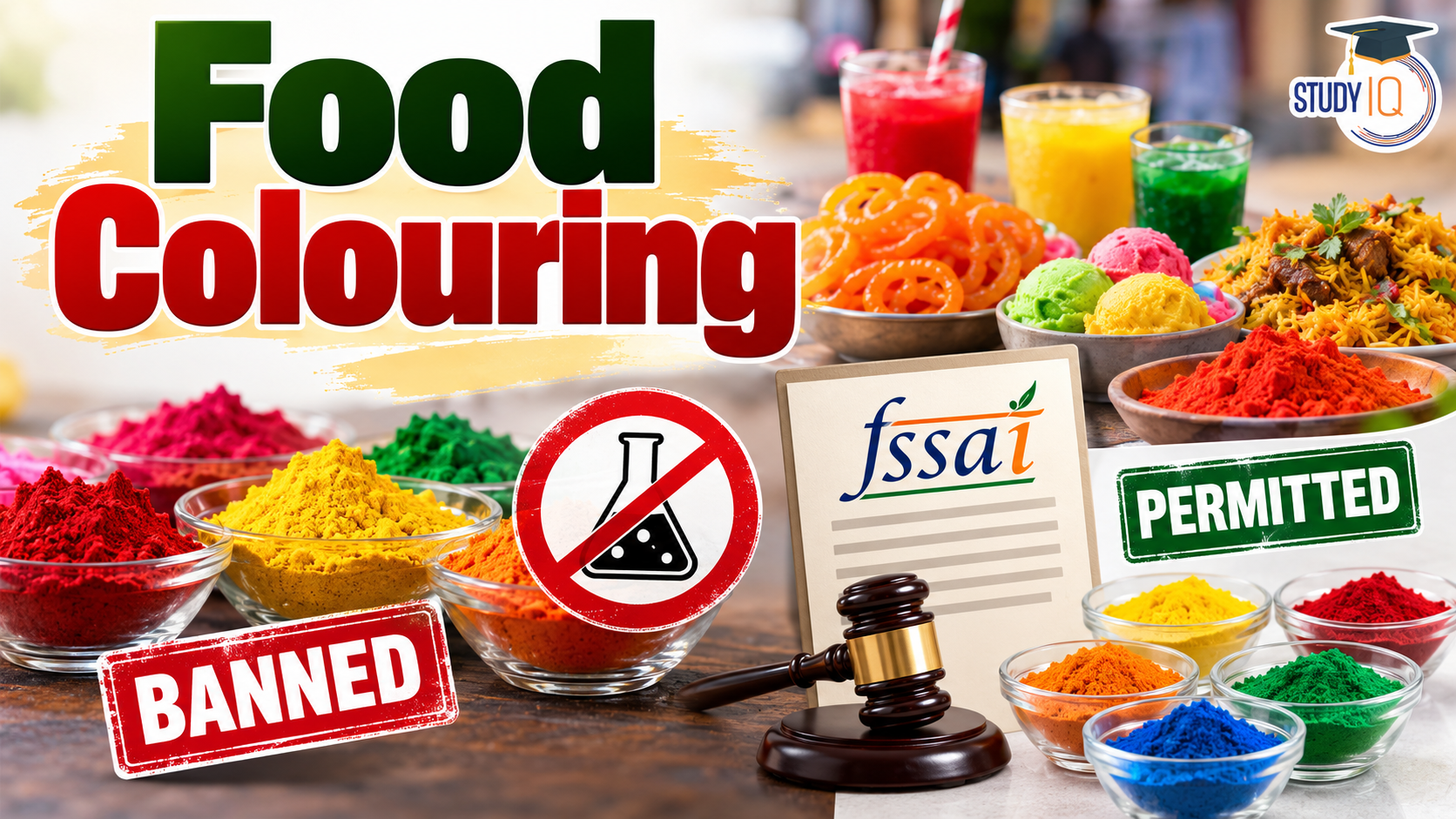
The Uttar Pradesh Food Safety and Drug Administration (FSDA) issued guidelines against the widespread use of banned industrial dyes in street foods.
About Food Colouring
- Nature: Any dye, pigment or chemical added to food or drink to give, boost or restore colour.
- Types:
a. Natural: From plants and minerals, e.g., beetroot, turmeric, paprika extract.
b. Synthetic: Chemically made food-grade additives, allowed only in specific categories within strict limits.
Chemicals Involved
- Banned Industrial Dyes (Illegal Adulterants): Rhodamine-B, Metanil Yellow, Malachite Green, Sudan dyes (I–IV), Butter Yellow, Auramine and Orange II.
- Permitted Synthetic Colours: Tartrazine, Sunset Yellow FCF, Carmoisine, Ponceau 4R, Erythrosine, Brilliant Blue FCF, Fast Green FCF and Indigo Carmine.
Legal Framework
- Food Safety and Standards Act (FSSA), 2006: The main law that punishes the making, sale and distribution of adulterated food.
- FSS (Food Products Standards and Food Additives) Regulations, 2011: Lists permitted colours by food category, sets Good Manufacturing Practices (GMP) and a general limit of 100 mg/kg (up to 200 mg/kg in some canned fruits).
Key Rules
- Cooked Foods: Synthetic colours are banned in everyday cooked food such as dal, biryani, curries, fries, bread and chutneys.
- Unprocessed Foods: No added artificial colour in milk, paneer, fruits, vegetables, juices, spices, pulses, honey and infant formula.
- Category Limits: Allowed only in listed categories, generally up to 100 mg/kg.
- Traceability: Needs precise digital weighing, purchase from licensed manufacturers and valid batch details and invoices.
Health Implications
- Toxicity: Rhodamine-B and Sudan dyes carry cancer risk and may damage the liver and kidneys.
- Allergies: Permitted dyes like Tartrazine and Carmoisine may cause hives, swelling and asthma-like reactions in sensitive people.
- Children: Coloured snacks, cotton candy and ice lollies may expose children to unsafe dyes, affecting health and behaviour.

 IUCN Coral Reef Assessment 2026: Key Fin...
 K9 Vajra Howitzer: Features, Range, Indi...
 Immersive Technologies in India: Applica...









 WhatsApp






