Table of Contents
Context
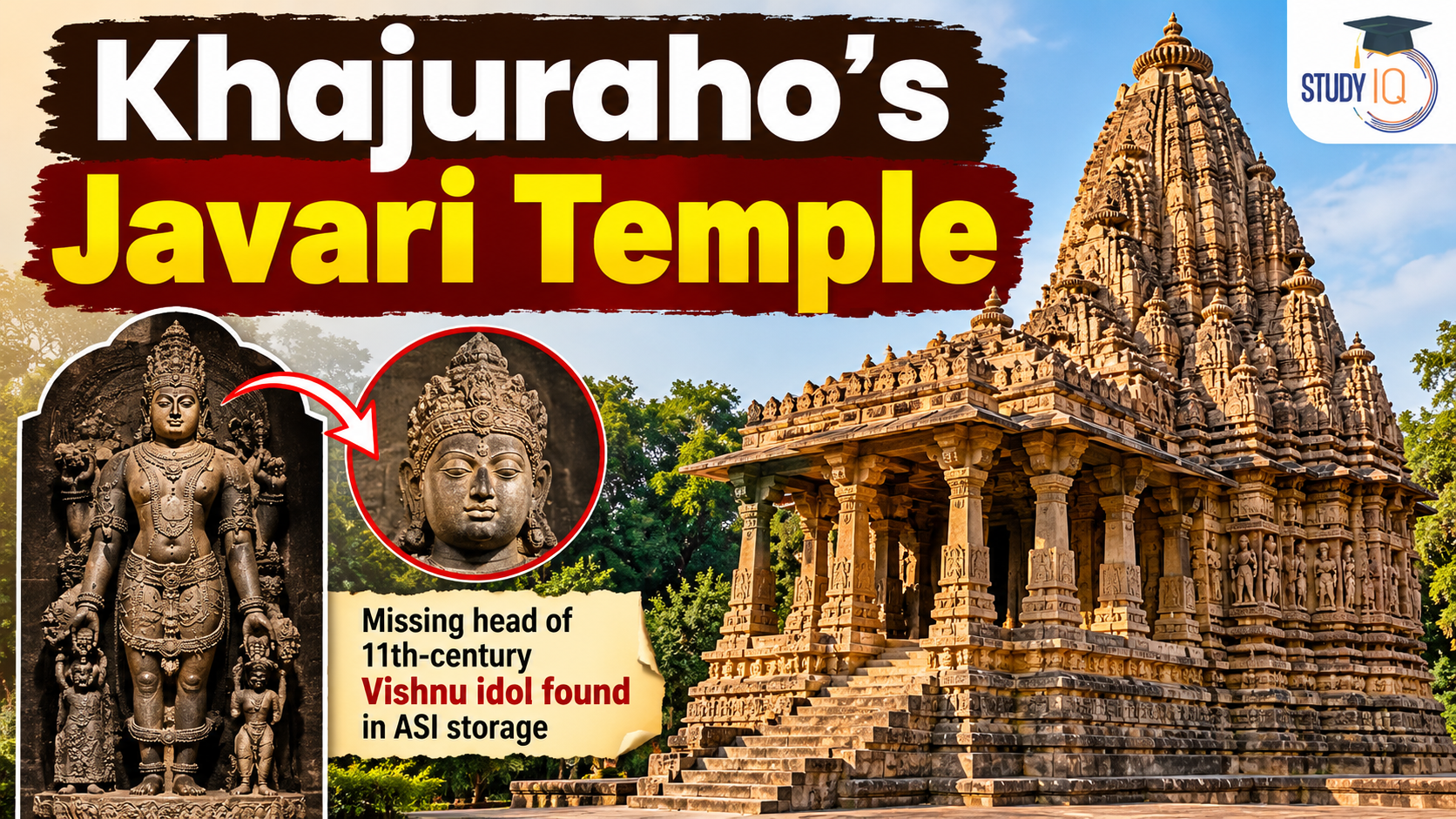
The Archaeological Survey of India (ASI) traced the missing head of an 11th-century Vishnu idol at Javari Temple to an ASI storage facility, resolving a long-standing legal controversy.
About Javari Temple
- Location: Eastern Group of Temples, Khajuraho, Chhatarpur district, Madhya Pradesh.
- Period: Built during the Chandela dynasty, around 1075–1100 CE.
- Heritage Status: Part of the Khajuraho Group of Monuments, a UNESCO World Heritage Site since 1986.
- Deity: Lord Vishnu.
Key Architectural Features
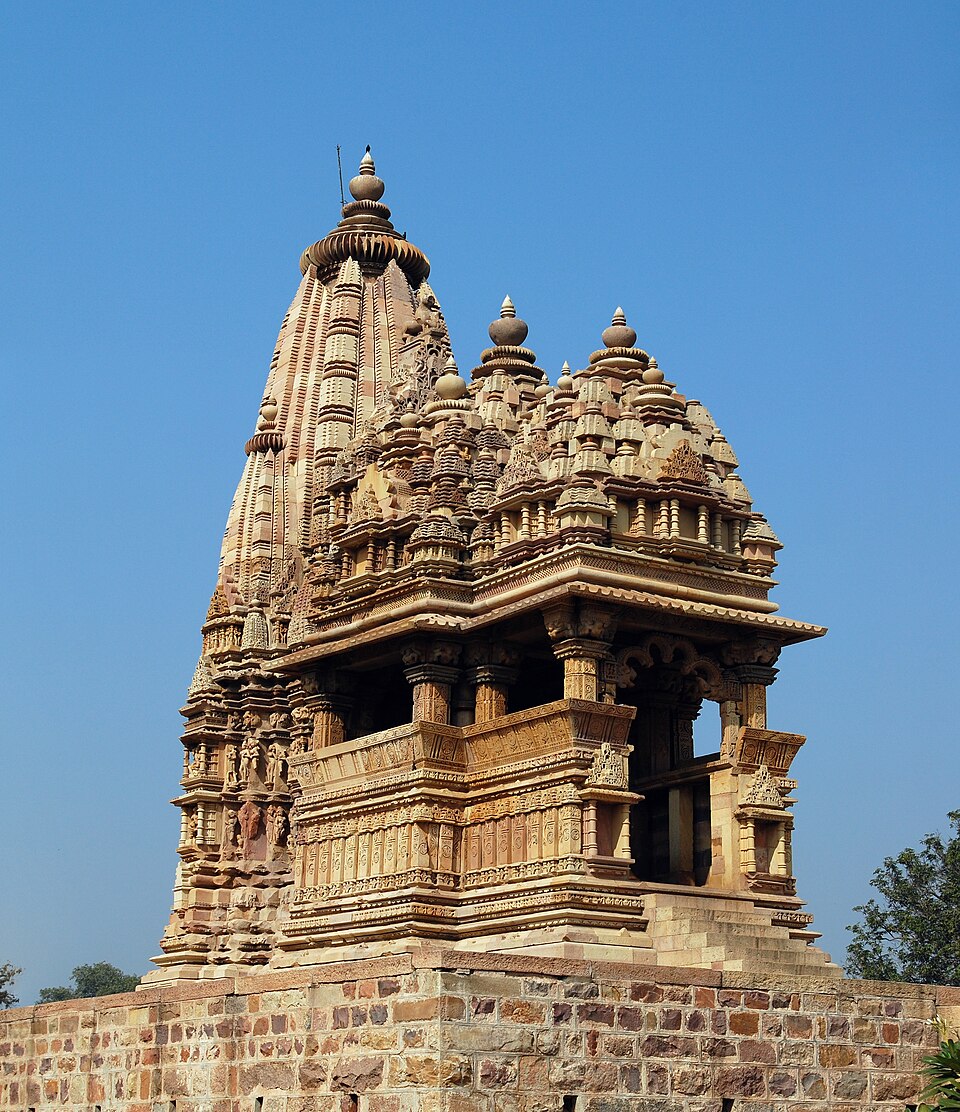
- Nirandhara Plan: Lacks an internal circumambulatory passage (pradakshinapatha); consists of an ardhamandapa, mandapa, antarala and garbhagriha.
- Makara-Torana: Features an intricately carved entrance arch depicting mythical aquatic creatures.
- Shikhara: Has a tall, curvilinear tower with miniature spires, built on a raised stone platform (jagati).
- Sculptures: Exterior walls feature apsaras, deities, mythical beasts (vyalas) and mithuna figures.
- Sanctum Doorway: Displays carvings of the Hindu Trinity—Brahma, Vishnu and Shiva—alongside the Navagrahas.

 State of the World’s Forests (SOFO) 20...
 Preventive Detention in India: Article 2...
 Lakshadweep Achieves 100% Literacy under...














 WhatsApp