
Table of Contents
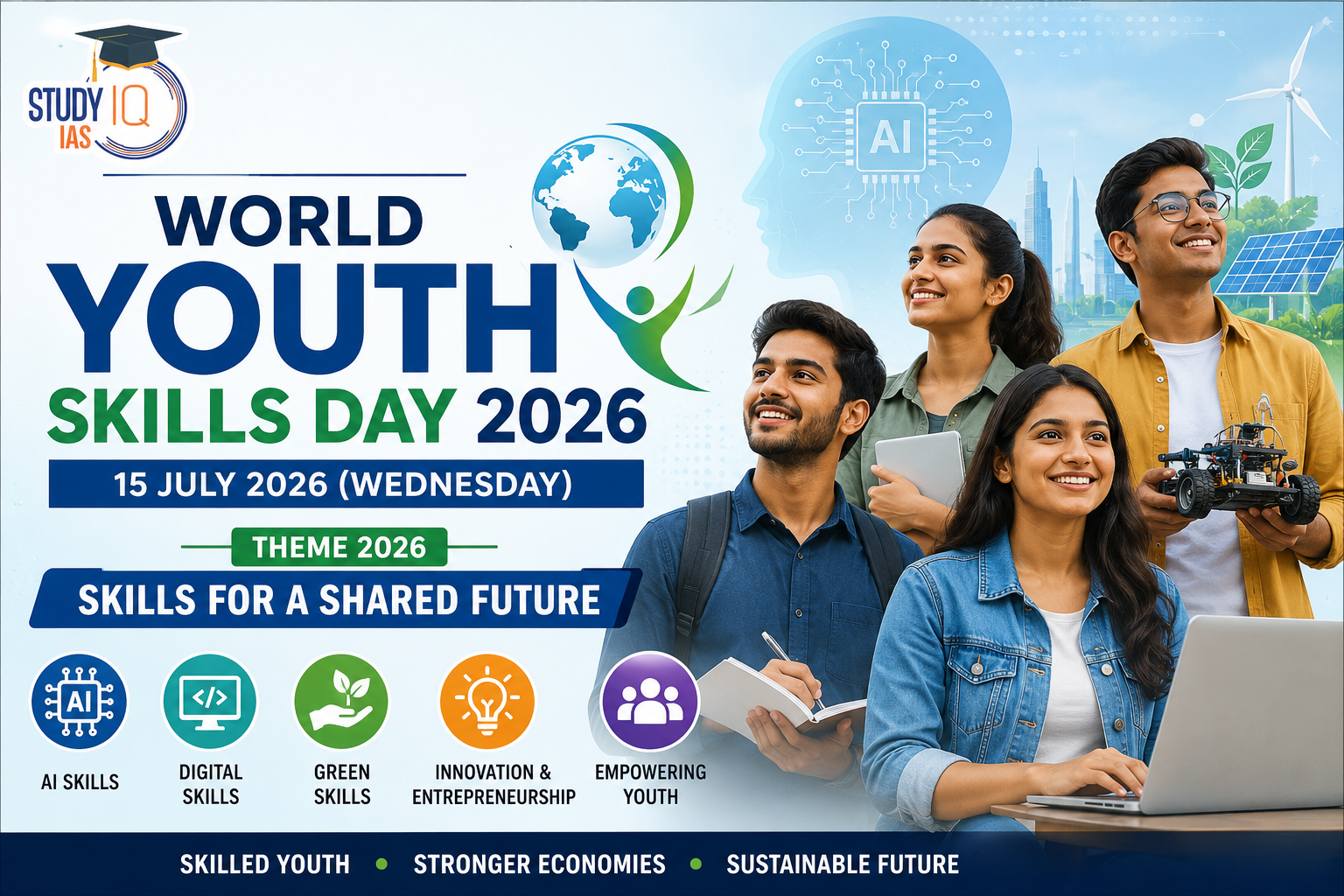
World Youth Skills Day 2026 is being observed globally on 15 July 2026 (Wednesday) under the theme “Skills for a Shared Future.” The annual observance, led by the United Nations (UN) in collaboration with UNESCO, the International Labour Organization (ILO), and other global partners, highlights the importance of equipping young people with the skills required to thrive in an increasingly digital, AI-driven, and sustainable economy.
With rapid technological transformation, automation, and the global transition to green industries, the 2026 observance emphasizes the need for future-ready skills, including artificial intelligence (AI), digital literacy, vocational education, entrepreneurship, and lifelong learning.
World Youth Skills Day 2026 Highlights
| Particulars | Details |
|---|---|
| Event | World Youth Skills Day 2026 |
| Date | 15 July 2026 (Wednesday) |
| Theme | Skills for a Shared Future |
| Declared By | United Nations General Assembly (UNGA) |
| First Observed | 15 July 2015 |
| Resolution | A/RES/69/145 (2014) |
| Focus Areas | AI Skills, Digital Literacy, Green Skills, TVET, Entrepreneurship, Lifelong Learning |
| Objective | Promote youth employability, innovation, inclusive growth, and sustainable development |
What is World Youth Skills Day?
World Youth Skills Day (WYSD) is an annual international observance dedicated to recognizing the importance of Technical and Vocational Education and Training (TVET) and skills development for young people.
The day aims to encourage governments, educational institutions, industries, and civil society organizations to invest in quality skill development programs that prepare youth for evolving labour markets.
The observance focuses on:
- Improving employability
- Encouraging entrepreneurship
- Reducing youth unemployment
- Promoting vocational education
- Supporting economic growth
- Preparing youth for future jobs
As industries undergo digital transformation, skill development has become one of the most important drivers of economic competitiveness.
World Youth Skills Day 2026 Theme
The official World Youth Skills Day 2026 theme is:
“Skills for a Shared Future.”
The 2026 theme emphasizes that the future workforce must possess a balanced combination of:
- Technical skills
- Digital literacy
- AI competencies
- Green skills
- Entrepreneurial abilities
- Soft skills
- Lifelong learning mindset
The theme encourages governments, businesses, educational institutions, and communities to work together in creating inclusive opportunities for youth.
Why is World Youth Skills Day 2026 Focused on AI, Digital and Green Skills?
The global labour market is undergoing unprecedented transformation due to:
- Artificial Intelligence (AI)
- Automation
- Robotics
- Climate change
- Digitalization
- Industry 4.0 technologies
These changes are creating entirely new categories of employment while making many traditional jobs evolve rapidly.
AI Skills
Artificial Intelligence is transforming sectors including:
- Healthcare
- Manufacturing
- Agriculture
- Banking
- Education
- Public administration
Young people increasingly require AI literacy, data analysis, prompt engineering, and digital problem-solving capabilities.
Digital Skills
Digital literacy now includes:
- Coding
- Cybersecurity
- Cloud computing
- Digital communication
- Data analytics
- E-commerce
- Digital marketing
These competencies are becoming essential across almost every profession.
Green Skills
The transition towards sustainable development has created demand for professionals in:
- Renewable energy
- Electric mobility
- Waste management
- Sustainable agriculture
- Environmental conservation
- Climate adaptation
Green skills enable youth to contribute to climate resilience while accessing emerging employment opportunities.
History of World Youth Skills Day
Recognizing the importance of youth employment and vocational education, the United Nations General Assembly (UNGA) adopted Resolution A/RES/69/145 on 18 December 2014, proclaiming 15 July as World Youth Skills Day.
The first World Youth Skills Day was celebrated on 15 July 2015.
Since then, governments, industries, educational institutions, NGOs, and international organizations have organized:
- Skill development workshops
- Career guidance sessions
- Vocational training programs
- Digital literacy campaigns
- Entrepreneurship competitions
- Policy discussions on youth employment
Objectives of World Youth Skills Day
The observance seeks to:
- Improve youth employability
- Promote Technical and Vocational Education and Training (TVET)
- Encourage innovation and entrepreneurship
- Bridge the skills gap
- Promote lifelong learning
- Support inclusive economic development
- Prepare youth for future technologies
- Enhance workforce productivity
Importance of Technical and Vocational Education and Training (TVET)
Technical and Vocational Education and Training (TVET) equips learners with practical, industry-relevant competencies.
Its benefits include:
- Hands-on learning
- Industry certifications
- Better employment opportunities
- Higher productivity
- Entrepreneurial development
- Reduced unemployment
- Stronger industry-academia collaboration
TVET has become increasingly important as employers seek job-ready candidates with practical skills.
Significance of World Youth Skills Day
1. Encourages Youth Empowerment
Skill development enables young people to secure better employment opportunities, start businesses, and achieve financial independence.
2. Bridges the Skills Gap
The observance highlights the need to align education systems with the rapidly changing demands of industries.
3. Supports AI and Digital Transformation
The day promotes digital literacy, coding, AI, and emerging technologies essential for future workplaces.
4. Promotes Green Economy
Green skills prepare young people for careers in renewable energy, sustainable infrastructure, climate adaptation, and environmental conservation.
5. Encourages Entrepreneurship
Innovation, creativity, and business skills enable youth to become job creators rather than job seekers.
6. Develops Soft Skills
Modern workplaces require communication, teamwork, leadership, adaptability, creativity, emotional intelligence, and critical thinking alongside technical expertise.
7. Supports Inclusive Growth
Skill development creates equal opportunities for women, marginalized communities, persons with disabilities, and economically disadvantaged youth.
UNESCO’s Role in Youth Skills Development
UNESCO works with governments and global partners to strengthen education systems and vocational training through initiatives such as:
- Improving Technical and Vocational Education and Training (TVET)
- Promoting digital and AI literacy
- Supporting lifelong learning
- Advancing gender equality in education
- Strengthening teacher training
- Encouraging innovation and entrepreneurship
- Enhancing international cooperation on skills development
UNESCO also collaborates with the International Labour Organization (ILO) and other UN agencies to address global skills shortages and prepare youth for future labour markets.
World Youth Skills Day and Sustainable Development Goals (SDGs)
World Youth Skills Day directly contributes to several Sustainable Development Goals:
| SDG | Contribution |
|---|---|
| SDG 4 | Quality Education |
| SDG 8 | Decent Work and Economic Growth |
| SDG 9 | Industry, Innovation and Infrastructure |
| SDG 10 | Reduced Inequalities |
| SDG 13 | Climate Action through Green Skills |
Key Challenges in Youth Skills Development
Despite progress, several challenges remain:
- Skills mismatch between education and industry
- Unequal access to quality vocational education
- Digital divide
- Limited opportunities in rural areas
- Rapid technological changes
- Inadequate investment in skill development
- Gender disparities in STEM education
Addressing these issues requires coordinated efforts by governments, educational institutions, employers, and international organizations.
Way Forward
To prepare youth for the future, policymakers and stakeholders should:
- Expand access to high-quality TVET programs.
- Integrate AI, coding, and digital literacy into school curricula.
- Strengthen partnerships between industry and educational institutions.
- Promote apprenticeships and work-based learning.
- Invest in green skills aligned with climate goals.
- Encourage entrepreneurship through incubation and startup support.
- Ensure inclusive access to skill development for women and marginalized communities.
- Foster lifelong learning through continuous upskilling and reskilling initiatives.
Latest UPSC Updates
| Resource | Link |
|---|---|
| UPSC Prelims Result 2026 | Check Here |
| UPSC Exam Calendar 2027 | View Calendar |
| UPSC Question Paper 2026 | Download PDF |
| UPSC Prelims Answer Key 2026 | Check Answer Key |
| UPSC Cut Off 2026 | View Cut Off |
| UPSC Syllabus 2026 | Read Syllabus |
| Daily Current Affairs 2026 | Read Updates |
| StudyIQ UPSC IAS Foundation 2027 (English) | Join Course |
| StudyIQ UPSC IAS Foundation 2027 (Hindi) | Join Course |
| StudyIQ UPSC IAS Foundation 2027 (Bilingual) | Join Course |
 World Food Day 2026: Strengthening Nutri...
 International Day for the Eradication of...
 India’s Ramsar Sites Reach 103: Sukhna...














 WhatsApp





